Perfect Picture Books for Libraries Week

Libraries Week takes place between the 8–13 October to celebrate the nation’s much-loved libraries.
This year, with a focus on well being libraries across the country will showcase how they bring communities together, combat loneliness, provide a space for reading and creativity and support people with their mental health.It’s not just public libraries – libraries of all kinds in schools, workplaces and universities have amazing services that improve our wellbeing.

Picture books are a wonderful way of sharing and celebrating all that libraries do to make children’s lives better. Here are a few that have been enjoyed by young listeners in the school library over the years. I hope they work their magic for you too.

Madeline Finn and The Library Dog by Lisa Papp.

A personal favourite. A gentle story offering hope and encouragement to children who may find reading difficult. The calming  illustrations with their slightly old fashioned feel perfectly match the text that is a celebration not only of libraries but also of the “reading dogs” scheme.

516bJ6hobcL._SX258_BO1,204,203,200_Madeline Finn does NOT like to read. But she DOES want a gold star from her teacher. But, stars are for good readers. Stars are for understanding words, and for saying them out loud. 
Fortunately, Madeline Finn meets Bonnie, a library dog. Reading out loud to Bonnie isn’t so bad; when Madeline Finn gets stuck, Bonnie doesn’t mind. As it turns out, it’s fun to read when you’re not afraid of making mistakes. Bonnie teaches Madeline Finn that it’s okay to go slow. And to keep trying. 

A Library Book For Bear by Bonny Becker and Kad MacDonald Denton 

This is a treat to read aloud being full of humour. Bear is a very reluctant library user but is won over by his friend Mouse (small but determined) and a library storytime session that illustrates perfectly that somewhere there is the right book for everyone. Even bear.

A1zojB6zoDLWhen Bear reluctantly agrees to go with his friend, Mouse, to the big library, neither rocket ships nor wooden canoes are enough for Bear’s picky tastes. How will Mouse ever find the perfect book for Bear?

The Midnight Library by Kazuno Kohara

This picture book is suitable for the youngest of listeners. The concept of a library coming to life at night to cater for the needs of a small army of animals is very appealing to children and the ”tiny librarian’ adds to the almost fairy tale feel. The distinctive illustrations in black, midnight blue and yellow create a secretive atmosphere in this very special library.

61IhboR+pLLWhen we are fast asleep in bed, the Midnight Library opens its doors to all the night-time animals. Inside the library the little librarian and her three assistant owls help each and every animal to find the perfect book. But with a noisy squirrel band, an upset wolf and a slow-reading tortoise to help, they could all be in for a very busy night.

How the Library (Not the Prince) Saved Rapunzel by Wendy Meddour and Rebecca Ashdown.

An absolutely wonderful twist on a traditional tale that will lift the spirits of any librarian or book lover. This happy story told in rhyme, accompanied by vibrant illustrations, relates how Rapunzel is released from a drab and dreary life not by a dashing Prince Charming but by a job in the library and the discovery of books.

61pVNjnHxjL._AC_SY400_Rapunzel sits on the sixteenth floor of an inner city block, bored, dreaming and looking out at the rain.  No one can rouse her from her apathy, not the milkman or the postman or the baker or her aunt – or even the prince. But when at last a letter is delivered, it contains news that has Rapunzel on her feet again. She has a new job at the library! And suddenly her life is busy, sparkling, exciting and stimulating.

Wanted! Ralfy Rabbit, Book Burglar by Emily Mackenzie

Ralfy is a book lover. Unfortunately he loves books just a little too much, even those that belong to others. Frankly I have a bit of sympathy with Ralfy, so many gorgeous books it’s tempting to want to own them all. Sadly this is not really possible. So hurrah for the library! This is a great way to introduce a discussion with children about right and wrong and not taking things that don’t belong to you. A book to spend some time over as there is a lot to look at in the illustrations with plenty of visual humour.

wanted-ralfy-rabbitt-book-burglarSome rabbits dream about lettuces and carrots, others dream of flowering meadows and juicy dandelions, but Ralfy dreams only of books. In fact, he doesn’t just dream about them, he wants to read them ALL THE TIME. Soon his obsession sends him spiralling into a life of crime!

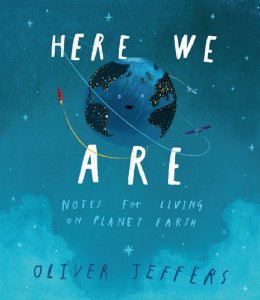
These are five of my favourites but there are several more wonderful picture books celebrating libraries of all sorts that I’ve shared successfully over the years and I’ve included pictures of these below in case you want to try them too. Perfect for Libraries Week but worth reading any week!

Collage 2018-10-08 09_59_08


Posted in Book Review, Libraries | Tagged , , , , , | Leave a comment

Secrets of a Sun King by Emma Carroll – Review and Link to Resources

Five years ago this month I reviewed Emma Carroll’s debut novel Frost Hollow Hall for The Bookbag. At the time I said that the ten year old me would have loved the book. Each of her subsequent novels has reminded me why I enjoyed as a child, and continue to enjoy, historical fiction. This latest title, both an exciting adventure and a window to long ago worlds is sure to hook young readers and encourage them to explore history further.

91Ew9DtJNlL

When Lilian Kaye finds a parcel on her grandad’s doorstep, she is shocked to see who sent it: a famous Egyptologist who had been found dead in mysterious circumstances and is the subject of the newspaper headlines that day.

Lil’s Grandad tells her that the mysterious package holds the key to a story. A story of secrets and wrongs that must be put right in order to break the deadly curse. So Lil and her friends, Tulip and Oz embark on an incredible journey – to return the package to its proper resting place, to protect those they love, and to break the deadly pharaoh’s curse.

Tutankhamen’s story has great appeal for both adults and children and Emma Carroll has captured that feeling of mystery and lost youth perfectly. The long lost writings describing the last days of this famous pharoah starkly bring home how young he was and this will undoubtedly add to the appeal to today’s children. The two stories, one in 1920s London and the other in ancient Egypt, have themes that weave the two together in a satisfying whole. Friendship, secrets and efforts to correct past mistakes are part of an exciting and well plotted adventure that moves at a pace sure to keep readers engrossed until the very last page.

Lil is a strong yet very likeable character and both she and Tulip supported by Tulip’s mother and, surprisingly to me, Lil’s father are feminist role models. This is also a book were diversity is recognised in a subtle and at times almost incidental way which, I think, normalises acceptance of differences. A lovely and thoughtful touch. There is mention too of the attitudes of many in 1920s England to other countries and peoples which would prompt interesting discussion and comparison to our world today.

This book has caused an excited buzz among primary school teachers and I can well understand why. It would work brilliantly as a class read linked to Ancient Egyptians. However, it certainly qualifies for a place on primary school library and classroom shelves even if this is not a topic being studied as it is an adventure with heart that can most definitely be enjoyed for its own sake. Emma Carroll, Queen of Historical fiction for children? Yes, I think so!

Secrets of a Sun King is available to purchase at all good bookshops, online or to borrow at your local library.

If you are looking for teaching resources linked to the novel Faber Publishers have some excellent ones free to download on their website

The websites listed below have information on Ancient Egypt presented in a child friendly way. Just click on the images to access the sites…

egypt

Children's university of manchester

Finally the excellent Books for Topics website has a list of books, both fiction and non-fiction, related to Ancient Egypt that children will find both interesting and informative.

Posted in Book Review | Tagged , , , , , , , , | 2 Comments

Reading Rocks South – Some Highlights

RR South

Over 200 primary school teachers, librarians, classroom assistants and others linked to the book community gathered together on a sunny autumn Saturday to celebrate and learn about children’s books, reading and how to encourage reading for pleasure in the classroom at the University of Greenwich. It takes something special to encourage people to give up a valuable weekend and this gathering of book lovers and educators was indeed something special. The combination of inspirational keynote speakers and well informed, experienced workshop facilitators ensured that everyone left for home at the end of the day buzzing with ideas and enthusiasm. It was a frantically busy event with many ideas shared and with time only to attend two workshops it was not possible to hear everything said but I thought I would share some of the key points that I took away from the day in case they are helpful to those who were unable to attend.

The Books You Read as a Child Are the Most Important Books You Read.

IMG_20180929_153748Christopher Edge, award winning children’s author and former teacher made this remark during his keynote speech in the afternoon and this was, I felt, the key to the whole day and the reason we were all there. He expanded on this by sharing a quote from The Lost Childhood by Graham Greene and shown on the slide here. He went on to say that books open doors to other worlds for children and by opening many doors we help children’s understanding, provide them with a refuge and perhaps the possibility that they will in turn create a better world. This importance highlights the need for access to a wide range of books for all children through libraries and schools. It was fascinating to hear how Christopher was influenced by Neil Gaiman’s work as a child, sneaking off school to get a book signed by the famous author at a local bookshop. Discovering that authors were in fact ”real people” inspired him to go on to become an author himself. One very good reason to encourage author visits to schools for as Christopher himself said ”Scratch every writer and you find a reader.”

All Reading Counts as Reading

Heather Wright, the wonderful organiser of the day, kicked off the event by making the point that ”One reader’s trash is another reader’s pleasure.”  Each reader is an individual and their reading habits will reflect their own interests and preferences. Even more importantly all reading matter counts, including comics, magazines, cereal packets, posters and online reading. Teresa Cremin suggested that children are encouraged to create a visual montage of everything that they read over a 24 hour period and include all these suggestions in addition to books. This enables them to see themselves as readers.

Reading is About Making Connections

IMG_20180929_105049

When a reader reads a book they are making connections between their own experience and understanding and the characters and the events in the story. Each reader will experience the book in a subtly different way. In addition when we share and talk about books together we are making connections between people and creating a reading community. In a school this is hugely important in nurturing a positive attitude to reading. In Martin Galway’s workshop we learned about an initiative at the school at which he is a governor where they share one book throughout the whole school. The Take One Book approach enables teachers to share one book that they love with the children, explore it properly and use it as an inspiration for work across the curriculum as a community. You can find out more about the outcome on Herts for Learning website.

As a primary school librarian I know that librarians connect with their users on a daily basis however a key connection that encourages reading is that of a teacher and pupil.  Teresa Cremin and the Open University have carried out a great deal of research on this and their website is full of practical advice and case studies on how to become a true Reading Teacher. A Reading Teacher is reader who teaches and a teacher who reads but in addition thinks about their own reading and shares it with their pupils. At Teresa’s workshop we discussed ways of creating reading communities in schools. These included starting staff meetings by reading aloud from a children’s book. reading books at assembly and teachers sharing their own childhood reading histories.

Reading Aloud Makes A Difference

At several points throughout the day the speakers read aloud to the delegates. The effect this had on us as listeners was striking.  Roger McDonald, Senior Lecturer at The University of Greenwich read The Rascally Cake by Jeanne Willis and Korky Paul aloud to a large group of adults who enthusiastically joined in with the humorous rhymes and rhythms of the story. When a little later Nicola Davies read aloud her new picture book, Perfect, beautifully illustrated by Cathy Fisher you could have heard a pin drop as we engaged with this moving story told with care and kindness. In each case we as listeners were emotionally engaged with the storytelling and this was evidence, if any is needed, of why reading aloud to children matters. Somehow we have to find time in the school day to make this happen.

Children’s Books Broaden Minds

IMG_20180929_124547Nicola Davies says that when she writes books such as Lots (illustrated by Emily Sutton) she wants children to say when they reach the end, ”Wow! I want to know more about that.”  Although some may say that war is not a suitable topic for young children she maintains that children are exposed to difficult subjects via the media on a daily basis and therefore it is our duty to talk about the world with all its beauties and horrors with them. In her stunning book, The Day War Came (illustrated by Rebecca Cobb) war and its impact on refugees is dealt with in an extremely moving yet age appropriate fashion.  During the Q & A Panel in the afternoon Jane Considine mentioned this subject again, remarking that it is our moral duty to ensure that children learn about lives and worlds different to their own.

This is just a small snapshot of a very full day and there were so many important and interesting topics and points raised throughout the event it is impossible to include them all here. As is often the way in any educational gathering one of the many very cheering aspects of the day was the sharing of ideas, resources and suggestions between those attending. It was a treat to see old friends again, make new ones and to meet Twitter chums in real life. Thanks to the wonderful organisers of Reading Rocks a flourishing reading community of educators has been created and that has to be good news for the children in their care.

IMG_20180929_145821

If this has whetted your appetite to participate in an event in the future the next Reading Rocks is Reading Rocks North in Northumberland on 13th October and and there is to be Reading Rocks SouthWest in Taunton on 23rd February 2019. For more information please visit the Reading Rocks website.

Posted in Reading, Teaching | Tagged , , , , , , , , | Leave a comment

How to Help Children Become Really Good Researchers

There was a conversation on Twitter recently about the use of KWL grids in primary schools.  This method for organising a research session asks three questions: What  is already known [K], What would like to be known [W] and What has been learnt (L). The general gist of the discussion was that the ‘W’ can create problems when a new topic is being introduced. If a young child knows nothing about a subject at all how can they identify what they want or indeed need to know? It is possible that after a couple of introductory lessons and prompting by an enthusiastic teacher they will think of something but for many children this would still be too broad a question. However there are alternatives to this system.

As a primary school librarian I have frequently seen children struggle with the need to carry out independent research without a framework suitable for their age group. When the senior management at my school made the decision to alter the teaching of the curriculum to encourage children to carry out independent research rather than being ‘spoon fed’ facts I grabbed the opportunity to become involved and collaborate with teachers to come up with an information literacy (research)  model that would enable the children to investigate independently but also ensure that they covered the elements of the subject that the teachers needed the children to learn.

It is important to note that as a staff we were clear that the teacher would introduce the subject first, provide a general overview and key information. Then the independent research sessions would provide the opportunity for the children to carry out a more in depth study of the subject. Sometimes this would be individually but frequently in pairs or small groups. Their findings would be shared as a class and the information found used in a way previously described by the teacher.

I needed to provide a system to structure research lessons in a way that could be used throughout the whole school and which would work successfully for both teachers and pupils. There are number of information literacy models available for use in education. One that is used frequently is The Big 6 method. This is very popular and there are many resources available online to support the use of this model. However after a great deal of thought and discussion I settled on the PLUS method devised by James Herring. There were a number of reasons for this choice. I believed the acronym would be easy for primary pupils to remember as it was a word with which they were already familiar. The division of the different aspects of the research process were logical and readily understood by children: Purpose, Location, Use and Self-evaluation. Lastly PLUS was easy to adapt to a visual aid that I believed would make it more effective and easy to use in the classroom.

I created a poster outlining the PLUS information literacy model that could be used by both teachers and children. This is shown below in a PDF format which you are welcome to download if you would find it helpful, by clicking on the image

PLUS

At the start of the new academic year I introduced this research model to all the teachers and they were provided with posters to display in the classroom and smaller versions to place inside exercise books. The PLUS visual aid was placed in the library and next to computers as a constant visual reminder to the children. Gradually using the system began to feel more natural to them and one major benefit was that it prompted the children to slow down, pause, think and plan before they searched which generally resulted in a much more successful outcome.

The posters and the defined structure worked very well in Years 5 and 6 but the process needed to be simplified further for lower KS2. However the basic overview of PLUS was a constant basis for enquiry based learning in school. The question, What do I want to find out? in this model is just part of an initial gathering of thoughts about what the children have been asked to do by the teacher and is therefore less vague. In my experience this approach does help the child to focus on the specifics and is preferable to the broad, “Find out about the Tudors”, approach to research. In order to answer specific questions children have to think about what they are reading and decide if and how it answers their research question.

Some children’s idea of independent research is to ‘Google it’’ with little idea of how to use a search engine properly. Although Google can be an extremely valuable research tool children of this age do not generally have the skills to search successfully or to appraise the vast amount of information available.  School librarians are trained to teach research skills – referencing, plagiarism etc. and know how to carry out online research, use digital tools and can guide Google searching. As librarian I stored links to numerous websites for both teachers and pupils, provided links to suitable sites on the school VLE for young children to use both in school and at home and guided research lessons using books and online resources. School librarians can educate the next generation to select, appraise and use the information they find with confidence. This is just one of the many reasons for the Great School Libraries Campaign.

When planning this whole school approach to research based lessons I found a publication from the School Library Association immensely useful: Cultivating Curiosity: Information Literacy Skills and the Primary School Library This is available to purchase from the SLA website for both members and non-members.

A structured approach to research, using a recognised model, will help primary school children to develop good habits that they will be able to build on as they move through secondary education. We all need to have critical thinking skills and to be able to access, assess and use information to become engaged citizens and primary school is a very good place to start.

Posted in Teaching | Tagged , , , , , , , , | Leave a comment

The Lost Diary of Sami Star by Karen McCombie

In her latest book for Barrington Stoke Karen McCombie captures the voice of a young girl who feels she is invisible to her family and friends but gradually discovers that friendship can be found in the most unlikely places.

Lost Diary of Sami Star

Life at home is hard for Hannah at the moment. Her older sister, Vix, is constantly arguing with her parents and Hannah feels that no-one has time for her and her worries. Her parents are concerned for her sister’s future but appear to be uninterested in Hannah’s life. To make matters worse her friends at school don’t appear to understand either. She is beginning to feel invisible. But then she finds an abandoned diary in the park and becomes intrigued by the life of Sami Star whose photos and drawings appear in the journal. Hannah decides to to find the mysterious Sami in the hope that she will be the real friend she needs so badly. But she does not realise that perhaps Sami needs her just as much too.

Karen McCombie writes with kindness and captures extremely well the emotions of a girl in the early days of secondary school who is trying to keep up with her friends and cope with the changes around her. I think that readers will empathise with Hannah and quickly become involved with her story.  At just under 60 pages this is a quick read but manages to convey a thoughtful and worthwhile message.  Hannah is drawn to the happy personality described in the pages of the lost diary but when she finally meets Sami it becomes clear that she has problems of her own. Theirs is to be a special and inclusive friendship that will, we hope, make things easier for both of them. All the different issues in the story are resolved in a happy ending which will leave young readers with a positive feeling. I particularly liked the way in which Hannah gradually learns to feel comfortable with who she is and her own individuality which is a comforting message for many.

As already mentioned this is a short read and presented in Barrington Stoke’s recognised highly readable style. I feel sure that this will be popular in school libraries with readers of about eight plus.

Thank you to Barrington Stoke for providing my review copy. Karen has written several books for these publishers and you can find details of the other titles on their website.  I particularly enjoyed The OMG Blog which I reviewed for the Bookbag.

The eye catching cover of The Lost Diary of Sami Star is designed by Ali Ardington.


Posted in Book Review | Tagged , , , , , , , | Leave a comment

Race to the Frozen North – The Matthew Henson Story by Catherine Johnson

This is a remarkable story about an equally remarkable man and this enjoyable retelling ensures that his story will reach the wider audience it deserves.

Race to the Frozen North

Eleven year old orphan Matthew runs away from his violent stepmother to try to find a new life in Washington city and is taken in by a kindly woman to help in her cafe. Sleeping on the floor beneath the counter at night and sweeping the floors and running errands during the day Matthew earns his keep but always dreams that life holds something more for him. However, from this inauspicious start no one would ever have imagined that he would become the first man to reach the North Pole. Through hard work and determination Matthew becomes a sailor, navigator and craftsman and ultimately an explorer and right hand man to Commander Robert E Peary on his expedition to the Arctic.

The explorers I learned about at school included names such as Scott, Columbus and Amundsen and in recent years new children’s books about Shackleton, Hillary and Armstrong have been added to the school library shelves.  Yet, to my shame, I had never heard of Matthew Henson. Catherine Johnson, in her introduction to this book published by Barrington Stoke, explains why this is the case.  Although he was the first man to reach the North Pole his story was suppressed for decades because of the colour of his skin.

I read this story with mounting admiration for Matthew and anger at the way he was treated. In addition to being a wonderful, gripping and exciting adventure his story is one that will prompt discussion with young readers on a variety of important themes. These include prejudice and discrimination and resilience and determination. Matthew goes to sea at a very young age, as was common at the time, and learns much from a kindly sea captain who acts as a mentor and father figure. Without the input of this man would Matthew’s story have turned out as it did? The kindness of strangers is an interesting aspect of the book and there is a little bit of luck too but the overriding impression is that Matthew works hard and rises to any challenge he faces and it is this that enables him to succeed eventually.

The descriptions of the expedition in the Arctic are enthralling. The bravery of these men and their ability to endure the hardships they faced in order to achieve their aim is astonishing.  The friendships made between Matthew and the Inuits who helped and joined the trip to the North Pole and the lasting, shared memories of this were a touching part of the story too.

It is Black History Month in October and this excellent children’s book is a must to add to any list of titles to mark this occasion. I enjoyed ‘meeting’ Matthew Henson very much, a remarkable man and would like to thank Catherine Johnson for the introduction.

Like all of Barrington Stoke’s books this story is presented in an accessible way suitable for emergent, reluctant and dyslexic readers. However this is also an extremely worthwhile quick read for older and more confident readers too. Last but definitely not least I loved the cover by Katie Hickey.

Like all good historical fiction this wonderful story left me wanting to find out more. There is an interesting interview with Catherine Johnson on Grace Latter’s blog which answers my questions. This National Geographic article provides more background information too.

Thank you to Barrington Stoke for sending me this review copy.


Posted in Book Review, Reading | Tagged , , , , , , , , , , | 3 Comments

Armistice Runner by Tom Palmer

This thought provoking story follows Lily as she uncovers the story of her brave ancestor. Lily has a lot of worries. She is struggling to compete in her fell running races and unable to concentrate on her training because she fears that she is losing her much loved Gran to Alzheimer’s. But then, whilst visiting her grandparents’ house she discovers her great-great grandfather’s diaries from the First World War. Gradually as his story of bravery is revealed Lily dares to hope that it could provide the key to a re-connection with her Gran and maybe even give her the inner strength and inspiration to win her next big race.

Armistice Runner


The First World War has been the subject of many children’s books in the past and inevitably there has been a flurry of new ones published to coincide with the commemoration of the centenary and this story by Tom Palmer is one of the best that I have read. Armistice Runner vividly portrays the reality of the suffering the soldiers endured in the trenches at a level that is appropriate to its target audience and by cleverly intertwining this with the difficulties faced by a twenty first century family he ensures that this important historical event feels relevant to today’s young readers.

Lily is an engaging character and as we get to know both Lily and her family in the opening chapters their relationships feel very believable. The stress her Dad is under as he worries about his parents, the niggling teasing from Lily’s little brother and the sad despair of her Grandad have all been captured and conveyed by the author in a manner which feels true to life and encourages the reader to care about these people and very quickly to become drawn into the story.

As Lily reads her ancestor’s diaries we learn about Ernest’s success as a fell runner in the Lake District and how he put this ability to good use in the war as a runner messenger. These brave men carried news along the front line and this was an aspect of the First World War that I knew little about. This story pays a moving tribute to these forgotten heroes. The connection between Lily and her great-great grandad is key to this story and it is this connection that provides Lily with the resilience and strength to tackle her rival, Abbie, in the next race.

This is a thoughtful book and ideal for introducing children to the history of the First World War and would be an excellent prompt for discussion on a wide range of topics including dementia, loyalty and forgiveness. I thought the ending was extremely well done providing a moving lesson in overcoming differences and reaching out to others in difficult times. However, this is above all a great story to be enjoyed for its own sake. I quickly became totally engrossed and enjoyed this book very much.

Last but not least, thanks to the lovely people at Barrington Stoke this book is accessible for many readers including those who may be dyslexic or are put off by very lengthy texts. The cover illustration by Tom Clohosy Cole is very eye catching giving the book great shelf appeal. A must have for school libraries and classrooms.

Tom Palmer has kindly produced a wide range of teaching resources linked to the book and these are available on his website. These include downloadable worksheets, theme ideas and posters. I also found the author’s notes at the end of the book both interesting and informative.

If you are looking for other books suitable for introducing WW1 to primary school pupils there is a very helpful list of titles collated by LoveReading4Kids

Booktrust have created a list of titles that may be helpful if you need to discuss dementia with primary aged children.

Posted in Book Review, Teaching | Tagged , , , , , , , , , , | 7 Comments

Firebird by Elizabeth Wein

Nastia is a fearless pilot, the daughter of revolutionaries and now as the Second World War envelops Russia she must fight to protect her beloved country from the invading German army. Nastia is determined to fly a fighter-plane but instead she is sent to train new pilots alongside the Chief from her flying school. When the battles begin secrets are revealed and this forces Nastia to question all that she has known and believed.

39909790._UY1600_SS1600_

The story opens with Nastia appearing at a tribunal declaring her innocence having been accused of being a traitor and the build up to this event is then told in flashback form. From the opening pages we are made aware that Nastia has had an unusual upbringing. Within a few chapters I was drawn to her as the mix of bravery, loyalty and impulsiveness is appealing. Both Nastia and Chief are extremely strong female role models and as the story progresses their bond strengthens. Wein gradually builds up the tension to a very exciting climax and this is an extremely satisfying read.

This latest book by Carnegie shortlisted author, Elizabeth Wein, is clearly well researched and like all the very best historical fiction it blends accurate historical detail with a well written narrative. The author has cleverly combined two periods of Russian history, the women pilots of The Second World War and the revolution which saw the downfall of Tsar Nicholas and the Romanovs. The links between these two events and the way in which Elizabeth Wein incorporates a “what if” scenario ensures that this is a gripping read. I knew very little about these female pilots and this book whetted my appetite to find out more and the author’s notes at the end of the story provide interesting historical background and further information. I think that teenage readers would also find these details interesting, particularly as Nastia is such an engaging and inspirational character.

I continue to be impressed by the range of books published by Barrington Stoke. This title is aimed at a teenage readership but written in an accessible style both in vocabulary, presentation and length without ever detracting from the quality of the writing. Firebird would be suitable for dyslexic or reluctant readers with a reading age of about 8 plus. This book would be a welcome addition to secondary school library shelves. An exciting and enjoyable read that can be bought in your local bookshop or online.

Posted in Book Review | Tagged , , , , , , | Leave a comment

Why Do Adults Enjoy Reading Children’s Books?


I no longer “need” to read children’s books and yet I still do. As a primary school librarian for more than seventeen years, in order to do my job properly, I read a broad range of books so that I could recommend and suggest titles to the children who visited the library. As I am no longer working in school libraries at present you might imagine that I would relish the time now available and pack away the picture books and the middle grade titles and delve into the adult best seller lists. To tell the truth I have a little but I’m also still enjoying books intended for people much, much younger than me.

My Twitter timeline is full of primary school teachers who know that being a #ReadingTeacher, a teacher who reads children’s books, will help them create and encourage young readers. But that, I think, is not the only reason they do so. There are frequently discussions about children’s books online such as #RR_Chat run by @ReadingRocks where remarks about how much teachers have “loved” a particular book, comments about the moving themes of a beautiful picturebook or recommendations made to colleagues suggest that they are enjoying the books for their own sake and not simply as a teaching tool.

Why is that I wonder? Why do we enjoy these books intended for children under 12 years old so much? The books are not always ones that we read as children ourselves and are now rereading and sharing with a new audience so it’s not exclusively about recapturing our own childhood. It has been said that we are in the midst of a new Golden Age of children’s literature and it is true that there has been a huge growth in the number and range of books available. The subject matter of these books is very different to that in the books of my childhood. Authors today are not afraid of tackling subjects such as bereavement, eating issues, bullying, mental health, prejudice and racism and this was, even in the 1970s and 80s, rare for this age group. Perhaps it is this relevance that encourages adults to read and want to discuss children’s books? There are times when an excellent children’s book can comfort and reassure an adult just as effectively as it does a child.

Books for children, particularly perhaps when they deal with upsetting or worrying aspects of life, require the ending to be, if not a happy one, at least a hopeful one. Personally, it is this feeling of hope that I find so engaging. Our world is a troubled one at present and although we can’t hide away from that sometimes we need the reassurance that generally people are doing their best and trying to be kind. Children’s books usually celebrate that. In fact children’s authors and illustrators could be described as a powerful voice for both good and change too.

Nicola Davies writes books such as Lots that celebrate our natural world and warn of the damage we are doing to our planet . Titles such as Story Like The Wind by Gill Lewis and My Name Is Not Refugee by Kate Milner encourage readers to be empathetic about the refugee crisis. Can we dare to hope that books such as these can help create a generation of adults who will show care and kindness? Perhaps the feeling these books create is why we as adults enjoy reading them.

Earlier this year the Centre for Literacy in Primary Education published their Reflecting Realities report which highlighted the lack of BAME characters and diversity in children’s books today. There are publishers such as Lantana Publishing and Knight Of who are trying to correct this. We pass books by these publishers on to children to help them to understand people who are different to themselves. Perhaps reading them as adults helps us understand too?

Of course sometimes we read children’s books because they are simply well told gripping adventures with likeable characters. Yet, I think it’s more than that. People ask why I still read and review these books and I say because I enjoy reading them. Why I enjoy reading them so much is a little more complicated but can be summed up by saying.. because I’m not yet too old to learn some valuable lessons from them.

image


Posted in Reading | Tagged , , , , | 17 Comments

Splash by Charli Howard

Splash by Charli Howard is an uplifting story about family, friendship and following your dreams told with sensitivity and warmth. A perfect read for those moving from primary to secondary school.

51vKLYZxASL._SX324_BO1,204,203,200_


Molly, who lives with her grandparents following the departure of her mother when she was a baby, is in her final year of primary school and dreams of becoming a champion swimmer. But when her best friend, Chloe, tries to make her quit her regular swimming practices, describing them as too babyish, Molly is torn between trying to fit in with her friends or to follow her dreams. Once offered the chance to compete in a regional swimming contest Molly decides to train in secret and strikes up a friendship with fellow swimmer, Ed. However the strain of trying to maintain her friendships and cope with the surprise reappearance of her mother start to make life difficult for Molly and for her family. Can she conquer the problems and achieve her dreams?

This is an extremely readable novel and in the character of Molly the author has created a character with whom many young girls will empathise. That final year at primary school with its promise of change and new horizons beckoning can be tricky for many and it is at this age that friendship issues can rear their ugly head too. Charli Howard tackles all of these issues and more with a sensitivity and warmth which will reassure children at this stage of their lives. Molly is taunted about her size by her ‘friend’, Chloe and sadly body image is increasingly something that affects young girls. The author, a former model, has first hand experience of this and therefore deals with the subject with understanding and in a manner appropriate for this age group.

I loved Molly and her voice carries the story beautifully and her relationship with her grandparents feels both loving and realistic. As the story progresses and Molly and her friends cope with the fallout of their parents’ problems in addition to their own squabbles and misunderstandings they develop and mature. This would be a perfect read for children in Year 6 as they prepare for the transition to secondary school. The story incorporates many of the possible fears and problems they may be dealing with and allows the reader to see how these can be overcome. Molly’s achievements and the way in which friendships are restored make this book an uplifting read. A story that will soothe, entertain and encourage young readers, particularly girls.

Thank you to Clare Hall–Craggs and Nosy Crow books for providing my review copy.

Posted in Book Review, Reading | Tagged , , , , , , , | 2 Comments