Firebird by Elizabeth Wein

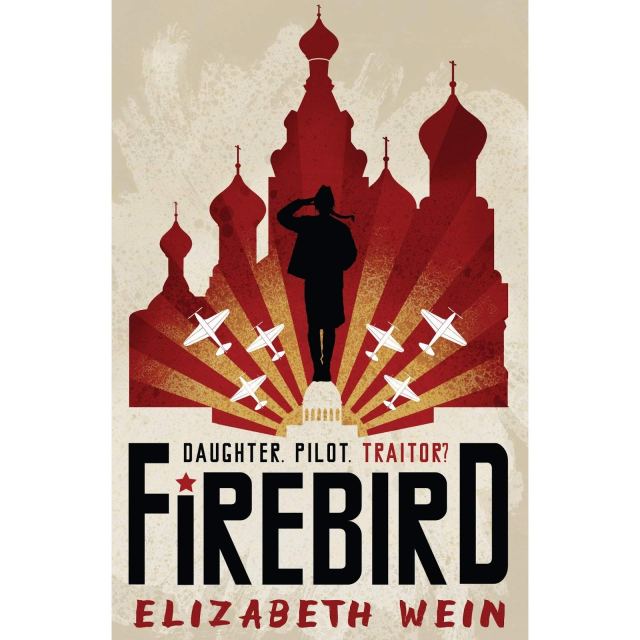
Nastia is a fearless pilot, the daughter of revolutionaries and now as the Second World War envelops Russia she must fight to protect her beloved country from the invading German army. Nastia is determined to fly a fighter-plane but instead she is sent to train new pilots alongside the Chief from her flying school. When the battles begin secrets are revealed and this forces Nastia to question all that she has known and believed.

39909790._UY1600_SS1600_

The story opens with Nastia appearing at a tribunal declaring her innocence having been accused of being a traitor and the build up to this event is then told in flashback form. From the opening pages we are made aware that Nastia has had an unusual upbringing. Within a few chapters I was drawn to her as the mix of bravery, loyalty and impulsiveness is appealing. Both Nastia and Chief are extremely strong female role models and as the story progresses their bond strengthens. Wein gradually builds up the tension to a very exciting climax and this is an extremely satisfying read.

This latest book by Carnegie shortlisted author, Elizabeth Wein, is clearly well researched and like all the very best historical fiction it blends accurate historical detail with a well written narrative. The author has cleverly combined two periods of Russian history, the women pilots of The Second World War and the revolution which saw the downfall of Tsar Nicholas and the Romanovs. The links between these two events and the way in which Elizabeth Wein incorporates a “what if” scenario ensures that this is a gripping read. I knew very little about these female pilots and this book whetted my appetite to find out more and the author’s notes at the end of the story provide interesting historical background and further information. I think that teenage readers would also find these details interesting, particularly as Nastia is such an engaging and inspirational character.

I continue to be impressed by the range of books published by Barrington Stoke. This title is aimed at a teenage readership but written in an accessible style both in vocabulary, presentation and length without ever detracting from the quality of the writing. Firebird would be suitable for dyslexic or reluctant readers with a reading age of about 8 plus. This book would be a welcome addition to secondary school library shelves. An exciting and enjoyable read that can be bought in your local bookshop or online.

Posted in Book Review | Tagged , , , , , , | Leave a comment

Why Do Adults Enjoy Reading Children’s Books?


I no longer “need” to read children’s books and yet I still do. As a primary school librarian for more than seventeen years, in order to do my job properly, I read a broad range of books so that I could recommend and suggest titles to the children who visited the library. As I am no longer working in school libraries at present you might imagine that I would relish the time now available and pack away the picture books and the middle grade titles and delve into the adult best seller lists. To tell the truth I have a little but I’m also still enjoying books intended for people much, much younger than me.

My Twitter timeline is full of primary school teachers who know that being a #ReadingTeacher, a teacher who reads children’s books, will help them create and encourage young readers. But that, I think, is not the only reason they do so. There are frequently discussions about children’s books online such as #RR_Chat run by @ReadingRocks where remarks about how much teachers have “loved” a particular book, comments about the moving themes of a beautiful picturebook or recommendations made to colleagues suggest that they are enjoying the books for their own sake and not simply as a teaching tool.

Why is that I wonder? Why do we enjoy these books intended for children under 12 years old so much? The books are not always ones that we read as children ourselves and are now rereading and sharing with a new audience so it’s not exclusively about recapturing our own childhood. It has been said that we are in the midst of a new Golden Age of children’s literature and it is true that there has been a huge growth in the number and range of books available. The subject matter of these books is very different to that in the books of my childhood. Authors today are not afraid of tackling subjects such as bereavement, eating issues, bullying, mental health, prejudice and racism and this was, even in the 1970s and 80s, rare for this age group. Perhaps it is this relevance that encourages adults to read and want to discuss children’s books? There are times when an excellent children’s book can comfort and reassure an adult just as effectively as it does a child.

Books for children, particularly perhaps when they deal with upsetting or worrying aspects of life, require the ending to be, if not a happy one, at least a hopeful one. Personally, it is this feeling of hope that I find so engaging. Our world is a troubled one at present and although we can’t hide away from that sometimes we need the reassurance that generally people are doing their best and trying to be kind. Children’s books usually celebrate that. In fact children’s authors and illustrators could be described as a powerful voice for both good and change too.

Nicola Davies writes books such as Lots that celebrate our natural world and warn of the damage we are doing to our planet . Titles such as Story Like The Wind by Gill Lewis and My Name Is Not Refugee by Kate Milner encourage readers to be empathetic about the refugee crisis. Can we dare to hope that books such as these can help create a generation of adults who will show care and kindness? Perhaps the feeling these books create is why we as adults enjoy reading them.

Earlier this year the Centre for Literacy in Primary Education published their Reflecting Realities report which highlighted the lack of BAME characters and diversity in children’s books today. There are publishers such as Lantana Publishing and Knight Of who are trying to correct this. We pass books by these publishers on to children to help them to understand people who are different to themselves. Perhaps reading them as adults helps us understand too?

Of course sometimes we read children’s books because they are simply well told gripping adventures with likeable characters. Yet, I think it’s more than that. People ask why I still read and review these books and I say because I enjoy reading them. Why I enjoy reading them so much is a little more complicated but can be summed up by saying.. because I’m not yet too old to learn some valuable lessons from them.

image


Posted in Reading | Tagged , , , , | 17 Comments

Splash by Charli Howard

Splash by Charli Howard is an uplifting story about family, friendship and following your dreams told with sensitivity and warmth. A perfect read for those moving from primary to secondary school.

51vKLYZxASL._SX324_BO1,204,203,200_


Molly, who lives with her grandparents following the departure of her mother when she was a baby, is in her final year of primary school and dreams of becoming a champion swimmer. But when her best friend, Chloe, tries to make her quit her regular swimming practices, describing them as too babyish, Molly is torn between trying to fit in with her friends or to follow her dreams. Once offered the chance to compete in a regional swimming contest Molly decides to train in secret and strikes up a friendship with fellow swimmer, Ed. However the strain of trying to maintain her friendships and cope with the surprise reappearance of her mother start to make life difficult for Molly and for her family. Can she conquer the problems and achieve her dreams?

This is an extremely readable novel and in the character of Molly the author has created a character with whom many young girls will empathise. That final year at primary school with its promise of change and new horizons beckoning can be tricky for many and it is at this age that friendship issues can rear their ugly head too. Charli Howard tackles all of these issues and more with a sensitivity and warmth which will reassure children at this stage of their lives. Molly is taunted about her size by her ‘friend’, Chloe and sadly body image is increasingly something that affects young girls. The author, a former model, has first hand experience of this and therefore deals with the subject with understanding and in a manner appropriate for this age group.

I loved Molly and her voice carries the story beautifully and her relationship with her grandparents feels both loving and realistic. As the story progresses and Molly and her friends cope with the fallout of their parents’ problems in addition to their own squabbles and misunderstandings they develop and mature. This would be a perfect read for children in Year 6 as they prepare for the transition to secondary school. The story incorporates many of the possible fears and problems they may be dealing with and allows the reader to see how these can be overcome. Molly’s achievements and the way in which friendships are restored make this book an uplifting read. A story that will soothe, entertain and encourage young readers, particularly girls.

Thank you to Clare Hall–Craggs and Nosy Crow books for providing my review copy.

Posted in Book Review, Reading | Tagged , , , , , , , | 2 Comments

Run Wild – Review and Q & A with Author Gill Lewis

Izzy and Asha live in the city and don’t have a space to call their own. A space where they can practise with their skateboards without the Skull brothers watching them. A space where they can escape from the difficulties at home. When they find their way into the derelict gasworks the girls think that they have found the perfect place but something else has already made this their space. Something different, unexpected and wild. An injured wolf that needs their help. As Izzy, Asha, Izzy’s younger brother Connor and his friend Jakub try to plan what to do to save the beautiful animal they discover a world they had forgotten existed and a feeling within themselves that they thought they had lost for good. They discover a world of freedom and wildness.
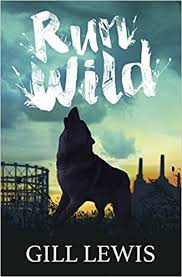
Run Wild cover

This is a thought provoking story highlighting the need for children to experience nature first hand, to be able to roam free and to notice the wildlife hidden in the urban landscape. This natural bond between children and nature is in danger of being lost and Barrington Stoke, Gill Lewis and the charity Rewilding Britain have joined forces to work together on bringing this issue to the notice of the world. The story itself is wonderfully told, vividly creating the hidden world that the children discover together.  Each character responds to the situation in subtly different ways and I particularly liked Connor’s enthusiasm for each new discovery and his happy drawing of everything as if he wanted to capture it forever. The children are resourceful and show commitment to what is important to them as they fight to save the landscape from developers and create instead a nature reserve to be shared by the local community.  The various strands of the story incorporating family life’s worries and the wildness the children so enjoy are brought together in a climax that is resolved beautifully. I think this is a wonderful story drawing attention to an important issue and accessible to many readers. This would be a great book to prompt discussion and further learning.

A big thank you to Gill and Kirstin at Barrington Stoke publishers for supplying my review copy.

Q & A With Author Gill Lewis

I am very happy to welcome Gill to my blog today where she will be answering some of my questions about Run Wild,  the inspiration behind the story, her love of wildlife and how her readers can get involved in the protection of the natural world in their own communities

Gill Lewis 2018

LL: The theme of Run Wild is a very important one and your books have featured wildlife in many forms. How do you hope reading books such as yours will make a difference to young readers?

GL: I hope the book will let readers realise that they belong in wild space. So much of our wild space is in designated national parks. It sets nature as something that happens elsewhere; somewhere you have to go to. It becomes something other, and can make people feel they are excluded from it. I hope my books allow readers to see themselves in wild space, be it urban, suburban or more rural areas. Within these areas, space can be given over to wildlife. We have this obsessive desire to keep things neat and tidy; cut hedgerows, mow lawns, have tidy weed-less borders. Even worse are AstroTurf lawns. The constant weeding and strimming strips gardens of useful feed plants and shelter places of many insects and birds. It’s time for children to take over the garden, reclaim the wild and to know that they are part of the landscape, not separate from it.  Imagine across the country if every garden and roof terrace and park had wild space. Just imagine what we could have.

LL: The derelict gasworks hide a natural landscape that offered so much to the children in the story. Was this setting inspired by somewhere you know or visited as a child?

GL: My love of wildlife began on a piece of suburban scrubland. I grew up on the outskirts of Bath. We had a long steep garden where brambles and grasses were allowed to grow wild and untamed at the far end. Beyond the garden, through a hole in the fence, lay The Woods. They weren’t really proper woods, but council owned land that had been left to grow wild and straggly. I used to go to The Woods with my friends. It was a place away from parents and the safety of our gardens. The only rule was to be home in time for tea. The Woods to us seemed vast and endless. In truth they were probably less than an acre. The uneven wooded land was pitted with old bomb craters from WWII. There were secret tunnels through brambles into the heart of thickets where we would share sherbet dips, taking turns to lick the lolly. It was a wild place of wild creatures: the musky scent of fox, blackbirds, sparrows, crows, and cooing collared doves. We found frogs and toads in the water that ran from the hills through the storm drain. We knew we should never enter the storm drain because a dragon lived there. It howled with the wind on dark nights and ate children who unwisely ventured in. (At least that’s what we had been told). There were other tribes who frequented The Woods and we often had to battle with them, flinging our mud pies and insults. If there were more of them than us, we would flee back to the safety of our gardens. If there were more of us than them, we would chase them out and claim The Woods as our own. It was a place to be ourselves. It was a place to be wild. Nearly forty years on, The Woods no longer exist. Where the brambles ran wild, there are now houses with neat, trimmed gardens. I suspect even the dragon has gone. So where do the children who live in these houses play now? There is the park, but the green space is monitored and tidy. The road where we once ran and practised our bicycle stunts is now lined with cars and too dangerous to play in. There is less space for children to play and roam, to simply be. And if children lose the chance to immerse themselves in wild space they lose the opportunity to connect with it and feel a part of it, and that will have a huge impact upon future generations. Like the plants and the animals, children need wild space to grow too.

LL: The wolf is very much at the heart of Run Wild. Wolves have featured in children’s stories for many years. Did you choose it for this reason? Did you consider another creature as the focus point?

No. It was always a wolf. Wolves have been part of folklore of many countries over the centuries. They have been vilified. They were persecuted to extinction in many countries, but are now making a come back in places such as Spain, France and Germany. Many people now feel a deep connection and affection for wolves. Maybe in our safe and dulled lives, wolves offer that sense of wildness that belongs somewhere deep within ourselves. Maybe the domestication of the dog offers us a view into a wild animal we have a familiarity and bond with. I think it is probably this reason why the wolf chose me to write this story, rather than me choosing the wolf!

LL: I have long admired Barrington Stoke’s books as they are so accessible for many children. As this is your debut for them did you have to adapt your writing style in any way?

GL: I was delighted and really honoured to write for Barrington Stoke. I really struggled to read as a child. I don’t recall any testing for dyslexia back then. All I remember is that I couldn’t progress from the Ladybird Books. Many people have nostalgia for the Lady Bird reading scheme, but I just remember frustration. The stories were so dull to me, about a boy and girl buying shoes or having a picnic in the garden and I wanted to read about fantastical adventures. I somehow felt that I was excluded from being able to go through the wardrobe with Lucy in the Lion the Witch and the Wardrobe. It turned me off books until I found the Tintin adventures where there were great stories and accessible text and illustrations. I wish the Barrington Stoke Books had been available when I was a child as they offer a wide variety of great stories in such an accessible way.

I didn’t have to adapt my writing style too much writing Run Wild. The editorial process was very interesting. Some of the sentence structure was simplified, and the story had less word count than my other novels, but the heart of the story never changed.

LL: Would you ever consider writing a book without an element of the natural world within the plot?

GL: Hmm! I think there will always be an element of the natural world within the plot even if there isn’t an animal central to the plot. I can’t imagine my life without it, so I think it goes into my stories.

LL: Have you any advice for children who would like to get involved with the protection of wildlife and nature in their local environment?

GL: There are lots of interesting projects especially through the Wildlife Trusts and the RSPB. I think the biggest impact can be through starting off with what is around you. Whether it is a balcony window box, a garden or a communal space there is always somewhere you can allow to become part of the wild. If you have a garden let one area go wild: put in little pond, let the nettles and brambles grow. Don’t mow all of the lawn, allow a wildflower meadow to flourish. You’ll be surprised how quickly the wild things come. Add nesting boxes, logs piles and stone piles. Build a hedgehog shelter. If you make a den it can be an escape; a place to just be, to daydream, to read books, draw or snooze and watch the clouds or stare up at the stars. Wildlife should not just be contained within nature reserves. It should be part of our everyday world.

Thank you very much, Gill, for taking the time to answer my questions with so much detail and enthusiasm. I loved the stories of life in ‘The Woods’ which took me back to my own childhood. Wouldn’t it be fantastic if Run Wild prompted more of today’s children to experience that magic themselves!

 

Posted in Author Q & A, Book Review | Tagged , , , , , , , , | 3 Comments

Why Author Visits to Schools Matter


In 2013 the Society of Authors published a survey on the impact of author visits to schools. At that time I contributed to the survey and that author visits have a positive effect on promoting reading for pleasure amongst school children came as little surprise to me. In fact if a similar survey was undertaken now I imagine the results would be even more positive.

For more than seventeen  years I was employed as a school librarian working with children aged 3 –11 and during that time I arranged numerous visits by children’s authors, illustrators and poets. These events have enthused and excited pupils and with support from the school the positive impact can be long lasting too. I have seen a successful author visit kickstart a reading habit in children who have not previously been enthusiastic readers.

image

As a child I don’t ever remember an author visiting my school, in fact I don’t think I knew a great deal about my favourite authors. The world of children’s books is very different today. Since the arrival of J K Rowling in the late 90s children’s literature now operates at a different level. Recent figures show a marked resurgence in book buying with children’s book sales featuring significantly in this growth. The increase in the number of literary festivals and visits to schools has brought children’s authors and their readers together. Reading among both children and adults has become a more communal activity, hence the success of book clubs. Many children’s authors have responded to this with engaging and interactive websites that their readers enjoy visiting. It is possible for authors and their readers to chat via social media and to engage in virtual visits via Skype.  However nothing quite matches meeting the author or illustrator ‘for real’.

Author/illustrators are particularly effective in firing the imaginations of younger children and over the years visits to my school by Korky Paul, James Mayhew, Clara Vulliamy, Tracey Corderoy, Kate Maryon, Abi Elphinstone, Peter Bunzl, Matt Haig and Certie Burnell have all been huge successes. You could have heard a pin drop during James’s story telling sessions and years later pupils still referred to the ‘clever man who did the upside down paintings’. Perhaps more importantly when they look at his paintings in pride of place in the school library today some pupils can both remember and retell the story that James told their own class several years ago.

Clara Vulliamy visited during our Arts Week and engaged our youngest children in a winning combination of storytelling, art and craft sessions. These sessions went down a storm with both pupils and teachers and the lovely happy buzz throughout the day would convince the most sceptical of the positive influence of such an event. Some of these children were only four years old but months later teachers reported that they were copying and expanding on the activities Clara had shown them. A recent visit by a Tracey Corderoy involving crafts, games and interactive storytelling was a similar success with positive feedback from everyone involved.

image


In education today when it can feel as though everything must be assessed and measurable it is difficult to quantify the impact of these days but surely the fact that these special events are remembered and valued by the children themselves is important too.

In my experience as a school librarian the very best way of ensuring that books are borrowed from the library and read in large numbers is a successful visit by an author.  Kate Maryon visited my school twice to work with pupils in years 5 and 6 and on the second occasion also to officially open our new, larger library. Kate’s books were already enjoyed by our girls but as the day of her visit approached requests for her books increased and the waiting lists for each of her books grew steadily longer. The teachers were reading her books aloud in class and I was constantly being asked about the lady herself. Her visit was a big hit with queues out of the door at her book selling and signing session at the end of the day. Kate talked about her book, ‘Invisible Girl’, and the issues raised in this and her other books. The discussion touched on difficult subjects and our pupils were engrossed and thoughtful throughout Kate’s talk. The opportunity to talk about and overcome difficulties and to learn to empathise with others is an important aspect of children’s books and I think that this particular author visit was more effective than a lesson on the subject would have been.

Something that an author can do that even the very best teacher can’t is offer an insight into how an author writes. Following Kate’s creative writing workshop one of the teachers told me that her pupils ‘were bursting to write’ when they returned to their classrooms. The result of a successful author visit goes beyond raising the profile of books and reading but can also have a direct influence on the classroom too.

Perhaps the author visits with the biggest impact were those by Abi Elphinstone. To describe Abi as inspirational is an understatement, both staff and pupils talked about her visits for weeks and the book reading buzz she created was something that could never have been replicated by the most enthusiastic librarian or teacher.

The Society of Authors recommends that all schools should have a school library and a trained librarian to run it who can take responsibility for the organisation of author events. I realise that I am very fortunate to have worked in a school where the library and enriching activities for the children were valued and therefore had the budget required to allow me to organise these visits, but there are ways of funding such events by teaming up with other local schools to share costs. It could also be possible to work with your local library, literary festival or bookshop to reduce the expense. I was fortunate to team up with a local independent bookshop who arranged free visits as part of a book publicity tour.


Having seen first-hand how important and worthwhile author visits can be for both school children and teachers I think it is vital that these types of events are actively promoted and their positive contribution to children’s education recognised. Organising author visits is only one aspect of a school librarian’s job but it is undoubtedly an important one.

Here is a list of possible sources of information about author visits to schools:

Apples and Snakes

Authors Abroad 

Authors Aloud 

Contact an Author 

Patron of Reading

Speaking of Books

Virtual Authors 


Posted in Libraries, Reading | Tagged , , , , , , , | 1 Comment

The Button Collection by Helen Hamill and Christina Ryan

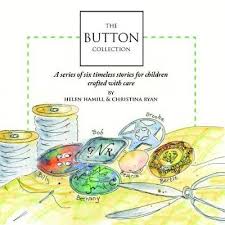
The Button Collection is a series of six traditional style stories for young children featuring a selection of different buttons, each of them with a special story to tell. Tales of adventure and survival featuring a variety of buttons from Bertie the Soldier Button to Bethany the Explorer Button.

The Button Collection

Each individual little book in this charming package tells the story of a particular small  button and the job that it does. These jobs include being part of a wedding dress, a clown’s costume or a train guard’s uniform. The six individual books depict how these buttons spent their days and in each case, sadly, they grew old and past their best or were no longer needed so were discarded in old trunks, drawers or wardrobes and forgotten by their owners. However, these are stories with happy endings and our little buttons find new lives as they are each discovered and put to good use once again.

The stories each follow a similar pattern and very young children enjoy this sort of repetition as they quickly come to recognise the recurring theme and begin to anticipate what will happen next. The water-colour illustrations that accompany the text are lovely and add greatly to the overall appeal of these books. I particularly liked the pictures in Bertie the Soldier Button with the small button lying among the poppies of the First World War battlefields. In each story at the point when the storytelling button becomes old and unwanted the illustrations portray the change of mood and the sadness extremely well.

IMG_20180613_160515

The overall package is very appealing with the small books, a perfect size for small hands, placed inside a presentation box showing all the buttons and the story’s titles. This would make a lovely gift for a small child.

You can find out more about the Button Collection books on the publishers website.

The books can be purchased online or via The Cobham Bookshop, an independent bookshop in Surrey.

Posted in Book Review | Tagged , , , , , | Leave a comment

A Picture Book to Help Young Children Care About the Environment – Somebody Swallowed Stanley by Sarah Roberts

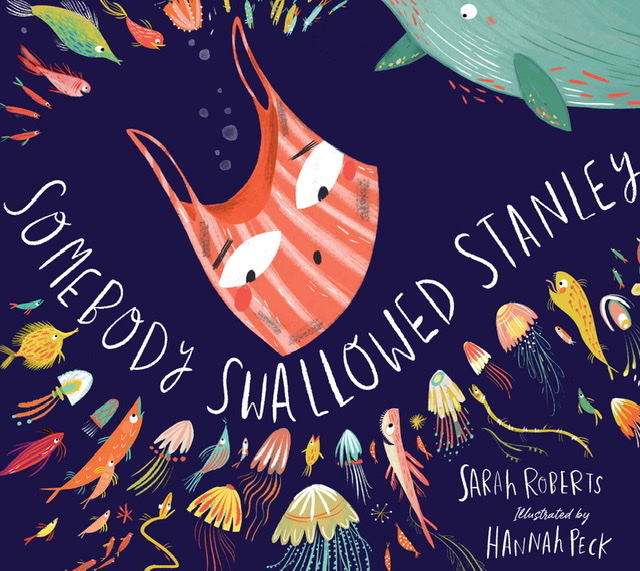
”Plastic” has been declared children’s word of the year after analysis of the entries to this year’s BBB Breakfast Show 500 words competition for children aged 5-13. Its appearance was up 100% from last year’s entries with titles including “The Plastic Shore” and ”The Evil Mr. Plastic”. It is good news that children are becoming increasingly aware of the dangers to our environment. However, if you are looking for a picture book to highlight this issue with very young children, “Somebody Swallowed Stanley” would be an excellent place to start.

942448AA-1676-4998-9C8F-D608D3D22C18


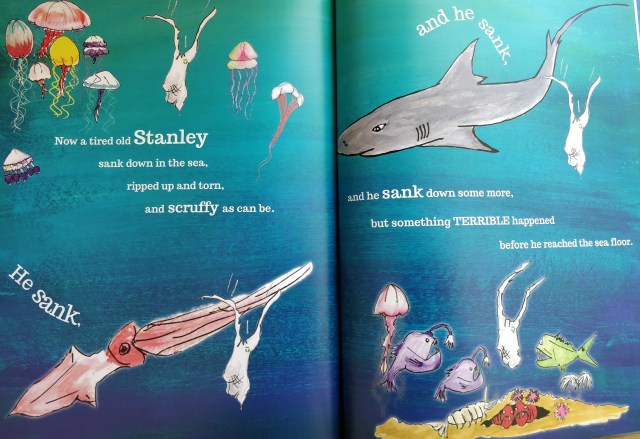
Stanley is floating in the sea alongside many beautiful jellyfish and we quickly realise that Stanley is no ordinary jellyfish. Stanley is a plastic bag. His story is told through rhyme and repetition with questions to engage the listener or reader. Children will learn to identify different types of marine life and the impact that Stanley has on them. The illustrations with their use of vibrant turquoise and blue convey the image of the oceans very well.

IMG_20180606_120106

I thought the personification and naming of the plastic bag was a clever touch. As the story reaches its happy ending young children will realise that the blame is not really Stanley’s as he was simply in the wrong place. This is an excellent picture book for conveying the message to young children that responsibility for the care of the environment is ours. Recommended for the Early Years and Lower Infants age group.

You can find out more about the author, Sarah Roberts, including details of her workshops for schools on her website

World Oceans Day takes place on 8th June, a day on which the organisers hope we will all join together to learn how we can protect our shared ocean. There are teaching resources available on the official website.

Posted in Book Review | Tagged , , , , , , , | 1 Comment

The Boy Who Grew Dragons by Andy Shepherd Illustrated by Sara Ogilvie

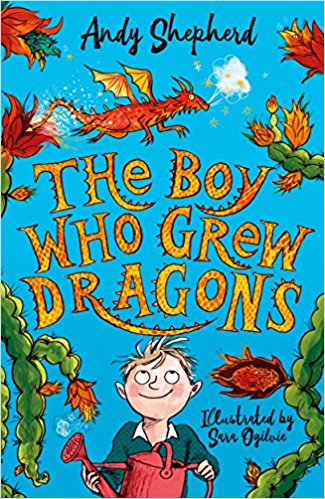
A gloriously happy debut this engaging story is told with humour and warmth and would be a treat for newly confident readers. The charming illustrations by Sara Ogilvie combine perfectly with Andy Shepherd’s entertaining adventure in this welcome addition to the growing range of good quality illustrated fiction for the 7 – 9 age group.

The Boy who grew Dragons cover

When Tomas discovers a strange tree at the bottom of his Grandad’s garden, although he doesn’t think much of it, he decides to take one of its funny looking fruits home with him. Once in his bedroom Tomas gets the surprise of his life when a tiny dragon emerges from the fruit! The tree was a dragon-fruit tree and Tomas now has a dragon of his very own. Of course Tomas is delighted but decides to keep his new friend, Flicker, a secret from the rest of his family. However this proves to be much more difficult than he expected. Although Flicker the dragon is great fun and rapidly becomes a good friend he is rather prone to doing dragon-type things. How on earth is Tomas going to explain his burnt toothbrush, the devastation in his bedroom and, worst of all, the exploding dragon poo? Then on a return visit to his grandad’s he notices that there are more fruits growing on the peculiar tree. Tomas has become the boy who grows dragons!

This is a story guaranteed to put smiles on faces. The adventure is both original and entertaining and I think that young readers will warm to Tomas. There is a lot of fun in this book but a lot of heart too. I particularly enjoyed the relationship between Tomas and his Grandad and that bond as they worked alongside each other in the garden felt comfortingly familiar. Andy Shepherd has a knack of describing emotions and situations in a way that young readers will understand and Tomas’s family are both realistic and entertaining. I also loved that a visit to the local library was included in the story.

Sara Ogilvie’s illustrations are wonderful and add to the overall appeal of the book. The chapters are short enough not to put off newly confident readers and yet this also feels like a wonderful bridge to longer fantasy novels. It would work very well read aloud to younger readers too being full of jokes and edge of the seat moments.  This is a treat of a book and I’m delighted that there are more stories to follow this one. The second book in the series, The Boy Who Lived With Dragons, is due to be published in September 2018 with another title planned for early 2019. More fun to look forward to!

Thank you to Andy and Piccadilly Press for kindly sending me a copy of this book.

Andy Shepherd has a wonderful website full of information and entertaining stuff for children including yummy recipes, dragonfruit fact sheets and quizzes.  The range of teaching resources Andy has thoughtfully created for schools is extensive and covers everything from creative writing to art and research to media and these are available to download here.

Posted in Book Review, Reading | Tagged , , , , , , | 4 Comments

Perfect Picture Books for Children Who May Think They Don’t Like Reading

Reading picture books aloud and sharing the wonder of beautiful illustrations is a rewarding part of being a school librarian and, of course, of being a parent. This joy of stories will hopefully continue as young children move on to the first steps of reading books themselves. Sometimes though this transition does not always go smoothly. These two picturebooks will reassure and encourage those little people who wonder if the world of books is for them.

I Do Not Like Books Anymore! by Daisy Hirst


9781406369137

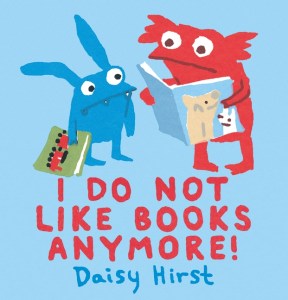
Natalie and Alphonse love stories and books. Picture books with Dad, scary books read by Mum and storytelling sessions with Grandma. Natalie looks forward to being able to read herself and reading stories to Alphonse.  Then Natalie is given her first reading book and things are not quite what she expected. The words are jumbled shapes like scuttling insects on the page and even when they make sense nothing exciting happens in the stories. Natalie is downhearted and although she practises and practises she soon decides that she doesn’t like books any more.

However after a little while her love of stories returns and she starts to make up stories of her own which she tells to little Alphonse. Then together she and Alphonse create their own picture books which they share together as a family.

I love the wry humour in this entertaining book and the way in which it counters the rather dry approach of some reading schemes and their concentration on achieving levels rather than celebrating the joy of stories. Daisy Hirst has cleverly concentrated on the sharing of stories and pictures which will reassure young children who may be struggling with the mechanics of learning to read. This makes reading something to be loved rather than learned which for some is exactly what is needed at this age. A book to reinforce what reading is all about and allow breathing space until a child is ready for the next stage. Definitely recommended for home and schools.
The Covers of My Book Are Too Far Apart (and other grumbles) by Vivian French and Derek Baines

51j+BqyrmrL._AC_SY400_

“I’m too old for bedtime storiesThat’s a girl’s book!I hate this book but I’ve got to finish itI can’t find a book that I like.” You’ve probably heard at least one of the grumbles in this book before but have you known how to respond to it? This brilliant picture book will do it for you and is a joyful celebration of all that’s wonderful about books and reading.

From the eye catching cover to the ending which isn’t really an ending at all but hopefully a beginning this is a very special book. Vivian French and Nigel Baines have managed to make this a very inclusive book and it will be reassuring for those who find reading a chore and also for those who want to read but find it a struggle. Every possible question about reading, or excuse for not reading, given by both children and adults is tackled by a wide range of characters. The diversity of those featured is another major plus of this original book as it ensures that everyone sharing the book can readily identify with at least one of them. The illustrations by Nigel Baines are bright, colourful and engaging and these together with the witty writing add to the book’s overall appeal.

This is part of the Picture Squirrels range from Barrington Stoke and has a dyslexia-friendly layout and typeface to help adults with dyslexia or those less confident of their reading ability to enjoy it with their children too. However, as with so much of the Barrington Stoke range, this is wonderful to share for everyone. I particularly like the fact that it encourages children to enjoy stories in any form be that audio books, listening to stories read aloud, e-books, comics or picture books at any age and stresses that it’s fine to read favourite books again and again if you want to. The advice given is wise and sensible but is presented in an amusing and enjoyable manner.

I love this and think it deserves a place on every bookshelf but perhaps most importantly on school bookshelves as a reminder that Reading isn’t a competition! It’s fun!

Both these books would be invaluable in the primary school classroom and can be bought online by clicking on the book titles above.

Although I’m aware of many picture books celebrating reading, stories and libraries I would love to know of more titles similar to these two. Do you have any suggestions? If so I will happily prepare a list that may be useful.

Posted in Book Review, Reading | Tagged , , , , | 1 Comment

The Infinite Lives of Maisie Day by Christopher Edge

I love it when a book surprises me and Maisie Day definitely did just that. Christopher Edge has created a very different but also extremely satisfying read in which the world of science combines with the unbreakable bonds of true family love.

IMG_20180523_161915

Maisie wakes up late on her tenth birthday and remembers that Mum and Dad are planning a special party for her. She looks out of her window at the sunlit garden and the gazebo lying ready on the lawn. Maisie pulls on her dressing gown and rushes excitedly downstairs calling out for her Mum and Dad. There is no reply and the house is eerily quiet. She walks around the ground floor from room to room and sees that there is no one there. Puzzled she heads back up the stairs and cautiously taps at her big sister Lily’s bedroom door. There is no reply and on entering Maisie discovers that this room too is empty. Where is everyone? They should be busy with her birthday preparations. Amid rising panic Maisie opens the front door and there is nothing there, absolutely nothing. Total blackness extending to infinity. Trapped in this nightmare world Maisie must use all her knowledge to save herself. Will this knowledge be enough?

Wow! What a story. This may be short at just 150 pages but it is a book full of science, courage, love and huge surprises. I don’t normally tend to choose science fiction but this, although absolutely crammed full of scientific information, has converted me. Children who ask a lot of questions will lap this up. Christopher Edge manages to make the subjects of black holes, time, virtual reality and the cosmos accessible to everyone. There is lots of detail but it never becomes overwhelming and will, I think, encourage young readers to go away and learn more.

Maisie, academically gifted and already studying for a degree, is both engaging and interesting. I very quickly cared about what happened to her and was committed to the story within a couple of chapters. The story is told in alternate chapters portraying firstly the terrifying world of ever growing blackness and secondly the sunny, celebratory birthday world of Maisie and her family. This never becomes confusing but instead intensifies the reader’s interest as you try to work out what will happen next. I had suspicions of possible outcomes but Christopher Edge cleverly builds up the tension culminating in a plot device I did not expect. I think this is a gripping and frankly emotional read that would be wonderful for readers of about 10 upwards. It’s absolutely perfect for youngsters who have an interest in science and as an added bonus its length means it won’t put off children who find 400 page long tomes a little off putting . Highly recommended.

There are a range of teaching resources available to go with the book on Christopher’s website suitable for KS2 and KS3.

Posted in Book Review, Reading | Tagged , , , , , , , | 7 Comments