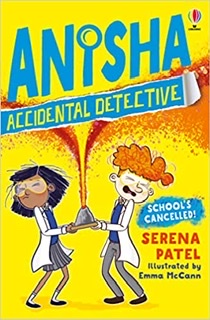
The second in this series sees science loving Anisha hoping to represent her school in the forthcoming science fair. However all does not go as planned and Anisha soon finds that her detective skills will be required to sort out the muddle. Full of humour, this fast paced story with its likeable lead is great fun for readers aged 8 plus.
Firstly, a confession, I have not read the first in the series and happily it did not affect my enjoyment at all, this book works well as a stand alone. However I feel sure that young readers would enjoy this so much they will want to read the first and indeed the third book, a taster of which is included in the final pages of School’s Cancelled!
In this sequel Anisha can’t wait to show off her volcano project at the science fair and, she hopes, maybe win the prize trip to the national space centre. But when the volcano explodes and floods the school, Anisha is disqualified. She knows that it wasn’t her fault so feels that this is unfair. Together with her best friend Milo, his pet rat, and a high-school vlogger she sets out to catch the true culprit. Interspersed with the mystery and the school setting is Anisha’s home life which adds so much to the enjoyment. The multi generational family, the forthcoming birthday celebrations for Grandma and the friction with newly acquired ‘cousins’ give the story an added depth. The reader feels immersed in and part of this bustling, warm and likeable family.
Serena Patel has drawn from her own experience to create this narrative and thus allow children to see themselves in an adventure that is accessible and enjoyable for all. This is not an issues driven drama but a highly amusing, kind story starring in Anisha a ten year old British Indian girl from a mixed Punjabi and Gujarat background. At a time when only 4 per cent of children’s books feature a character from a minority ethnic background this is vitally important. In addition I love the narration by Anisha as Serena Patel has, I think, captured the voice of a girl this age wonderfully well. I can hear children I have taught in her speech and manner and this makes the book feel believable and will do so for young readers too. In addition to being likeable and relatable Anisha is also an inspiring role model, an added bonus.
The book is illustrated throughout by Emma McCann and her entertaining and amusing touch adds to the overall enjoyment. The use of fonts, the helpful footnotes describing the different foods and the science experiment and recipe complete the package and make this even more inviting to children. Having read only good things about the first in the series I was hoping that this would be an enjoyable read. It was, very much so and I would recommend this to children aged 8 upwards. A lovely, happy book with a thoughtful message for its readers.
I should like to thank Fritha Lindqvist and Usborne Books for my review copy.
You may enjoy this interview with Serena Patel in the Federation of Children’s Book Groups website in which she explains how she became a published author.
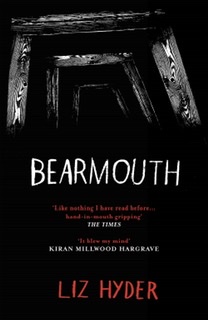
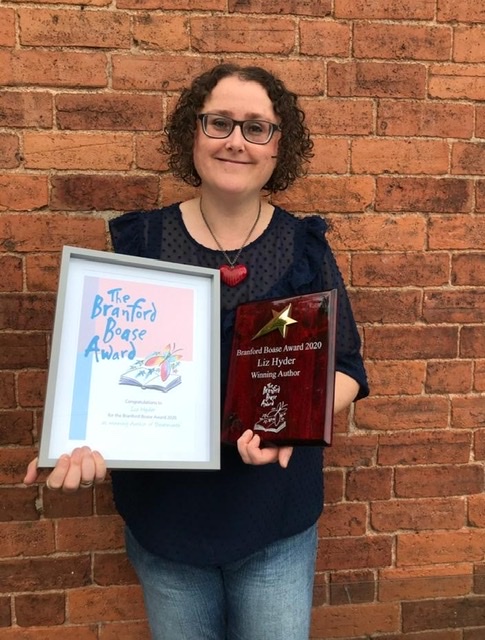
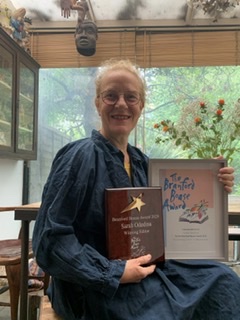
The winners of this year’s award to the author and editor of the outstanding debut novel for children and young people has been announced by last year’s winner Muhammad Khan in an online ceremony. This year’s Branford Boase Award was presented to Liz Hyder and her editor Sarah Odedina for the powerful dystopian novel, Bearmouth published by Pushkin Children’s Books. In an exceptional year for debuts, Katya Balen and her editor Lucy Mackay-Sim were awarded Highly Commended for The Space We’re In.
Based on real-life stories of nineteenth century child miners, Bearmouth is set in a deep underground mine, and told in a distinctive dialect, invented by Hyder and maintained throughout.It was also named winner of the Waterstones Children’s Book Prize Older Readers Category in July. Muhammad Khan says of the winning novel: “Bearmouth is a tour de force of a page turner with an intricate and stylised plot. Liz Hyder has created a gritty world for her hugely likeable protagonist, Newt, and a unique language which evolves as the exciting story unfolds. Original and unforgettable.”
Chair of the judging panel and founder of the award, Julia Eccleshare, summarised the wining book’s appeal, “We all agreed that Bearmouth is the outstanding novel on the list, a hugely brave and impressive piece of writing, testament to the skill of both author and editor in successfully creating such characters and such a narrative. It’s a book that sends shivers down the spine, truly astounding.”
Now in its twenty-first year, the Branford Boase Award was set up in memory of award-winning author Henrietta Branford and her editor Wendy Boase of Walker Books, who both died in 1999, and is unique in honouring editor as well as author. It is regarded as one of the most important awards in children’s books and has an impressive record in picking out star authors at the start of their careers. Previous winners include Meg Rosoff, Mal Peet, Siobhan Dowd, Marcus Sedgwick and Frances Hardinge.
Liz Hyder
Sarah Odedina
Winning author, Liz Hyder says: “The Branford Boase Award is such a prestigious award and I love that it celebrates both editor and author. It was a true partnership to work with Sarah on Bearmouth. I learnt so much from her and can honestly say that the experience changed my life in so many ways.” This award highlights the importance of the editor and the special chemistry between the writer and editor that results in great fiction. This became more apparent during the interesting conversation following the presentation of the award. As Sarah Odedina says, “To win the award in partnership with an author confirms that this task of bringing stories to young readers is a work of collaboration and one that is most successful when author and editor listen to one another and enjoy the process of creating a novel.”
It is encouraging to note the quality of new fiction being published at present and as submissions in 2020 were particularly strong, the judges chose to award Highly Commended to Katya Balen and her editor Lucy Mackay-Smith for The Space We’re In, a moving story about a boy and his relationship with his younger brother, who is autistic. A book Muhammad Khan describes as, “An incredible first novel.”
I thoroughly enjoyed the online ceremony itself and the discussion between Muhammad Khan, his editor Lucy Pearse and judge, Sue Bastone was, I thought, illuminating. Muhammad described how his own experience informed the narrative of his prize winning novel, I am Thunder. As a teacher and then an author he felt it was important to capture the voices of the pupils he taught. His comment that “when you sideline and other a section of society you leave them vulnerable.” explains in part the inspiration for his story. I am Thunder is now being used as a school text opening up honest discussions about challenging subjects such as Islamophobia. Although progress has been made in recognising the problems there is still more to be done.
As Julia Eccleshare said during the ceremony the judges of this important award are “looking for a book that will touch a reader” and explain what is going on in the lives of children and young people. Long may this award continue to do so!
As well as encouraging publishers to find and promote new writers, the Award sets out to alert readers of all ages to the work of interesting newcomers. This is welcomed by all who enjoy reading books for children and young people and discovering new talent. Many congratulations to the winners and thanks to the organisers and the judging panel for making this possible. For more information about the award and the Henrietta Branford Writing Competition please visit the official website.
This lyrical story by award winning author Patricia Forde accompanied by Nicola Bernadelli’s stunning illustrations is based on the mythical Irish island of Hy Brasil, which, according to tradition, lies off the west coast of Galway. The book was commissioned as part of the Galway 2020 European Capital of Culture programme and is also published in Irish by Little Island Books who have published this English edition. The legend of Hy Brasil describes how this beautiful island is said to appear just once every seven years with its next scheduled appearance due in 2020. Perfectly appropriate!
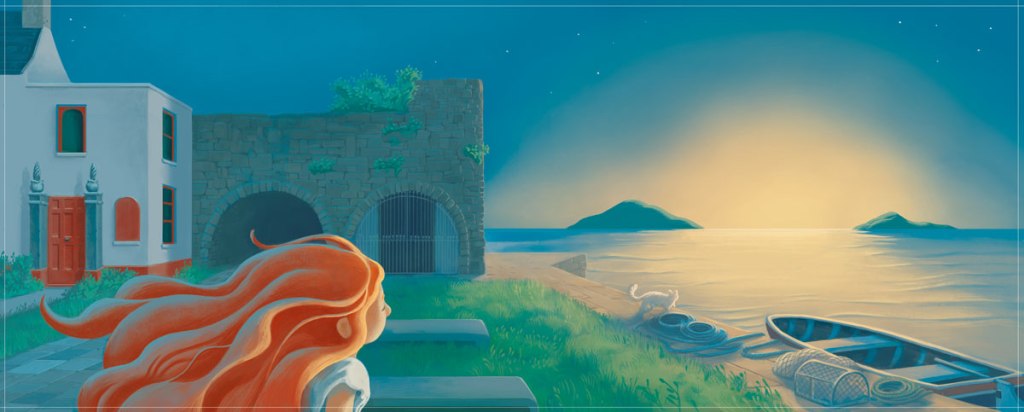
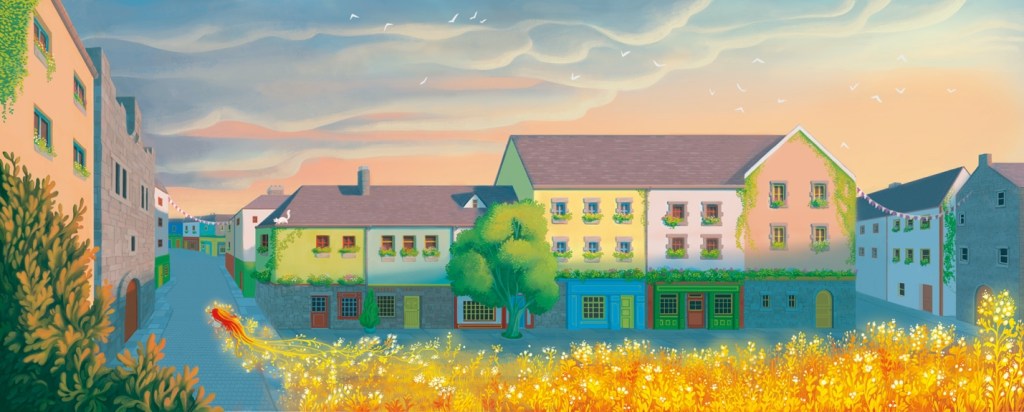
The story with its magical quality and the illustrations showing familiar Galway scenes suffused with a golden glow combine in a beautiful book. A young girl named Fia, who lives in the town, gazes from her window hoping to spy the mysterious island which she so longs to visit. In the middle of the night she magically makes her way across the calm bay to discover a secret land where fabulous creatures live and enjoy the beautiful setting. To the Island has a fairy tale appeal that children will find engaging.
On the first day of the blog tour organised by Little Island Books to celebrate the publication of this charming picture book I am delighted to share Patricia Forde‘s thoughts on the stunning illustrations by Nicola Bernadelli and the links to her home city.
Nicola Bernardelli is Italian. He has never been to Galway and yet his illustrations in To The Island perfectly capture not just the look of the old town but the atmosphere too. There is a stillness about his nightscapes in particular that resonates with me. I grew up on Market Street right in the heart of Galway city, only it wasn’t a city then, but a small sleepy town in the west of Ireland. Three stories up, in a house that was two hundred years old, was my bedroom. The window with its deep window seat looked onto the street, and on a winter’s night, when I opened that window, there was a magical hush about the place. Nicola has captured that feeling, and I can feel that hush again in the spread where Fia is running through the streets in the moonlight.
In that same spread, you see the spire of The Collegiate Church of St Nicholas which dates back to 1320 and is the largest Medieval church still functioning in Ireland and is situated at in Lombard Street, down at the bottom of Market Street.
The church is dedicated to St Nicholas of Myra, patron saint of children and of sea farers. The bell ringers woke me every Sunday morning, the pealing bells competing with the seagulls, who are the soundtrack to Galway life. I grew up listening to stories about the church at the end of our street and indeed it had a long and interesting history. Christopher Columbus visited it on one of his unsuccessful attempts to get to the new world, and Cromwell’s soldiers galloped through it, beheading statues and leaving the track of the horses’ hooves on the stone floor.
In another spread, Fia runs down to the old stone arch before leaving for Hy Brasil. This is the famous Spanish Arch and Nicola captures it perfectly. In Irish it’s called The Blind Arch ( An Poirse Caoch) The arches date back to 1584 and were built as an extension to the 12th century Norman built wall built to keep out unfriendly visitors.
Galway is also a place of castles. I grew up near the most famous one – Lynch’s Castle. From our living room window we could see the remains of the old cobbled yard where once the horses of the castle were housed. The castle was owned by the Lynch family, and the first story I ever wrote, at about age ten, was inspired by the story of how Lynch hanged his own son. James Lynch Fitzstephen was Mayor of Galway in 1493 and he executed his hapless son after he murdered a Spanish sailor so bringing the term ‘lynching’ to the English language, according to folklore. The two men fell out over a beautiful girl and I wrote the story from her point of view.
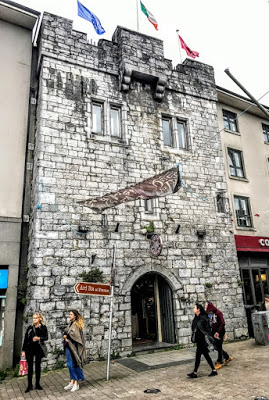
On Quay Street, you can still see Blake’s Castle. It was built in 1470 by the Blake family who were said to be descended from one of the Knights of the Round Table. When I first read about that it sent me running to the library to read all about Arthur, Lancelot and the famous knights. In To The Island Fia passes it on her way back home.
I love Nicola’s illustrations and I think they breathe life into the story of Fia and Hy Brasil. We had been looking forward to welcoming Nicola to Galway in May for the launch of the book but unfortunately the pandemic put paid to that plan. Hopefully he will get to see Galway in real life very soon.
Patricia Forde
Thank you very much to Patricia for sharing this fascinating insight. When next possible I would love to revisit Galway, a place I remember from my childhood.
To the Island is published on 10th September. Please do follow the rest of the blog tour to find out more about this special story.
Welcome to the first edition of Reading Matters for the new academic year and I hope it has been a restful summer despite the fact that this has been such a different one for us all. This weekly recap of some of the news, reviews and articles that I have enjoyed or found useful first started as my 2020 New Year resolution and no one is more surprised than me to find myself still compiling them in September. However as, despite everything, there is still children’s book news aplenty and better still a book loving community to share it with here is the latest offering. After a long gap this is bit of a bumper issue, so perhaps settle down with a cuppa and explore!
What I’m reading and what I read over the summer…
One rather special highlight of the summer was the online course run by Nikki Gamble and the Just Imagine team, Exploring Children’s Literature, when for one session per week for six weeks we looked at different aspects including, fairy tales, poetry, well being, taboo subjects, nonfiction and humour. This will be taking place again next year and I can wholeheartedly recommend it. Put a reminder in your diaries now! I am currently reading Nikki’s excellent book which is both fascinating and informative.
I have read a variety of books over the last few weeks and have enjoyed them all for differing reasons. After the War by Tom Palmer was a book I read at the end of July and has stayed in my memory since. Beautiful, thoughtful and respectful this is an important story and suitable for Year 6 and older. Many others have sung the praises of this special book over the last few weeks and I would urge you to read this if you have not already done so.
Amongst the other books I have read and enjoyed is The Midnight Library by Matt Haig which I felt lived up to the prepublication hype. The Unwinding by Jackie Morris is a soothing, uplifting and beautiful book to dip in to as needed; reading can be the best medicine at times. Sequin and Stitch by Laura Dockrill and Sara Ogilvie is another thoughtful children’s book published by Barrington Stoke and My Name is River would be excellent for Years 5 and 6 and links perfectly to studying the Rainforest. Among the many books being published this week is The Key to Finding Jack by Eva Jozefkowicz which is a mystery with a difference and a story I very much enjoyed.
Resources and news…
Reading for Pleasure – Resources to Help Children Enjoy Books at Home – when schools temporarily closed in March I compiled a list of resources to help schools and families at that time. Many of these links will still, I think, be useful so I am including them here in case they will help over the coming weeks.
The Literacy Calendar 2020 – 2021 – this wonderful and extremely helpful resource created by Sadie Phillips (Literacy with Miss P) was included in the last Reading Matters but I’m mentioning it again as it is so useful when planning for the coming academic year. It includes a mixture of writing and reading competitions, events, days, weeks, festivals and shadowing schemes suitable for primary pupils. It is available to download in both PDF and Word formats.
Reading is Magic Festival – Have you seen the amazing line up of bestselling authors & illustrators for the Reading is Magic Festival? Six days of FREE digital events designed especially for schools takes place 27 Sep to 2 Oct. You can find out more and sign up at the link above and there is a list of all the fabulous events here.
MMS Publishers – this link takes you to excellent site featuring catalogues for the coming year from the likes of Lantana Publishing, Alana Max Books, Milet Publishers and more. Thank you to Mat Tobin for making me aware of this site.
Read Me a Story in Year 6: Tips for Reading Aloud – the third in a series of blogposts by teacher Ben Harris this is an excellent and encouraging guide for teachers and school librarians giving advice on how to make reading aloud work for you and the children. Part one with suggestions for books to read aloud in Year 6 can be found here and part two here. A brilliant and generous resource.
Love My Books Newsletter – the latest newsletter for parents and educators from this excellent reading charity is packed with information & ideas including simple ways to support children’s reading, new activity pages based on great books & challenging racism through children’s books.
Branford Boase Award 2020 Zoom Winners Announcement – This special event on 9th September celebrates the announcement of the winners of the 2020 Branford Boase Award for author and editor of the outstanding debut novel for children and to celebrate twenty years of this unique award. This special webinar will feature a discussion with 2019 winning author Muhammad Khan and his editor Lucy Pearse, followed by the announcement of the winners of the 2020 Branford Boase Award and a chance to put questions to them. The event will run on Zoom and is free but make sure you register for the event via the link.
Reading groups and the enabling adult – this informative blogpost on the Just Imagine website explores ways in which teachers can support reading in your classroom through their own reading practice.
September is World Kid Lit Month – this month we celebrate and promote world literature for children. We have the chance to explore the world through books for children and teens. Where will you travel to by book? This helpful website includes links to books by country and information about translated texts.
Qatar Foundation Read Alouds – this would be lovely to link to the World Kid Lit initiative. QFI is releasing read-alouds of various children’s books, working with authors, publishers, and writers from across the Arab world.
Tata Storytime – although mentioned in Reading Matters earlier in the year a reminder as you may be interested in using this YouTube channel to link to World Kid Lit Month. Tata Storytime is a new online kids show where fantastic actors read beautiful picture books. With Authors from African, Caribbean & African American heritage these stories will engage your children. Aimed at Pre-school to 8 year olds,
Top 50 Illustrators Borrowed from Public Libraries – this detailed and informative article by illustrator and author Sarah McIntyre is a must read for anyone interested in children’s books. The power of illustration to nurture readers is apparent to anyone involved in this area and this in-depth look at the current position is both fascinating and important.
The Boy Who Grew Dragons by Andy Shephard Authorfy Masterclass – this latest master class from the fabulous Authorfy team is wonderful. ‘The Boy Who Grew Dragons’ is the perfect series for ages 7-9 and now you can discover where she got her inspiration from, how she plans her stories and more. It’s free to join Authorfy and they provide wonderful support and ideas for children, teachers and families.
First Issue of PaperBound Magazine – this looks great for use with secondary age pupils in particular. ‘A writing magazine for the young, and the young at heart. Our aim is to bring you useful writing advice, brilliant book recommendations, and get you writing creatively. Whether you are a young person, a parent, a teacher, librarian, someone who would like to write for young people or you just enjoy reading MG and YA fiction, we hope you find something useful within these pages.’
Interview with Andre Reece, Editor of Books for Keeps – Books for Keeps has for many years been a magazine that have I found enormously helpful. Jake Hope’s interview with Andrea, editor since 2010 is lovely and an example of the positivity of children’s book enthusiasts. If you have not already discovered Books for Keeos I would highly recommend it.
Simon Smith’s Year 1 – Year 6 Picturebook Lists – last but most definitely not least I want to include these wonderful lists just in case there is anyone who has missed them. Fabulous books, old and new, compiled by a headteacher who loves them and loves sharing them.
Finally, some recent book reviews that caught my eye…
It is impossible to list all the fabulous books that have been published over the summer, particularly as this week has seen a surge of titles but these are just a few for a range of ages and tastes that may tempt.
Jumbo the Most Famous Elephant Who Ever Lived by Alexandra Stewart and Emily Sutton – picture book nonfiction is a wonderful way for children to learn and this beautiful book is an excellent example. In his helpful review teacher Paul Watson describes this ‘cracking read’ and provides suggestions as to how to use this book in the classroom.
Be an Artist Everyday by Susan Schwake and Charlotte Farmer – a pocket sized journal to prompt creativity with ideas, shape challenges and colour tests. In her review Louise Nettleton says, ‘This would be a lovely treat at the start of the new school year. It is no bigger than most notebooks and would slip nicely into a school bag for playtime or lunchbreak activities.’
Mason Mooney Paranormal Investigator by Seaerra Miller – my own knowledge of graphic novels is limited so I rely on the advice of others for recommendations. This great review by Mat Tobin provides a wonderful taste of what to expect from this one. ‘This is a beautifully presented debut, rich in humour and with a diverse cast.’ I’m now very much looking forward to reading this.
October, October by Katya Balen illustrated by Angela Harding – this is a lovely review by teacher Andrew Rough who describes the book as ‘a strong story about relationships and coming to terms with your place in the world’ and excellent for Upper Key Stage 2 (aged 8plus) Perfect for primary school libraries and classrooms and publishes on 17th September.
The Hungry Ghost – H.S. Norup – another lovely review! This time by Rich Simpson. I love the sound of this for Rich says, ‘This was a thrilling, exciting, thoughtful and moving story. It kept me gripped from start to end, desperate to find out more and have the secrets revealed.’ Published on 24th September and another for the shopping lists.
The Wanderer by Peter Van Den Ende – this looks simply stunning. A wordless picturebook that comes recommended by Mat Tobin is definitely going on my wish list and his beautiful review, ‘a ‘visual delight’ would be selling Peter Van Den Ende’s creation short.’, has convinced me to put this one near the top of that list.
The Girl Who Became a Tree by Joseph Coelho; illustrated by Kate Milner – this fabulous review by Ben Harris has persuaded me that I need to get a copy of this book which sounds both intriguing and remarkable. One for older readers of KS3 and above Ben has described this as ‘without doubt one of my books of the year’ which is good enough for me.
That’s all for this week. I do hope that this contains something of interest or a resource or idea that will be helpful. Have a happy weekend with some time for reading and warm good wishes for a happy and healthy Autumn term.
Next week I am taking part on the blog tour to celebrate the publication of To the Island by Patricia Forde illustrated by Nicola Bernardelli so do please look out for this to find out more.
Flick and her older brother Jack have a close bond, spending time together and sharing a love of solving riddles each evening. When Jack goes missing following an earthquake while on a gap year trip in Peru Flick is determined to follow the clues to find her beloved brother. Gradually she realises that perhaps the biggest mystery of all is the person you think you know the best.
Cover illustration by Katy Riddell
After Jack’s disappearance Flick discovers a tiny golden key left by her brother with a message mentioning an ‘SF’. As Flick follows the clues first to try and identify the mysterious SF and subsequently to find her missing brother she forms new friendships, is brought closer to a family member and learns much about the brother she thought she knew so well. Alongside her quest Flick is also writing her own mystery story at school and learning of the secret treasures from long ago in ancient Peru and these combine in a book that has strong themes of family, love and friendship.
This is such a clever and thoughtful book. I enjoyed trying to unravel the clues alongside Flick who is an immensely likeable character. The family relationships are depicted with warmth and understanding and these are good, kind people who may sometimes get things wrong. There are lessons here to be learned on the danger of making assumptions, of not allowing children the freedom to follow their own paths and passing judgement without truly knowing the people we are dealing with. Ewa Jozefkowicz‘s writing is filled with an understanding that encourages you to empathise with each of the characters. This would be a fabulous book to prompt discussion and I can see this working well with and being enjoyed by readers from Year 6 upwards.
If we have learned anything at all from 2020 it is not to take things for granted. Most especially not the people who matter to us the most. This is a mystery story with a difference. I loved the gradual development of the separate stories within the story and how they merged to create a whole that encourages the reader to think about the way in which we are connected to one another. Each life in a family and in a community touches others in ways that may not be immediately apparent as we rush around in a state of busyness. Acts of kindness may have lasting effects and create a web of unexpected events. Ewa Jozefkowicz has captured this beautifully.
I should like to thank Fritha Lindqvist and Zephyr Books for kindly providing my review copy.
In her helpful guide to nurturing readers, The Book Whisperer, teacher Donalyn Miller prefers the term ‘dormant readers’ to the more widely used ‘reluctant readers’ arguing that these are children who have not yet found the right book to hook them into the reading habit. Barrington Stoke have for more than twenty years been working to help these dormant readers find that special book. Their editing process ensures that the books they publish are more accessible, presented in a special super readable font and on cream paper to reduce glare. But they know that what really hooks children is a good story. These two books, published on 3rd September, although different in themes and content are both good stories that will encourage more children to see that reading for pleasure is for them too.
Noodle the Doodle by Jonathan Meres illustrated by Katy Halford
As a school librarian I was frequently asked by children to show them where they could find ‘the funny books’ and Noodle the Doodle would definitely be on the funny shelf. This has huge child appeal. Jonathan Meres has brought a typical primary school classroom to life in this happy story and there is a great deal in this adventure that would be reassuringly familiar to young readers.
When Mr Reed tells the children that they have a new member of the class starting that day none of them expected him to have four legs, a noisy bark and a shaggy coat! However Noodle the dog quickly makes himself at home, listening when the children read him stories and ‘helping’ to deliver messages to other classes. When the class go on their trip to the seaside of course Noodle must go with them, even if this may have more chaotic results than anyone expected.
Jonathan Meres has taken care to ensure that young readers will find someone with whom to identify in this story. The class is made up various diverse types such as the little girl with all the answers and an impressive general knowledge, the class clown who wants to make his friends laugh, the shy child who gains confidence reading aloud to Noodle and, importantly, a boy who worries and is wary of dogs. The teacher is kind and comforting and all the mayhem is resolved in a happy ending that leaves the way clear for there to be more adventures with Noodle. A really lovely story to recommend to newly independent young readers exploring their personal reading tastes, with entertaining illustrations by Katy Halford completing the appealing package. There is a downloadable Doodle activity sheet available here.
The House of Clouds by Lisa Thompson with illustrations by Alice McKinley
Lisa Thompson’s ability to both capture and carefully convey children’s emotions is displayed in this thoughtful and tender story about family relationships and coping with loss. A tale in which love, friendship and the magical power of imagination are brought together to comfort, reassure and also to encourage us all to stop and take notice of what really matters.
As this story opens Tabby is unhappy. Her best friend has abandoned her and since Grandad has come to live with her family their home life has been disrupted. All the changes made to accommodate an elderly person result in Tabby no longer feeling comfortable in her own home. She struggles with Grandad repeating the same old stories and does not really believe all of them. Worst of all she has to take Grandad’s smelly dog for a walk each day after school. Yet an unplanned visit to a mysterious, old house whilst walking Grandad’s dog followed by tragedy changes Tabby’s views.
This is a lovely story leaving the reader with much to think about. It is an important reminder to cherish those we love, to savour every minute, focus on the world around you rather than the artificial one on social media and to value true friendship. Yet again with these novellas published by Barrington Stoke short in length does not mean brief in impact. Despite dealing with themes of grief and sadness this is not a depressing read for children. Far from it in fact, it highlights the power of friendship and love to make things better and also the possibility that magic does exist if you can learn to trust your imagination.
One of my favourite books as a teen was Jane Eyre by Charlotte Bronte, a book that caught my imagination and lingered in my memory for years. As an adult I read and enjoyed The Tennant of Wildfell Hall by her sister Anne. However despite several attempts the work for which their sister Emily is renowned has never had the same effect on me. This is in truth an understatement, and now is probably the time to confess that I actively disliked the leading characters and have never managed to finish reading the book. My relationship with Wuthering Heights goes back a long way. I’m of the age to remember the Monty Python sketch in which Heathcliff and Cathy communicate by semaphore across the Yorkshire Moors. No wonder I struggled when this prompted my first attempt at reading this classic! Fast forward a couple of years and Kate Bush gave the book a whole new appeal so older and hopefully a little wiser I had a second attempt. Although more successful I still found the Yorkshire dialect and the complex plot unappealing and started to wonder what I was missing. Over the years TV adaptations and a guilty conscience have encouraged me to try and engage with this highly rated classic and I simply couldn’t. I had admitted defeat.
However Barrington Stoke and Carnegie Award winning author Tanya Landman have come to my rescue. Earlier this year the publication by this brilliant team of a retelling of Jane Eyre captured what made that particular book special for me and made it accessible to a wider audience. I enjoyed that version immensely. Could they make this reluctant reader finally understand the appeal of this classic beloved by so many? The short answer is, yes. Let me explain how.
Firstly it is, I think, a stroke of genius to retell the story from Cathy’s point of view. She is a complicated character, as a child unmanageable and wild and as a young adult selfish and at times unkind, even cruel, so allowing the reader to observe and experience events through her eyes is enlightening. Heathcliff is not a conventional romantic hero by any means; his desire for revenge coupled with Catherine’s self absorbed wilfulness is crucial to the plot. Possibly this is why I struggled with the book when I was young as I mistakenly expected a romantic novel when in fact it is a tragedy. Tanya Landman’s powerful retelling captures all the drama, passion and conflict so well. In the opening chapters she conveys how much the wildness of the Yorkshire Moors means to the young Catherine. The child loves nature and feels at one with the landscape she inhabits and unhappily constricted when she is confined to the home. Cathy’s wild ways put her at odds with those around her but encourage the bond which rapidly develops with the young orphaned Heathcliff when he is brought home by her father.
As the story progresses and the conflict between family members and others grows the sense of claustrophobia and impending doom loom ever larger. The story has lost none of its darkness in Tanya Landman’s shortened version but is made more understandable and accessible. The bond between the two troubled characters is depicted with care showing how Catherine and Heathcliff are almost like twins in their thoughts and attitudes. There can be no happy ending for this couple and the reader accompanies them through their harsh childhood, foolish marriages and pain.
I was impressed at how Tanya Landman managed to retain the overall tone of this dark tale and yet still ensure that young readers are able to engage with the story. I can imagine this would encourage discussion about the motivation of key characters and provide an opening to the novel itself for some. This would be an invaluable book for secondary schools and will, I am sure, bring this novel to a wider readership. It definitely worked for this sceptical reader!
Published on 6th August and as with all Barrington Stoke books presented in a dyslexia friendly format this book would be excellent for reluctant readers and for more confident readers looking for a quicker read. With content suitable for teens this book has a reading age of 9.
I should like to thank Kirstin Lamb and Barrington Stoke for providing my review copy.
Over the last few weeks several new books have been published for children including some that were delayed due to the pandemic and I would like to share just three of them. Children overcoming fears, making friends, having adventures, magic, humour, dragons, space and rainforest exploration ensures that there is something here for all tastes and every one of these should be popular in primary school libraries and classrooms.
Sam Wu is Not Afraid of Space by Katie and Kevin Tsang illustrated by Nathan Reed
This is the last in the series featuring Sam Wu, a likeable if slightly unlikely hero, and no doubt young readers will be sad to say goodbye. This is a fast paced and funny story yet with a reassuring and thoughtful theme of making friendships work in difficult circumstances.
It is the summer holidays and Sam is given the chance to go to Space Camp with his friends and as a huge fan of the TV series Space Blasters Sam has never been more excited. He is desperate for his friends to enjoy it too and would love to work together with them to win the Space Challenge Trophy. However to do this Sam has to conquer his fears and cope with others who may be reluctant team players which may be an even bigger challenge.
This entertaining series tackles common childhood fears and this final instalment would be reassuring for children who may have misgivings about being away from home on residential school trips. There is a lot of fun in this adventure but an insightful look at children’s friendships too. I particularly liked how Sam was depicted as a kind, considerate team leader and as a character he has developed a braver attitude which may inspire youngsters. There is a positive message of the value of tolerance and learning to work as a team running through the story. However children very quickly recognise a preaching tone and in my experience avoid books that adopt one, thankfully Katie and Kevin Tsang have brilliantly avoided this and the story is great fun whilst still containing a valuable life lesson.
The engaging format of this book with its use of illustrations, graphics, differing fonts and amusing footnotes makes this an attractive read for children moving on to slightly longer independent reads; wonderful for readers who may find pages of dense text a little daunting. A jolly read but containing a great deal of warmth and understanding too
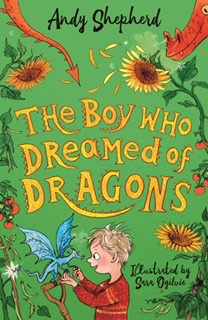
The Boy Who Dreamed of Dragons by Andy Shepherd illustrations by Sara Ogilvie
We may have thought that this delightful series ended with The Boy who Flew with Dragons but happily we were wrong. Tomas is back and so are the dragons. However the dragons have now grown and Flicker, Tomas’s beloved dragon, is living far away in the frozen North and only visits occasionally, which Tomas finds hard. However dragons are never far away and soon a new baby dragon hatches from Grandad’s dragonfruit tree at the bottom of the garden. Zing is tiny with very large wings and, like the other dragons, rather antisocial toilet habits and very soon, as regular readers may anticipate, magic and mayhem ensues.
However there is a subtle difference in this fourth instalment as we enter a time of change for Tomas and his friends. A new girl, Aura, starts at their school and immediately announces that she is a dragon expert which results in Tomas feeling both confused and a little threatened. However before long the two children are united by their shared interest and find themselves caught up in a new adventure together.
This story is just as charming and amusing as the previous books and I enjoyed the tantalising hints at what the future may hold for Tomas and Aura. The family relationships and childhood friendships are depicted so well and I particularly like the close bond between Tomas and his little sister Lolli. Told with warmth and kindness this is a lovely adventure full of friendship, magic and secrets and the lovely illustrations by Sara Ogilvie capture this perfectly. If you haven’t already read any of Tomas’s adventures you may like to try The Boy Who Grew Dragons which is the first in the series. More good news is that there is another adventure due to be published in 2021! There are some fabulous resources linked to the books on Andy Shepherd’s website.
My Name is River by Emma Rea
Perfect for young readers who enjoy adventure stories this exciting read also has a strong ecological theme running through its engrossing plot.
Dylan has dreams for the future. Perhaps they are simple dreams but they matter greatly to him; all he wants is to spend time with his friends in the Welsh countryside and grow up to follow in his father’s footsteps on the family farm. Then all his ideas and plans are swept away by a global pharmaceutical company who want to purchase the family farm. Dylan resolves to stop them and save the farm he loves so much. Together with his new friend Floyd Dylan sets off to put things right but his journey will take him to the Amazonian rainforest and dangers that he never anticipated.
With short chapters, a swiftly moving plot and a likeable protagonist I think this will be popular with a wide readership. Emma Rea writes convincingly and her research of the settings shows in the descriptions of Salvador and the rainforest itself with these settings brought vividly to life. Lucia, the street child who comes to Dylan’s rescue, is a wonderful character. Brave, compassionate and with a delightful turn of phrase thanks to learning English through a pocket thesaurus she and the more reserved Dylan form an unlikely but strong bond. A villain who in the best tradition of children’s books will have readers desperate for their demise and many thrilling moments add to the enjoyment.
In addition to being a great adventure My Name is River would be a perfect book to study in the classroom linking to many important themes such as preservation of our environment, animal testing in science and medicine and our global connections. A children’s book with similar themes to Journey to the River Sea by Eva Ibbotson and The Explorer by Katherine Rundell and highly recommended.
I should like to thank Fritha Lindqvist, Egmont, Piccadilly Press and Firefly Press for providing my review copies.
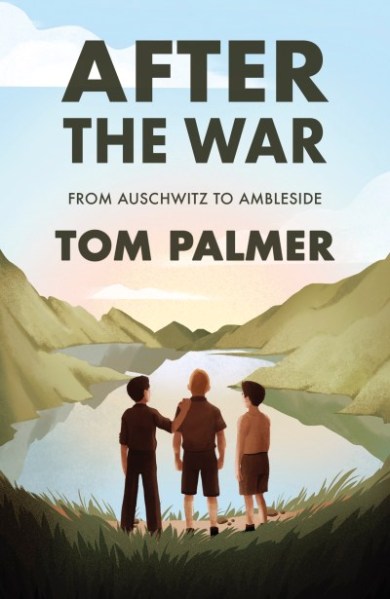
As soon as I read After the War by Tom Palmer I knew that it would be one of my top children’s books of the year. It was inspired by the three hundred child concentration camp survivors who came to the Lake District in the summer of 1945 for ‘recuperation’. The story is told through the eyes of a Polish boy named Yossi, who, with his two friends Leo and Mordecai, has survived the horrors of the camps to find himself in the beautiful surroundings of Lake Windermere where it is hoped they can begin to recover. An important story told with compassion and respect, it is immensely moving and leaves you needing to sit quietly and think about its impact.
It must be daunting to take on the challenge of making the subject of the Holocaust appropriate and understandable for children but Tom Palmer has made it work. In addition to portraying the aftermath of life in the concentration camps he also provides the background to the boys’ lives before the war and this creates a sense of them as people who were part of a supportive community where tradition, religion and family were important. They become real people to the reader and not nameless victims. He also portrays hope for their futures and the way in which they may be able to thrive in a new country helped by the kindness and support of others. There is relevance here to many situations in which we find ourselves in the world today. Many days after I read it the story of those boys, and their families, has stayed with me. The book was published this week and you can read my full review here. I think those who read it will not forget it.
Barrington Stoke, the publishers of this beautiful book, offered me the opportunity to ask Tom Palmer some questions about After the War, its inspiration and the writing process and I am delighted to share his interesting and thoughtful replies here.
Photo: Barrington Stoke Publishers
The subject matter of After the War is both important and challenging and you have successfully managed to convey this within a storyline that is appropriate and engaging for contemporary young readers. Did you know from the outset how you planned to approach the content or did the story evolve from your research?
First of all, thanks for saying that. That’s what I was trying to achieve, so I am glad you think it works okay.
The answer is I knew 100% that After the War had to be based on primary sources. I began with the audio recordings of the Windermere Boys – 300 children who came to the Lake District from the concentration camps in 1945 – on the Lake District Holocaust Project website. It had to start there. I was told by people who have worked in Holocaust education that you must be entirely faithful to the true events. There is no need to make anything up, no need to embellish, anyway. So I listened to hours of recordings and then read the books written about and by the Boys. Then it was just a decision as which of the true stories to work with, with the guidance of my editor at Barrington Stoke and the Lake District Holocaust Project. You can listen to the Boys’ interviews at http://ldhp.org.uk/?page_id=507.
Despite having spent many happy childhood holidays besides Lake Windermere and having family connections I knew nothing of the Windermere Boys. Why do you think they have only received attention in the last few years? How did you learn about them?
My wife heard about them on Radio 4’s Open Country (https://www.bbc.co.uk/programmes/m0000xrc). Then we checked out the FromAuschwitz to Ambleside exhibition at Windermere Library, then I met Trevor Avery, who led the team that put the exhibition together. He has great relationships with the surviving Boys’ and their families. He joins the survivors in schools to pass the story on. He was crucial to the film The Windermere Children coming out earlier in 2020. But all this work has really only happened in the last 10 years.
Gradually I built up what I needed. I also travelled to Auschwitz, then Theresienstadt, the camp where the Boys were liberated from. On a lighter note, to reach the part of the shoreline where the Boys would have played and swum, I had to canoe down from Ambleside to reach that. And I also took part in an archaeological dig on the site in July 2019.
You consulted primary school children at one point when writing the book and shared the story with them. Did this result in you making any changes and if so what type of alterations did you think necessary?
Hugely. I took a late-ish draft of After the War to Grasmere Primary, one of the nearest primary schools to site. The main point they made was that they did not want to be over-distracted by the drama of the events or their emotional impact on the readers: they wanted the facts. They wanted to know what the children’s lives were like before the Holocaust, what happened to the children during the Holocaust and what happened after they came to England. I remember the look on their faces when they said all this to me. It will stay with me forever. Yes, we like the story, but we want to know the facts, to understand the why, the what, the how. So I went through the book and rewrote several sections to make sure I was being clear and not being manipulative.
This is your 50th book. What an achievement! In what ways do you think children’s publishing has changed since your first book? Do you think that your writing style has changed too?
I think children’s publishing is far more decentralised and therefore more child-friendly. A lot of that is down to libraries, booksellers and bloggers, including the likes of the Federation of Children’s Book Groups acting as a two-way conduit between publishers and readers.
Authors are much more in touch with the children’s book world (and mightily grateful to them) and their readers through these channels. Also, I think there is a flourishing of smaller publishers excelling. Look at Barrington Stoke winning the Carnegie with Lark. It feels more bottom-up then top-down.
I’m not sure that my style has changed. To be honest, I don’t know. It probably has. The big deal for me has been confidence. The more confident I have become the more I dare take on bigger subjects. I would never have dared writing from the point of view of soldiers in the trenches or Holocaust survivors at the beginning of my writing career. Now I do dare, so long as I have the expertise of others to guide me. But the main reason I think my recent books – Armistice Runner, D-Day Dog – have done pretty well is because of the quality of editing I get from Ailsa Bathgate.
In After the War and your previous books connected with WW1 and WW2 it is obvious that you have carried out an enormous amount of research. Have you always had an interest in history or has this developed alongside your writing?
To be honest – as I’ve already alluded to – I would never have dared write about history before. I thought you had to be a historian or something that I wasn’t to do so. Then – with the help of another writer and the fact the book was about footballer – I wrote Over the Line. Then I realised that – so long as you do your research as in-depth as you can – you draw the confidence from that. That and enjoying reading history fiction, notably Rosemary Sutcliff and Bernard Cornwell. Gradually I built up confidence.
What type of book do you hope to write next and do you have an ideas or plans you can share with your eager readers?
I am writing a story about the Second World War Arctic Convoys with Barrington Stoke at the moment. It features HMS Belfast and the Imperial War Museum is giving me lots of help with that. That might be called At Sea and should be out in May 2021. As well as that I have been commissioned to write books 7 and 8 of the Roy of the Rovers series by Rebellion. Then there’s this other idea that I have, but I have to stop thinking about that for now and get on with the jobs I have been asked to do!
******
Thank you very much Tom for taking the time to provide such full, interesting and detailed replies to my questions. I have learned a great deal and have found following up the links you provided fascinating too. After the War is a remarkable and rather special book and I would urge others to read it if you can. Sometimes books really do matter and I think that this one does.
There is a flurry of activity in the world of children’s books at the moment with several books being published this week and among the range of titles are these two picture books. They made me smile and I think they will make children smile too.
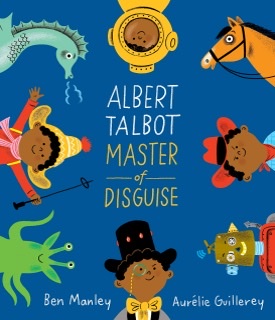
Albert Talbot Master of Disguise by Ben Manley and Aurelie Guillerey
The world can be a daunting place when you are very young, especially if you are a bit of a worrier. The school day is full of opportunities for young Albert to worry; what will he say at Show and Tell, will he stay afloat in the swimming lesson? Perhaps it would be easier if he were someone else. Albert decides to pretend that he is not Albert, a slightly anxious, small boy but instead he is a dangerous desperado, an intrepid explorer and even a galactic superhero. Suddenly things become a lot easier for him.
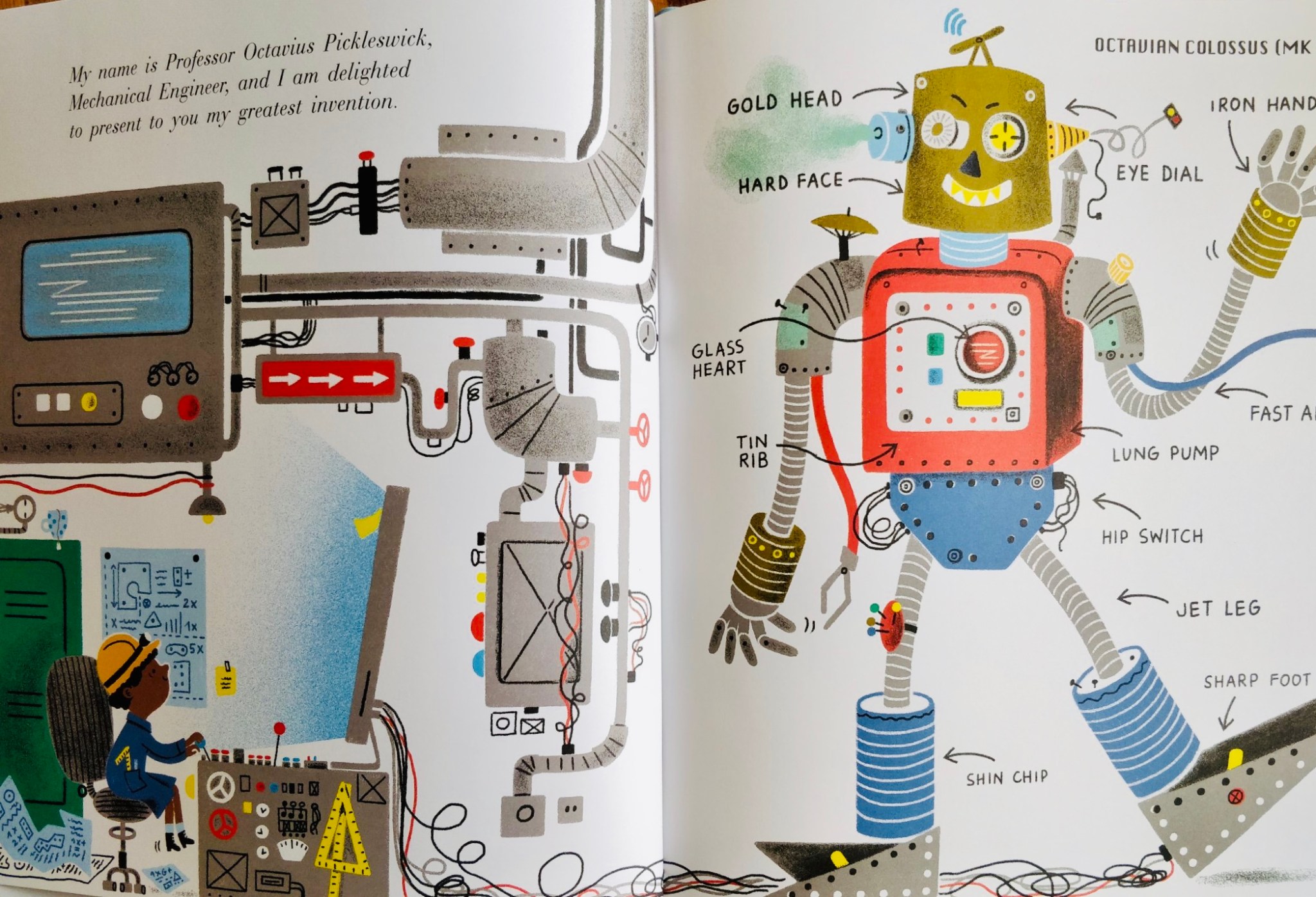
This lovely celebration of the power of the imagination will reassure small children, particularly as the variety of experiences depicted are situations which they frequently encounter. The story is told with kindness and with a great deal of humour. The names of Albert’s alter egos are a delight. Swimming lessons take on a different feel when your name is Zandrian Delaclair, Antarctic Submariner and who can possibly resist your Show and Tell presentation when you are in fact Professor Ocatavius Pickleswick, Mechanical Engineer? This would be brilliant to read aloud. The wonderful, bright and colourful illustrations by Aurelie Guillery are packed with detail and include helpful labels and entertaining additions.
As Albert’s interesting day draws to its close he has discovered the joy that can be found through imagination but also the comfort in being yourself too. A lovely, happy picture book. Oh and Ben Manley tells me that my name is no longer Anne, it is in fact Birta Ungerpup, Professional Waffle Ironer. That made me smile too!
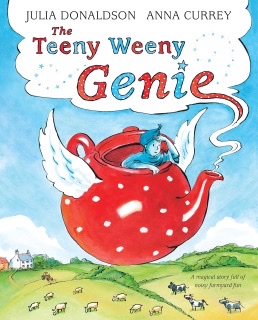
The Teeny Weeny Genie by Julia Donaldson and Anna Currey
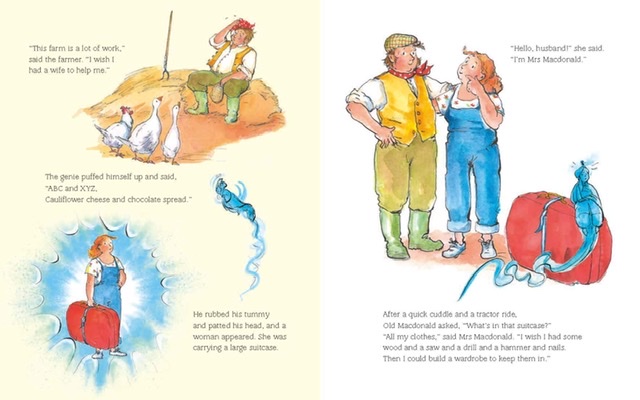
This is an entertaining picture book based on the familiar rhyme, Old Macdonald had a Farm and told with a magical twist. The farmer, Old Macdonald himself, is clearing out the farmhouse when he comes across an old, dusty teapot. Inside the teapot is a genie who is now disturbed from his peaceful slumbers by the farmer rubbing the teapot clean. Before long the the genie finds himself granting the farmer’s wishes, all his wishes. The resulting chaos proves too much for the poor genie who is desperate to escape but is unable to work magic for his own benefit. Thankfully the little genie is not the only genie disturbed by the racket and perhaps genie number two can save the day.
The classic, watercolour style illustrations by Anna Currey complement the text and add to the overall traditional feel of this jolly picture book. This also would be lovely to read aloud and the story encourages involvement by very young listeners with noises to copy and actions to imitate. Quite possibly resulting in a story time as noisy as the farmyard! The Teeny Weeny Genie does contain a message about being careful what you wish for and the ending allows young readers to give some thought to what they would wish for given the opportunity.
Thank you to Two Hoots, MacMillan Children’s Books and Clare Hall-Craggs for providing by review copies. Both books are published on 6th August and can be purchased at all good bookshops. You can search for your nearest independent bookshop here.










 Library Lady