Are you looking for information books to inspire youngsters? This trio of new titles may be just what you need.
Myths and Legends : THE HEROES GODS and MONSTERS who SHAPED OUR HISTORY written by Frances Durkin Illustrated by Nur Ventura
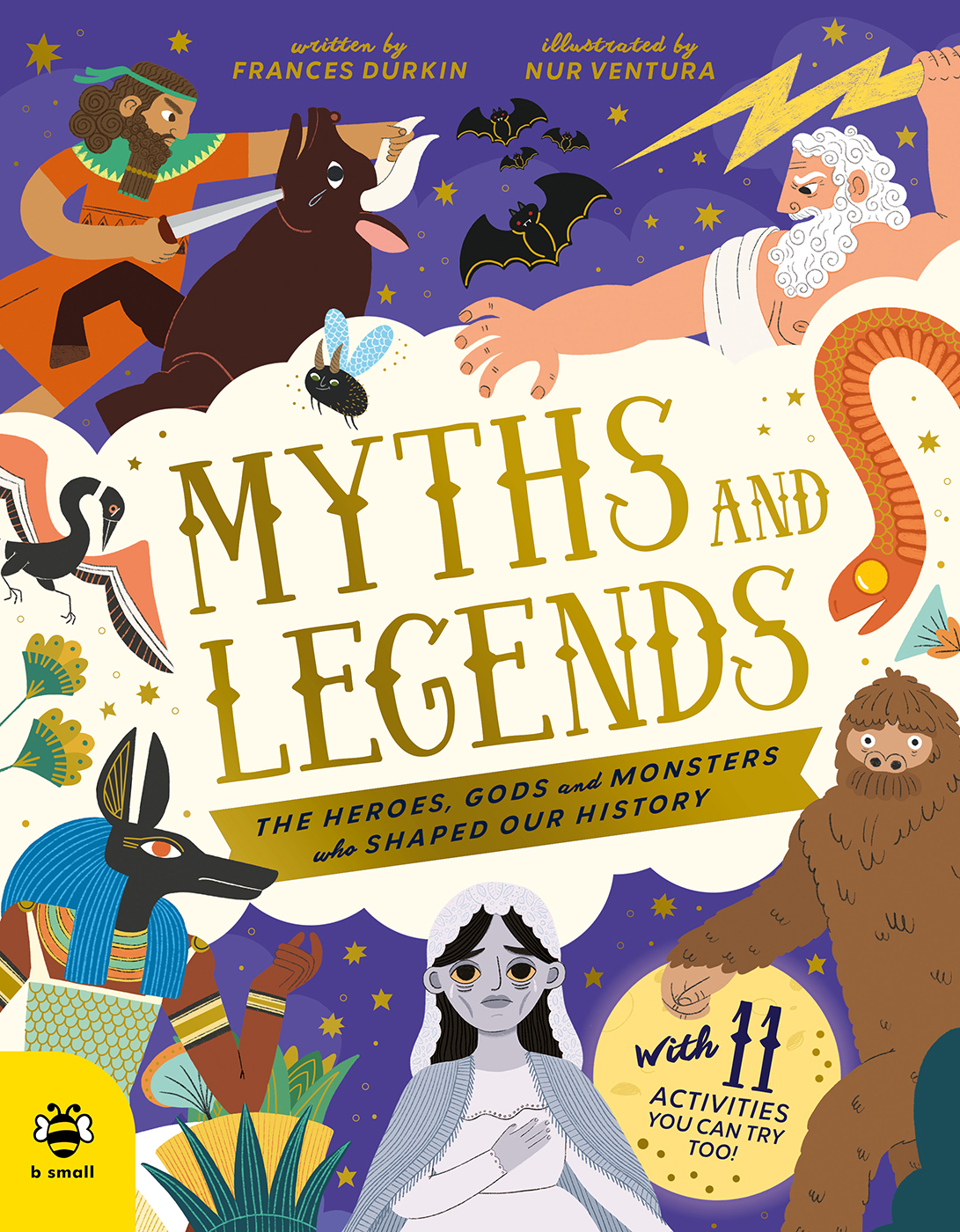
Frances Durkin and Nur Ventura know how to balance reader appeal and engagement with learning in the books on which they collaborate and this new book by the duo is another excellent example of their successful approach. In Myths and Legends readers are introduced to incredible stories from all the world that tell us about terrifying creatures, controlling the weather and creating countries. Children are often fascinated by myths and legends from ancient times up to today and this book accompanies the reader from Anubis of Ancient Egypt up to Bigfoot in the USA and Canada of the 1950s. Among the twenty stories featured are the more familiar such as Isis, Zeus, Heracles, Loki and Dracula but also some that children may not have learned about such as Grandmother Mago, a Korean creation myth or Nanny of the Maroons, a Jamaican rebel legend. This variety adds to both the enjoyment and the learning for youngsters and adults alike making this a good book to share.
Perhaps the most striking feature of Myths and Legends is the inclusion of creative activities and science experiments which bring many of these stories to life for young learners. For example after reading about the double page spead about the story of Anubis and its cultural links a small text box directs the reader to the linked activity in the second section of the book where you can learn how to mummify a piece of fruit. The story’s practical suggestion is cleverly linked to the myth each time such as designing a coat of arms for the Lancelot story of making a minature rock garden for the Grandmother Mago story. This is an inspired way in which to involve children in the myths and legends they have just learned about and increases the relevance of them to today’s world.
The presentation of the book is excellent, marrying the informative text with vibrant illusrations which increases appeal and engagement. There is also a comprehensive and well executed glossary including specific vocabulary such as ‘Aaru: the place where good souls go in the ancient Egyptian afterlife‘, and more general such as ‘Fearsome: very, very frightening!’ A wonderful information book with a broad appeal Myths and Legends is published on 3rd September by b small publishers aimed at readers of approxitely 8+ and I would like to thank Sam Hutchinson for my review copy.
How To Understand & Apply AI! by Sam Hutchinson and Ste Johnson
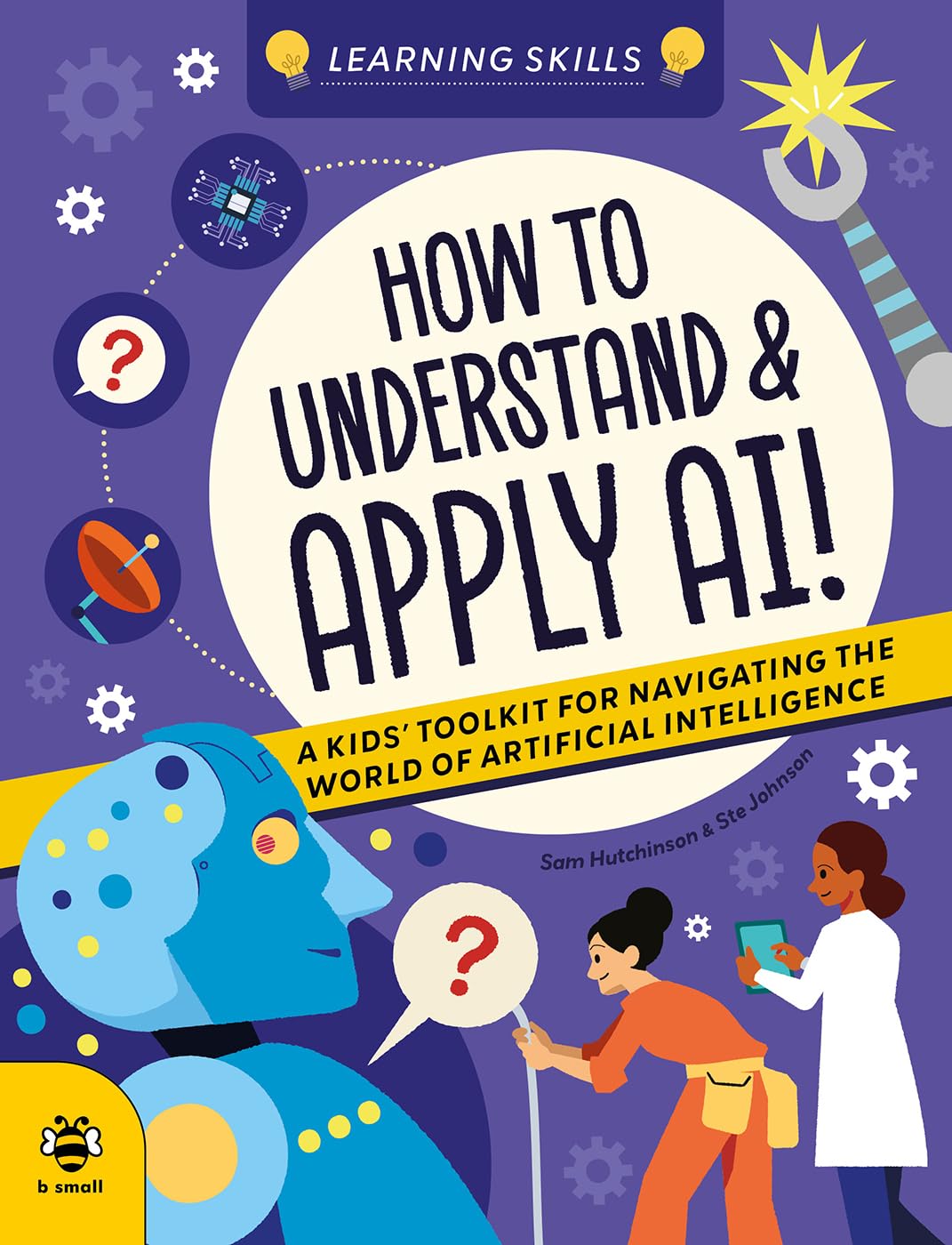
Almost everyday one reads a new article about AI, its use and misuse, the pros and cons of the world of artificial intelligence and how to cope with its impact. It can be bewildering for adults so how can children learn about and understand this new machine? B Small publishing have an excellent series of book on Learning Skills and the latest title in this collection is a perfect toolkit for children navigating the world of AI. The information is conveyed in clear and simple language with the use of text boxes, charts and graphs ensuring that facts are presented in a readily accessible manner. Colourful and well designed this book has an instant appeal and is less intimidating than full pages of text.
The content of How to Understand and Apply AI! is also carefully conveyed with the first double page spread asking, What is AI? and describing both the good and bad aspects of artificial intelligence. The following pages are all tagged with ‘AI in the World’, ‘How AI Works’ or ‘Types of AI‘ making the book easier to navigate. For example under the tag ‘AI in the World’ are examples such as pedestrian crossing sensors, and AI uses in history by people such as Alan Turing. How AI Works looks at facial recognition technology, the necessary inputs to enable the machine to make decisions, and how it organises information. Definitions of specific vocabulary are included throughout and there is also a helpful glossary at the end of the book. Children will also learn about bias, how to spot fake news and understand more about AI’s impact on us all. The content has been checked by an AI consultant, George Walkley, which ensures that this informative and reliable book is an excellent starting point for children who are beginning to learn about the subject. This would be an excellent reference book for KS2 school libraries and classrooms and is a useful guide for adults too! Published on 1st October and I would like to thank b small publishers and Sam Hutchinson for providing my review copy.
Scientists Making a Difference: 47 Inspirational Scientists Changing the World and How You Can Join Them by Dr Shini Somara illustrated by Manuel Sumberac and Adam Allsuch Boardman
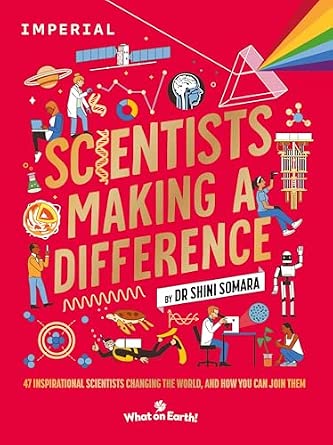
This collaboration between award winning engineer Dr Shini Somara, Imperial College London and The Gatsby Charitable Foundation hopes to inspire young people to become involved in the broad field of science in some way. Each of the scientists included are working on projects that will benefit us all and the different specialisms they represent range from AI and astrophysics to neuroscientists and zoologists. Presented in an interview format which ensures a more personal approach to the subject readers will learn not only about the individual’s achievements and motivation but also their route into scientific employment. The book answers questions about why these professors, entrepreneurs, technicians and apprentices do what they do and helps children think about the questions they would like to ask of them and about their own futures. The range of people included should ensure that youngsters reading can find someone with whom they can relate and maybe be inspired by. The scientists include people like Jenny Linden who is tracking wild African dogs to help protect them from climate change, Dr Luke Allsopp who is working to understand how bacteria causes infections in people with Cystic Fibrosis and trying to improve treatments and Professor Eleanor Dommett who is researching ADHD in the hope to make education more accessible and helpful for everyone. This is just a brief taste of the different areas explored and the wide ranging subject matter is impressive.
The Gatsby Charitable Foundation, set up by Lord Sainsbury is working to strengthen STEM education in secondary schools and also help build the UK’s future technical workforce. They have generously arranged for every state secondary school to receive two free copies of the book as part of a kit that includes a teachers guide suitable for KS3/KS4, a timeline and 12 posters covering topics from the book. The topics explored in Scientists Making a Difference include: Decoding Data, Understanding the Brain, Nurturing Nature, Generating Clean Energy and Feeding the Future.
This is another high quality title from What On Earth Books, well presented, packed with information and with QR codes throughout the book which will take you to videos where you can meet the scientists and learn more about their work. I should like to thank the publishers and Laura Smythe for providing my review copy.
Discover more from Library Lady
Subscribe to get the latest posts sent to your email.


Super reviews Anne. All three of these books sound very informative and it’s great to see that BSmall are starting the important work of explaining AI to children.
LikeLike
Thank you, Veronica and I’m sorry for the extremely belated reply I’m a big fan of BSmall’s books and this one on AI is particularly useful and well presented. It would definitely be useful in school libraries too.
LikeLike