Appealing facts for young readers, a graphic novel mystery set in Nigeria, a time-slip story for would be scientists, a thought provoking chiller, a football story with a social conscience and a guide to cancer for young people and their families.
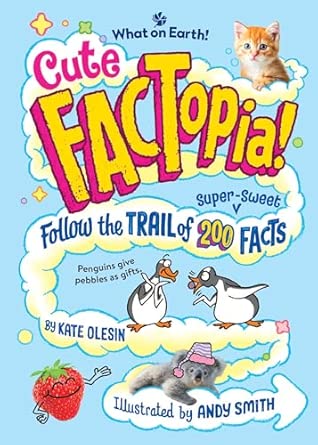
Cute FACTopia: Follow the Trail of 200 Super-Sweet Facts written by Kate Olesin illustrated by Andy Smith Publisher What on Earth Books
This pocket sized latest edition of the popular FACTopia series takes children on a trail through appealing facts including why baby owls sleep on their tummies, the smallest teddy bear and surf boarding dogs. It is not all animal themed however with the trail deviating to take in a ‘shy plant’, ancient baby rattles and the accidental invention of the snow globe. Each fact is linked to the next in an ingenious manner and sometimes the trail branches out to a totally different, but still connected, part of the book. Readers can follow the trail from start to finish but could also enjoy dipping into this in a more haphazard fashion. The appealing presentation includes witty illustrations, cartoons and photographs cleverly designed to encourage youngsters to pick this up and browse. This, I think, would be popular in school libraries but would also be a good summer holiday purchase for families. This is a jolly package combing fun with learning and suitable for readers of about 8+.
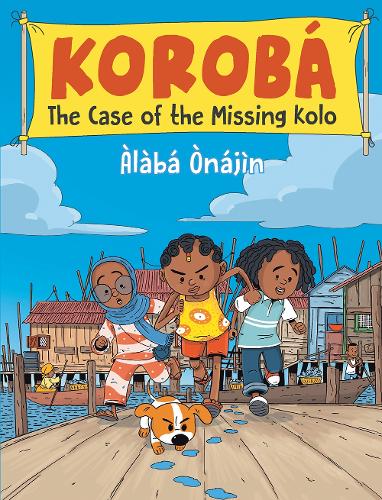
Korobá: The Case of the Missing Kolo by Àlàbá Ònájìn Publisher Scallywag Press
Ten year old Korobá knows everyone in her Nigerian fishing village. Between doing jobs for her mother she wanders through the local community with her friends Saidat and Joba and her little dog, Popi. When Saidat’s wooden piggy bank is stolen the young friends are shocked to think that there is a thief in their midst and resolve to find the culprit. Àlàbá Ònájìn enjoyed detective stories such as the Famous Five and the Nancy Drew mysteries but in particular the Tin Tin books. He wanted to create a series of stories that embraced all that he enjoyed so much in the books of his childhood but set in his home country of Nigeria. Korobá’s story told in a graphic novel format does just that. It is set in a real life fishing community in Lagos called Makoko and this first mystery incorporates the importance of friendship and features some likeable, intelligent characters and of course a little dog just like in the books that inspired the author. Readers learn about the local feast day and its customs as part of the plot and there is a helpful glossary too. I particularly like how some clues are depicted in the illustrations themselves and the plot is conveyed with enough tension to keep youngsters interested. The illustrations do remind me a little of Tintin, the colours used are strong and the vitality of the community is depicted in both the text and pictures. The scenes of the village centre for example are wonderful. There is a kind warmth to this too and some thoughtful messages about positive attitudes, tolerance and forgiveness incorporated. The first in a series there is another book in the pipeline too.
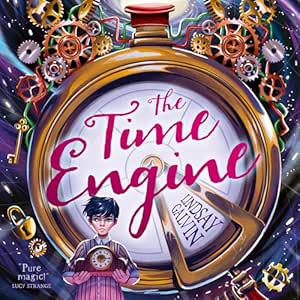
The Time Engine by Lindsay Galvin illustrated by Kristina Kister Publisher Barrington Stoke
Lindsay Galvin’s fiction for children is a wonderful mix of fact and fiction presented in an exciting adventure and her second novella for Barrington Stoke follows this successful approach. The Time Engine combines science fiction and history in a thrilling time-slip story featuring a young Ada Lovelace. When Eric Finch discovers a strange machine hidden in his attic he realises that his mathematician mother has been secretly working on something special. Using a journal belonging to her ancestor, Ada Lovelace, she has built a machine that the bewildered Eric does not understand. Whilst fiddling with the controls the shocked youngster finds himself in 1828 confronted with an angry young girl demanding to know who he is. The historical references, the well drawn characters and the sensitive portrayal of social attitudes add depth however they do not slow down the tension which builds to a thrilling climax. I particularly enjoyed the hopeful ending and the character development. This would be wonderful read for young people interested in science or maths and an excellent opening to fiction centred on Bletchley Park. Perfect for Year 5 and 6 classrooms and school libraries.
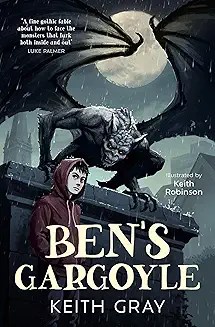
Ben’s Gargoyle by Keith Gray illustrated by Keith Robinson Publisher Barrington Stoke
When Ben sees a monstrous gargoyle creeping across the midnight rooftops, he’s desperate to tell someone. But Ben feels alone in his new home and is finding it hard fitting in at his new school. Since his mum left Ben’s dad has been angry, taking his frustration out on the 10 year old boy. When Ben builds up the courage to tell his dad about the gargoyle he doesn’t believe him. His anger escalates and he tells young Ben to ‘be a man’, to stand up to the bullies and act his age. Every night the gargoyle gets closer and during the day he misses his old school and his best friend. As Ben’s fear and unhappiness mount can he find the courage needed to improve his situation? Compelling from the opening page this is a dark story of family dynamics, with disturbing elements as the gargoyle and what it represents is conveyed. However, ultimately Gray provides hope for his readers and for Ben. Perfectly complemented by Keith Robinson’s brooding illustrations Ben’s Gargoyle would be a wonderful discussion prompt for Upper KS2 and KS3 on finding resilience in difficult circumstances.
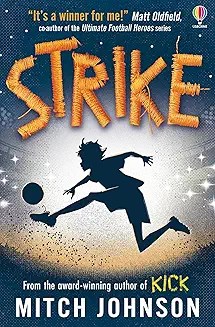
Strike by Mitch Johnson Publisher Usborne Books
Owen dreams of becoming a professional footballer and it finally looks as though his dreams may come true. However, when he finds a note in his new football boots pleading for help from those working in the factory where they were made his priorities change. This is a football story with a difference, highlighting the exploitation of some within the professional game and also conveying the importance of standing up for what is right. Owen faces difficult choices but is determined to make a difference through protest, eventually encouraging adults and teammates to listen despite the opposition he faces. Readers who enjoyed Mitch Johnson’s award winning debut, Kick, will be delighted by the reappearance of that novel’s hero, Budi. An excellent novel for encouraging discussion about social justice and the disparity in living standards throughout the world this also portrays a positive and warm relationship between a father and son. This story does also include the earlier death of Owen’s mother but this is sensitively handled. Strike is a thought provoking novel with a positive outcome. Highly recommended for Year 6 upwards.
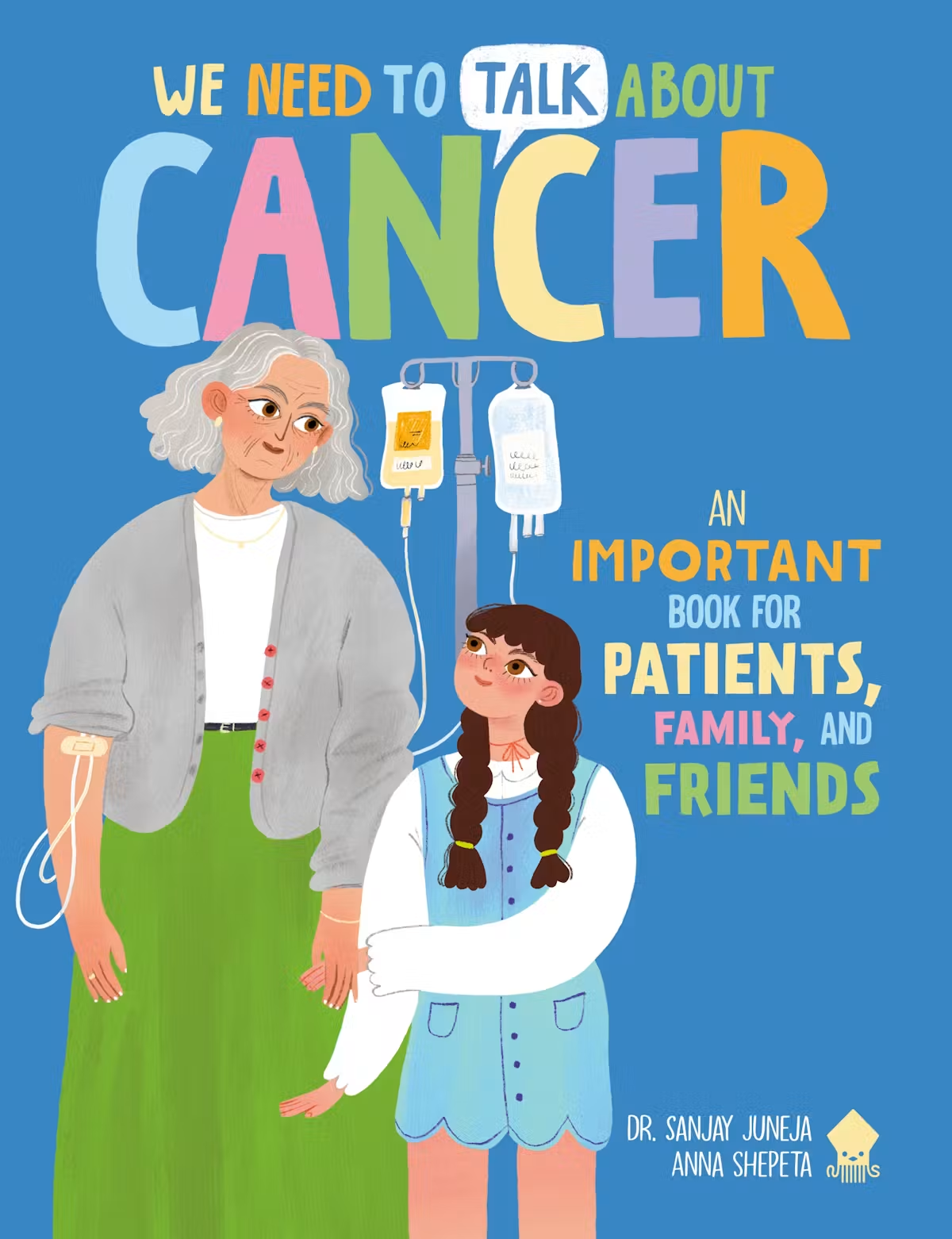
We Need To Talk About Cancer: An Important Book for Patients, Family and Friends by Dr. Sanjay Juneja and Anna Shepeta Publisher Neon Squid
Written by a medical oncologist this valuable book acts as a guide for children aged 10 – 14 who are affected by cancer either as patients themselves or through knowing a family member or friend with cancer. It attempts to answer all the types of questions a young person may ask and parents or carers may struggle to answer themselves. The book explains what cancer is, highlights the different types of cancer, introduces the medical staff that help patients throughout their experience, and looks at different types of treatment. The opening sets the tone for the rest of the book by explaining first what cancer ‘isn’t’. They reassure young people that it is not a germ and cannot be ‘caught’ thus dismissing an initial fear some may be hiding. It includes sections on the various stages of cancer and what these mean. The factual approach adopted ensures clarity and encourages understanding yet the general tone is reassuring and the emphasis is on adopting a positive approach. The side effects of treatment are explained both the more visible ones and those that may not be obvious. All aspects of the impact cancer has on both the patient and their loved ones are explained with a kind and understanding approach making this a book that one could recommend to families to share together. The illustrations support the text well and in some cases are used to provide visual representation of facts and relevant information. This may be a book one hopes not to need however it is definitely a valuable one to have to hand for the occasions when one does. Recommended particularly for lower secondary school libraries.
I should like to thank all the publishers mentioned and Laura Smythe, Poppy McLean, Fritha Lindqvist, Jessica Feichtlbauer and Malu Rocha for providing my proof copies.
Discover more from Library Lady
Subscribe to get the latest posts sent to your email.


That’s an absolutely fabulous collection , Anne, so varied in content and format. I am especially interested in the Let’s Talk About Cancer book. I think it would be helpful for staff at my hospital.
LikeLiked by 1 person
Yes, I’ve been lucky in the variety that I’ve been sent recently. It’s a lovely example of the range available.
Let’s Talk About Cancer is not too bulky or heavy. I’ll bring my copy on Saturday for you. 🙂
LikeLiked by 1 person
Thank you Anne, that’s so kind. I shall pop Home is a Hug in my bag for you 😊
LikeLiked by 1 person
Oh thank you ever so much. That will be lovely.
LikeLike
What a lovely selection, Anne. Korobá most appeals (I assume it’s a graphic novel) but I also liked the premise of The Time Engine; I’d happily read both in a flash, whatever age I was!
LikeLike
Yes, you’re right, Korobá is a graphic novel and I should have made that clear in my review. I’ll amend it now. Thanks Chris. The Time Engine would definitely have been a book I loved aged 10 and I’m still fascinated by time slip stories even now!
LikeLiked by 1 person
Thanks for clarifying, though I guessed as much from the comparisons with Tintin! Couldn’t see a copy in Waterstones today but I shall make a request at our local library when it’s next open. 🙂
LikeLiked by 1 person
Pingback: #Non-fiction review: We Need to Talk About Cancer written by Dr Sanjay Juneja, illustrated by Anna Shepeta – V'sViewfromtheBookshelves