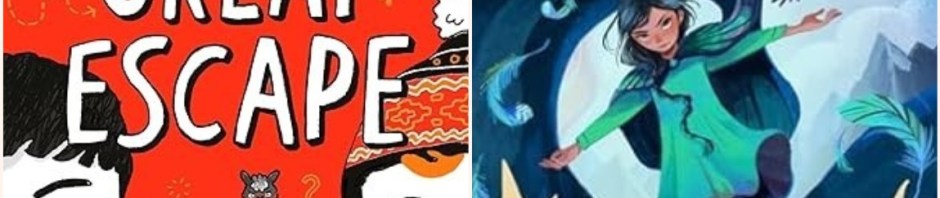
The Not-So-Great Escape by Emma Green
The Not-So-Great Escape is Emma Green’s first children’s book and is described by her publishers, Usborne Books, as a “hilarious and heartbreaking” road trip adventure. The trailer highlights the hilarious rather than the heartbreaking and yet within a few pages the reader is aware that there is something more profound lurking beneath the chaotic running away with an alpaca storyline. This is a portrayal of grief, family loss and learning to survive that on occasions is not glossed over resulting in a moving, yet ultimately hopeful book.
12 year old Hedley is struggling to cope with the death of his mum in a car accident and his dad’s reaction to this enormous loss. His attendance at a local therapy centre has brought Hedley together with Aiden, a boy seemingly the polar opposite of Hedley, and the ensuing distrust and friction adds to Hedley’s unhappiness. But then one night Aiden steals an alpaca from the local petting zoo at which both boys are volunteering and Hedley finds himself dragged into a runaway adventure involving risks that the normally hyper cautious Hedley would never dream of taking. As their journey continues they find themselves involved in an accidental robbery, a night in a haunted wood and inadvertently become a viral social media sensation. The drama builds until Hedley is forced to face the truth that he has been hiding from for so long.
The publicity material recommends The Not-So-Great Escape for fans of Jenny Pearson’s books and I can understand why has it has a similar blend of slapstick comedy and serious themes. The humour makes the subject of grief more accessible for children although I do think that readers at the lower end of the suggested age range or more sensitive children may find this upsetting in places. Because of the emotional content I would suggest that this may be more suited to some sort of guided reading be that through a small group, the ‘right’ class or under the supervision of a librarian or teacher to support a child in a meaningful way. For older children the book would be a great discussion starter on many subjects. Alongside grief the storyline explores bullying, friendship issues, mental health, theft, decision making, peer pressure all of which are important subjects for discussion, learning opportunities and building empathy. I would add that there are also some very funny moments! Hedley is a likeable protagonist too and as a reader I was drawn to his vulnerability and his naturally kind nature. The relationship between Hedley and Aiden and how this alters during the course of the adventure is an interesting and sensitive aspect for young readers too. This is a thought provoking debut and I will be watching out for more from Emma Green in the future.
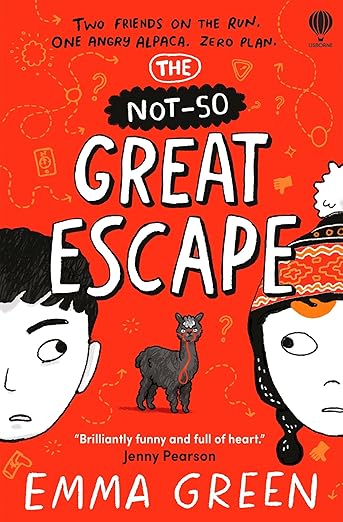
Magpie Girl by Rowan Foxwood illustrations by Tim Banks

Magpie Girl is an inventive reimagining of the traditional tales of the firebird and Baba Yaga but as I read this magical fantasy for children I was also struck by the wisdom Rowan Foxwood gently threads through the adventure. Key to the story, and to the outcome, is the bond of friendship, even when tested, and the importance of trust and loyalty.
There is something different about Lavender Wild. Lavender is a magpie girl who grows feathers, talks to birds and understands their songs, and she has a gift for finding lost things. She feels restricted at home with her carpenter father and longs for adventure and to travel to far flung places. When her former friend Kit’s father goes missing on the firebird’s mountain nearby Lavender takes the opportunity to set out with Kit on a mission to rescue him. They two youngsters are faced with danger in many forms from earthquakes to daemons and witches, and ultimately the evil firebird. Lavender and Kit are forced to examine their shared past and to try to rebuild their friendship in order to survive and save everyone. The plot gradually reveals episodes from Lavender’s past that she has forgotten and the story highlights the importance of memory in relationships and in creating a sense of belonging. There are moments when the reader is made aware how appearance can influence attitudes and judgement of others. There is much to unpick in this adventure and young readers will, I think, be encouraged to ask questions of the motivation and actions of some of the characters in the story.
The setting of this magical adventure is beautifully described and grounds the fantasy in a world that feels real to the reader. Rowan Foxwood mentions in her author’s note that Vineland, Lavender’s home, is ‘Mediterranean’ inspired and she has successfully created this image in her writing as that is very much what I was picturing as I read. Additionally the author drew on folklore from her native France and Corsica for some of the magic in the story. I found her descriptions of the origins of her Sentinels, the Spirit Hunters and the Asphodel Lanterns interesting and I expect her younger readers will do so too. They will also be interested that Foxwood hopes to return to Redvine with her readers!
There is a warmth and kind understanding to this story that increases its appeal. Magpie Girl is a fantasy for a wide range of young readers with important themes at its heart.
Both The Not-So-Great Escape and Magpie Girl are published by Usborne Books on 1st January and I should like to thank Fritha Lindqvist and the publisher for providing my finished copies.
Discover more from Library Lady
Subscribe to get the latest posts sent to your email.


 Library Lady
These two books both sound like very interesting and thought- provoking titles Anne. Your review of the first book certainly makes a very clear case for the need for a librarian in every school 😊
LikeLiked by 1 person
Yes, I think the description and the promotion for The Not So Great Escape may not fully prepare a young reader for the sadness within the story. Having said that sometimes adults find these subjects harder to talk about than youngsters so maybe I’m too cautious but nonetheless I prefer to highlight this aspect in my review just in case.
LikeLiked by 1 person