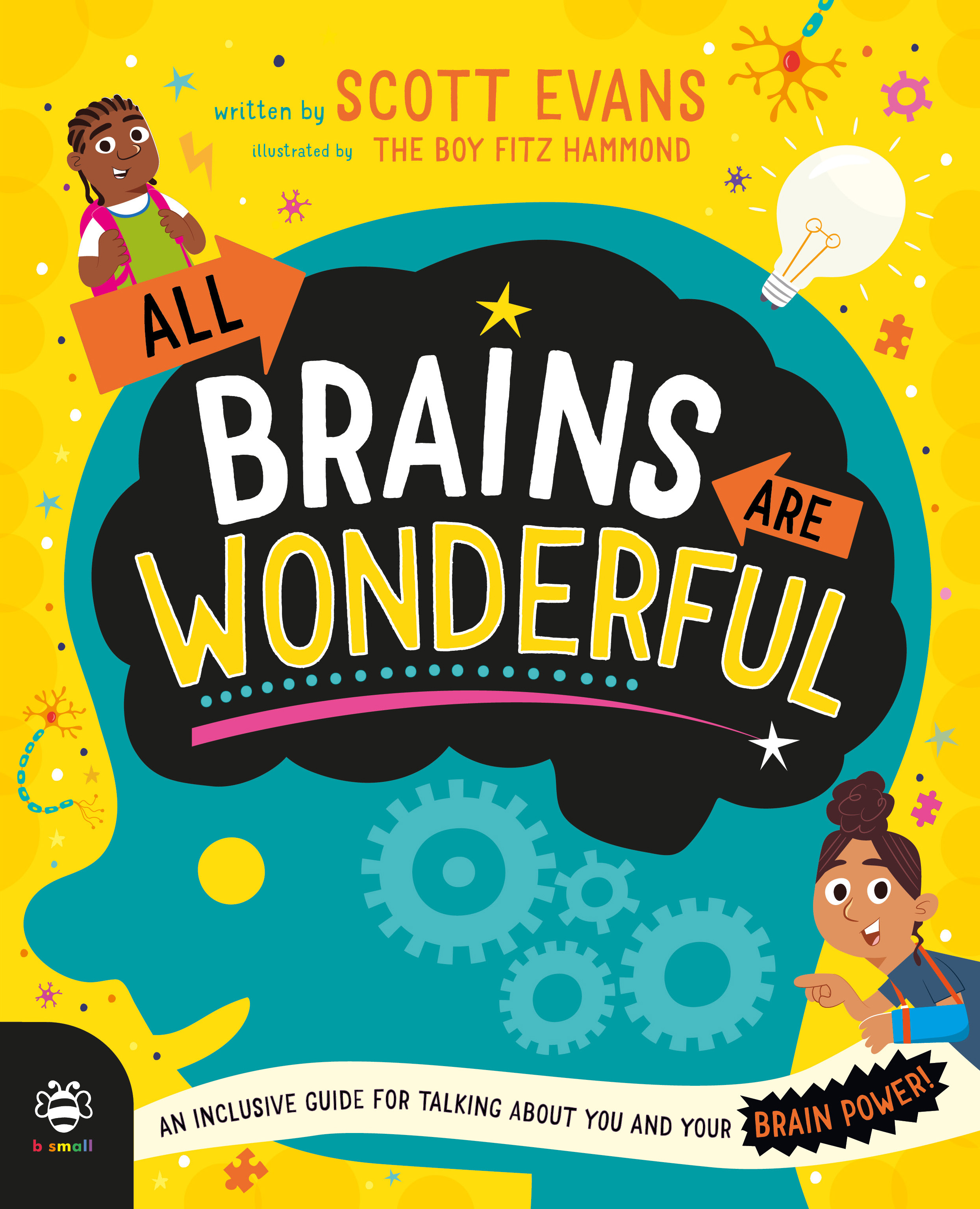
B Small Publishing have for some time been one of my favourite publishers. As a small indpendent publisher they specialise in creative, educational titles with high child appeal and their information books encourage their readers to discover new things. When I learned that they had teamed up with Scott Evans, known by many as The Reader Teacher, for a new title in their Science and Society range I was keen to see what this book would be like. Being invited to participate in the blog tour to mark publication was a golden opportunity to discover for myself. A short review would be, ‘a must buy for primary school libraries’. But please read on for a fuller review that explains why!
The synopsis provided describes All Brains Are Wonderful as “a comprehensive guide for children, and the adults in their life, as they learn to deal with the diverse ways our brains work.” This sounds hugely ambitious but this book, pitched at the 7+ age group, does provide an excellent overview of the subject in an appealing and accessible way. After the ‘about this book’ introduction the contents are divided into three sections; science, society, and taking action. The first section contains biological details such as: comparisons with animals’ brains; the development of the brain in the womb; the different areas of the brain and what each is responsible for plus how the brain understands the world and can be trained and challenged throughout our lives. The text is clear with sufficient detail to explain without overwhelming the reader. The illustrations support this well being colourful and child friendly but also depicting scientific aspects and labelled with brief detail.
The second section moves on to society and attitudes to differences in the way in which our brains our wired. As a neurodivergent teacher Scott Evans is well placed to explain this to children and the input of an expert consultant, Dr Rachel Williams, no doubt helps to ensure the veracity of the information shared too. The way in which knowledge of how the brain works has changed over time is given and how discrimination can affect neurodivergent people is covered alongside discussion about the meaning of the term disability. The book gently encourages its readers to appreciate these differences and to develop an understanding of how both their own brains and those of others work.
Finally, there is advice on mental health matters such as how you can take care of your own brain and well being plus what children can do to make life easier for themselves and their classmates. The glossary at the end includes definitions of terms such as more well known ones including attention deficit hyperactivity disorder and dyslexia but also hyperlexia and synesthesia which is helpful.
This is the type of book that well deserves a place in primary school libraries as it will be helpful in a wide range of scenarios and for both individuals and classes. It is immensely readable as book to browse and children will learn much from this but as an opening for conversations about a subject sometimes tricky to explain it is invaluable.
I should like to thank Naomi Weeks of B Small Publishing for providing my review copy and for her help in preparing this review. Please do follow the rest of the blog tour to discover what others think of All Brains Are Wonderful which is published on 3rd February.
When children first show an indication that they are ready to progress on to slightly longer independent reads they can still find pages of dense text a little daunting. Thankfully there has been a growth in highly illustrated quality fiction that is just right for this audience. They are attractively presented and appealing but still give young children that sense of achievement of having read a ‘proper book’. These two recently published titles, although very different to each other, are excellent examples.
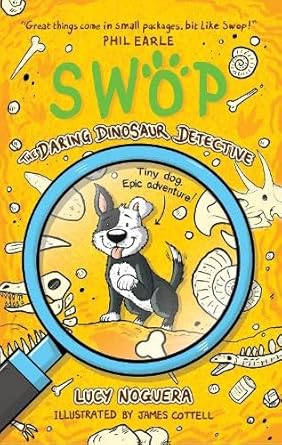
Swop: The Daring Dinosaur Detective by Lucy Noguera illustrated by James Cottell
The second book in the Swop series is set in the Natural History Museum giving this adventure story added appeal for young palaeontologists. Ernie’s class are on a school trip and he is reluctant to leave his ‘satsuma-sized’ pet dog at home alone so the little chap is smuggled on to the coach in Ernie’s backpack. With the support of his best friend Rafa, Ernie is hopeful that things will go smoothly but he has not taken into account the class bully Josh or the risks involved in taking his tiny pet out and about. This story of friendship, adventure and learning to adapt to situations is packed with familiar references for children and incorporates some lessons about friendship and self-confidence along the way.
The first book, Swop the Satsuma-Sized Secret, introduced readers to Ernie’s older sister Ivy who is deaf and allowed Lucy Noguera to incorporate the use of sign language in a natural manner. This use continues in The Daring Dinosaur Detective with Ernie communicating via sign language with both Swop and his friends Rafa and Clemmie. This recognition and inclusion is a positive element of these charming stories. As Ernie has to deal with stress and anxiety as things go awry in the story the way in which he draws on advice from his late Dad and his new friend, Clemmie is both reassuring and touching. There is a positive and thoughtful tone to the story throughout with teachers depicted as kind and caring, if a little pressured at times. Much like real life!
The plot is pitched well for young readers and as with the previous book is promoted as being accessible for dyslexic readers and at under 180 pages is not too daunting for newly independent readers. Each of the short chapters features black and white illustrations by James Cottell which add to the enjoyment and break up the text so that it is not overwhelming for youngsters. Brilliant Monster Books state on their website that they are “specialising in accessible books which promote empathy and inclusion” in Swop: The Daring Dinosaur Detective I think that they are succeeding. Published on 20th January. Thank you to Lucy Noguera for my review copy.
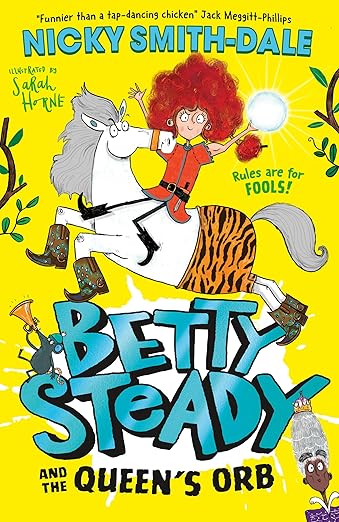
Betty Steady and the Queen’s Orb by Nicky Smith-Dale illustrated by Sarah Horne
I always find it fascinating to compare the lists for awards where the books are selected by children with the lists for other awards selected by adults. Among younger children in particular, books that they suggest are often ones with plentiful humour or illustrations and sometimes a combination of the two. Enter Betty Steady! Betty Steady and the Queen’s Orb, the second in this series of utterly bonkers adventures, is full of wordplay, humour and mayhem and I suspect will be a hit with many children.
After a helpful introduction by Salvadore Catflap (the self styled greatest storyteller in Wobbly Rock) giving a brief outline of the story so far and how young Betty was transformed to her diminutive stature thanks to a wicked spell cast by the Toad Witch in book 1 we are ready to join the fray. Betty Steady, The Guardian of Wobbly Rock, and her pals are off to the world famous Turnip Festival in the neighbouring kingdom of Upper Crust. During the festivities Betty meets a fashionable sprite named Misty Jamjar who offers Betty the opportunity to access magic which will offer the now tiny Betty the chance to return to her normal size. Despite this involving ‘borrowing’ the magic Orb belonging to Queen McNiff Betty struggles to resist this temptation. What will her friends, the Crossword Gang, make of this and how will Betty cope with the ensuing drama?
This is a fast paced and somewhat frantic tale but with a joyful air that is hard to resist. The cast of characters is many and varied and lovers of funny names will relish some of them. I am hard pressed to choose a favourite but Betty’s trusty horse Simon Anderson, resplendent in cowboy boots, is a winner and I grew fond of health and safety obsessed imp, Figg. The text is littered with asides from the author, poems from Clammy Pete and moments of common sense in letters from reader Dave Schoolboy adding to the fun. Sarah Horne’s illustrations are ideal for the tone of the story with lots of humorous detail and the eye catching cover featuring Betty and Simon Anderson in his own rather unique style will tempt many children. On this occasion I think you probably can judge a book by its cover!
Betty Steady and the Queen’s Orb is the sort of book that many children need to tempt them into reading and will no doubt be flying off primary school library shelves in the coming months. Published by Farshore Books on 16th January and I should like to thank the publisher for my review copy.
One of the joys of reading books written for children is being transported back to one’s own childhood and the luxury of escaping to a world where good triumphs against the odds, characters grow in confidence, and everything comes together in a spirit of optimism and hope in the end. Judith Eagle’s historical novels are reliable both in the quality of the writing and in the positive spirit in which the story develops. The Great Theatre Rescue, her latest title for Faber published in February, is another delight, an engrossing plot that twists and turns until the final chapter and a wonderful cast of characters. I loved this!
Cover illustration by Jui Talukder
It is the early 1930s in London’s theatreland and Charley has grown up knowing her Dad’s theatre, The Wren, as home and the performers as family. She dreams of being a dancer on the stage and following in her late mother’s footsteps. However a change in circumstances and her father’s absence results in Charley being dispatched to a truly dreadful boarding school many miles away. Charley has learned that her beloved theatre is under threat so she embarks on the long journey back to London with her new friend, Jewel, determined to put things right. Her plans are threatened by danger and intrigue and her own impulsiveness and the reader is swept along willing the irrepressible Charley to succeed.
Judith Eagle’s detailed and atmospheric descriptions of London in the 1930s provide a wonderful backdrop to this well plotted and engrossing adventure. The inclusion of real life characters such as Duke Ellington add a touch of authenticity to the drama and as a reader one easily becomes drawn into this story of family and mystery. The author has included many of the elements familiar to readers of classic fiction for children such as orphans, family secrets, a couple of truly dreadful villains, an epic journey and even a loyal dog. In The Great Theatre Rescue these elements feel fresh and there is a warmth to the story which is engaging. Charley is a delightful and appealing character and her development throughout the book is an uplifting aspect. The friendship between Charley and Jewel is an interesting element and there are well drawn relationships with various adult characters too. At times there is almost a Dickensian feel to the plot and even as an adult I was reluctant to put this book down.
This would, I think, be an excellent book to share in the classroom. The twisty plot and the cast of characters would make it a treat to read aloud and the rich descriptions could be used as a writing example too. A lovely book to recommend to fans of Emma Carroll or A. M Howell’s books, The Great Theatre Rescue would be a valuable addition to school library shelves.
I should like to thank the publishers, Faber Children’s Books and Bethany Carter for my proof copy. The Great Theatre Rescue is published on 13th February and is highly recommended.
At the moment in the depths of January, when the evenings are still dark and snow has been falling in parts of the country it is difficult to imagine Spring, sunshine and spending time planting, sowing and encouraging summer insects. Here are two thoughtful and cheerful books to help you look ahead, to plan and to share in readiness for when days are brighter and warmer.
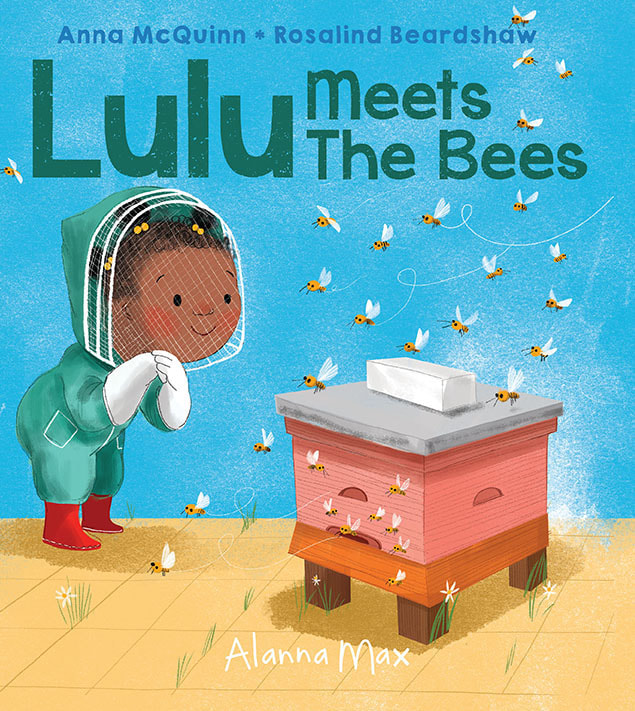
Lulu Meets the Bees written by Anna McQuinn and illustrated by Rosalind Beardshaw
Cover illustration by Rosalind Beardshaw
The latest title in the gorgeous Booky Girl Lulu series perfectly incorporates learning into a charming narrative for young children. Lulu Meets the Bees gently introduces its readers to the world of beekeeping, inspiring curiosity about nature and promoting a caring attitude to our environment.
Lulu is excited! She is going to visit her Mummy’s friend, Zora, who is a beekeeper. This has prompted the little girl to try to find out all about bees and she now has lots of questions to ask Zora. Once at Zora’s Lulu watches the busy bees at work and puts on a special suit so that she can go with Zora to check on the hives. Her outing ends with a taste of the delicious honey made by Zora’s bees. Once home again Lulu is inspired to help bees where she lives and plants some seeds to encourage them. ‘As the summer goes by, Lulu’s wild corner is abuzz!‘
Lulu’s curiosity is infectious and I think young children will be swept along by her enthusiasm and want to try to emulate this lovable character. The narrative is pitched perfectly for the story’s young audience, simple enough for them to understand but effectively conveying information in a manner that feels natural. There is reference to how bees ‘spread the pollen‘ and the different jobs they do and the ‘clever dance’ by which they communicate. In this way Anna McQuinn manages to make pollination and honey-making accessible to young children. Rosalind Beardshaw’s illustrations, as with all the series, work in perfect harmony with the text. There is a warmth and kindness in the depiction of Lulu and the adults in her life which is both tender and reassuring to a young audience. Little ones may like to explore the pictures spotting bees on mugs used by Lulu and Zora. Lulu even resembles a small, happy bee in her stripy yellow and black striped t-shirt and pinafore!
I particularly like how both text and illustration highlight the possibility of nurturing nature in an urban environment and in your own home, even without a big garden. The reader is told that ‘The city is a great place for bees.’ There is mention of gardens and parks and Zora herself keeps her bees on the roof or her building. Lulu plants seeds in pots on a balcony and her wildflowers, swarming with bees, flourish in a relatively small space. In this way all children can feel as they can participate and will relate to the story. Lulu Meets the Bees was published by Alanna Max in October 2024 and is a perfect purchase for both Early Years settings and families. You may like to visit Anna McQuinn’s website to read more about the background to the book here.
Kind Little Hands written by Kathy Urban Illustrated by Sally Garland
Cover illustration by Sally Garland
Kind Little Hands is another delightful picture book about the importance of nature and showing consideration to our environment with its themes conveyed appropriately for young children.
When Noah is walking through the city one day with his Grandpa a small, tired and hungry bee falls from the sky into his outstretched hands. Luckily Noah is kind and his Grandpa is thoughtful so the small bee is gently transported home with them in a box and carefully fed a water and sugar mixture. As Noah waits patiently gradually the bee makes a recovery and eventually crawls slowly to the window and flutters away safely. Although Noah is sad that the bee has gone, when he and his Grandpa walk through the city afterwards talking about the bee’s journey to its home an idea begins to grow in Noah’s mind. A plan that brings glimmers of nature to the city as Noah and Grandpa plant seeds together.
There is a lovely, positive feel to this book and the delightful illustrations by Sally Garland fit the tone of Kathy Urban’s text well. In a similar way to Lulu and the Beekeeper it also highlights the possibilities for encouraging nature in an urban setting. In addition to the information conveyed within the text there is a section at the end of the story detailing information and key facts about bees plus a list of things children can do to help bees flourish in their locality. Also a proportion of the profits from the sale of the book supports projects pollinator habitat restoration projects by Buglife – The Invertebrate Conservation Trust. Kind Little Hands was published by Little Steps Publishing in October 2024 and would be a valuable resource for schools for Early Years and KS1
I should like to thank the publishers for providing my review copies.
Scallywag Press now five years old, is a small publisher whose books are worth seeking out. They specialise in publishing talented newcomers and re-issues of established creators and classics. Here are three of their recently published picture books to give you a taste of their catalogue.
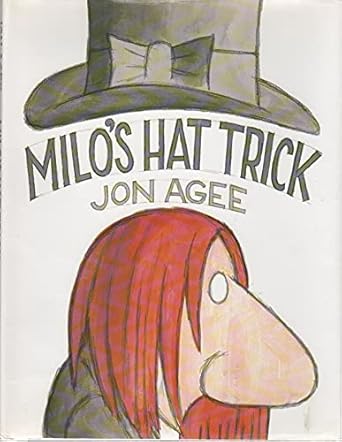
Milo’s Hat Trick by Jon Agee
Milo’s Hat Trick definitely comes under the description “re-issues of established creators and classics.” Originally published in 2001 this quirky and amusing story accompanied by Jon Agee’s distinctive illustrative style is an absolute gem. Milo the Magnificent is a magician with a problem. He is not at all magnificent in any aspect of magic; his card trick is botched, his rope trick is tangled and ‘his hat trick is pathetic.‘ The theatre manager, Mr Popovich, has had enough and tells the unfortunate Milo that he must pull a rabbit out of a hat tomorrow night, ‘or else.’ So Milo sets out to catch a rabbit for his act and instead catches a bear and not just an ordinary bear but a bear with a hidden talent. Will the bear come to Milo’s rescue?
Over the ensuing pages the story can in no way be described as predictable and it is this that makes it work. Nearly every page turn reveals something to make the reader or listener giggle. Much of the story is told through the illustrations and this, I think, adds to the reader’s engagement. This would be a terrific book to read aloud to young children but the humour will appeal to older ones too. It is also fun for the adult involved. The style of the appealing illustrations is almost cartoon like and there is a slapstick feel to the story in some ways. However, it is also cleverly paced and the slightly deadpan delivery made me smile. Milo’s Hat Trick is delightfully eccentric and enjoyable and was published in October.
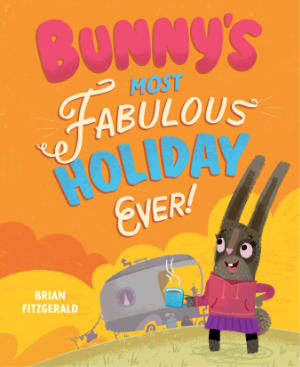
Bunny’s Most Fabulous Holiday Ever by Brian Fitzgerald
Brian Fitzgerald illustrated The Bear Who Had Nothing To Wear by Jeanne Willis, also published by Scallywag and his jolly, colourful illustrations helped bring Bear to life. Bunny’s Most Fabulous Holiday Ever is his first solo picture book and his cheerful illustrative style is paired with a kind and positive text about friendship.
Bunny has carefully planned her annual holiday. Each year she takes her caravan to a peaceful spot, away from others where she can relax on her own. Unfortunately this year she wakes up on her first morning to discover that a monster has set up camp next door to her. Bunny is aghast! She watches in horror as he plays, surfs, meditates and barbecues. When a storm arrives she is at first happy when the monster’s tent blows away and he is left sorrowfully sitting under his umbrella. But then Bunny has second thoughts and starts to feel a little sorry for the poor monster. She tentatively approaches him and gradually realises that holidays, and life, can be a lot happier when you share them with someone.
This a delightful story and the illustrations cleverly support and portray the text. Initially grey and sombre, colour is introduced as the growing friendship between the two develops. I particularly like the use of vignettes and panels to move the narrative along and the expressions on the two friends’ faces are a delight. Bunny’s Most Fabulous HolidayEver! is a rather fabulous picture book and would be lovely to share with young children. Although it would probably prompt conversation and comment the story alone may give youngsters pause for thought. This is a cheerful, upbeat picture book with kindness at its core.
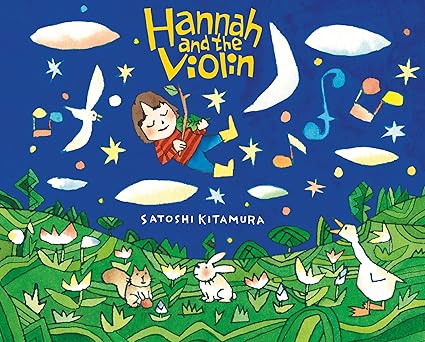
Hannah and the Violin by Satoshi Kitamura
In 1983, Satoshi Kitamura received the Mother Goose Award for the Most Exciting Newcomer to British Illustration for Angry Arthur and since then his distinctive illustrative style has become familiar to adults and children alike. He has created more than 20 of his own books and has collaborated with respected authors including Hiawyn Oram, Jon Agard, and Colin McNaughton. Scallywag Press has republished Kitamura’s early titles such as Lily Takes a Walk and now Hannah and the Violin, originally published in Japan in 2008, will be made available in the UK in February by this publisher.
While Hannah is playing alone in her garden she spots a leaf which she thinks looks a little like a violin. Picking it up she decides to see if she can play it and soon all manner of things are playing and dancing to the music alongside her. The birds are singing, the insects are dancing and ‘an orchestra of clouds arrived and joined in.’ When Hannah is eventually called in for dinner she plays for her parents too, alongside a little band made up of her toys. This is a wonderful celebration of music, imagination and creativity with the colourful double page spreads a delight to explore for children. Hannah and the Violin has endless possibilities in the classroom, encouraging an interest in music, the various instruments and the ‘music’ available to us in our environment. It also serves as a reminder of the importance of imaginative play. A wonderful picture book for children in Early Years settings upwards.
I should like to thank Sarah Pakenham at Scallywag Press and Laura Smythe for my review copies of these three books.
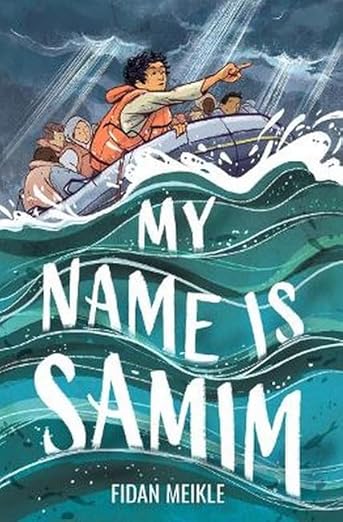
My Name is Samim is a powerful, at times heartbreaking, debut novel by Fidan Meikle, an Azerbaijani-British writer, linguist and translator. Meikle tells the story of a thirteen year old boy from Afghanistan who is fleeing his home after the death of his parents in the hope of finding safety. This remarkable and deeply moving story conveys the reality of the experience of refugees and provides the reader with the opportunity to learn, to understand and to empathise.
When Samim was nine years old his parents and younger sister were killed in a bombing raid. Together with his best friend, Zayn, he left his home country and travelled through Iran and onward to Europe in the hope of reaching England and a safe haven with his uncle whom he had not seen for several years. The horror of his dangerous journey is vividly conveyed and the unimaginable becomes more real to the reader. On his arrival in England Samim is first placed in a detention centre, despite his youth, and subsequently with a foster family. Once there he is required to prove to the authorities that he qualifies for asylum status. Through a series of interviews Samim relates his family background, the reasons for needing to escape from Afghanistan and the events that took place during the years he spent travelling to the UK.
The narrative structure enables the reader to experience the events Samim has witnessed and been part of as he answers questions during the interview process. We learn that he left the Ghazni province in Afghanistan during 2015 following the bombing of his home. With Zayn and his Uncle he spent two years in a stone cutting factory in Iran before moving on to Turkey, Greece and eventually to Italy . The stories of people Samim meets and interacts with on his journey form an important part of the story. There is cruelty from some, but it is the kindness and the resilience of others that resonates powerfully throughout the book.The bereft young father with a love of astronomy who inspires Samim and Zayn and the kind grandmother who brings the young boys into her family and supports them are two who stand out. There are other youngsters whose bravery is inspiring and moving, including a young girl named Darya. The loss of Zayn weighs heavy on Samim who experiences both guilt and sorrow. Zayn’s voice is a constant presence in the book, his humour and spirited attitude boosting his friend even when he is no longer here.
My Name is Samim is an impressive debut.I was completely immersed in Samim’s story as I read and his determination, quiet courage and his loyalty to others ensures that this young boy is a character who stays with the reader long after you turn the last page. There are subjects covered within the storyline such as refugee trafficking, gender identity and bullying that require a degree of emotional maturity yet despite the subject matter and sometimes harrowing incidents there is hope and great kindness conveyed.
My Name is Samim will be published in March by Floris Books in their Kelpies range and is suitable for the upper middle grade audience of about 11 or 12 upwards. Update: since writing this review I have been told that publication will now be in May. This will tie in with National Refugee Week marked in June.
Update: Teacher Resouces
In readiness for Refugee Week, taking place from 16th – 22nd June Floris Books/Kelpies have created some excellent teacher resources suitable for upper KS2 and KS3 to use with My Name is Samim. This learning resource pack has been created by the author to help teachers lead insightful class discussions and activities based on the book. Activities are suitable for pupils aged 10+ and can be downloaded here.
You may also like to read this guest blog written by Fidan Meikle for Just Imagine about using refugee stories in the classroom.
I should like to thank the publishers and Kirstin Lamb for generously providing my early proof copy.
Welcome to the first Reading Matters newsletter of 2025 and I hope that everyone had a happy and healthy Christmas holiday. Happy New Year to you and I hope that 2025 is a good year for you and your families. This round up includes both a look back at the best of 2024 and a preview of some books we can look forward to at the start of this new year. There are events and resources too so why not settle down and explore.
If you have not read my monthly round ups of news before I hope that this newsletter gives you the excuse to sit down with a cuppa, relax and catch up with what you may have missed during a busy time of year.
What I’m reading…
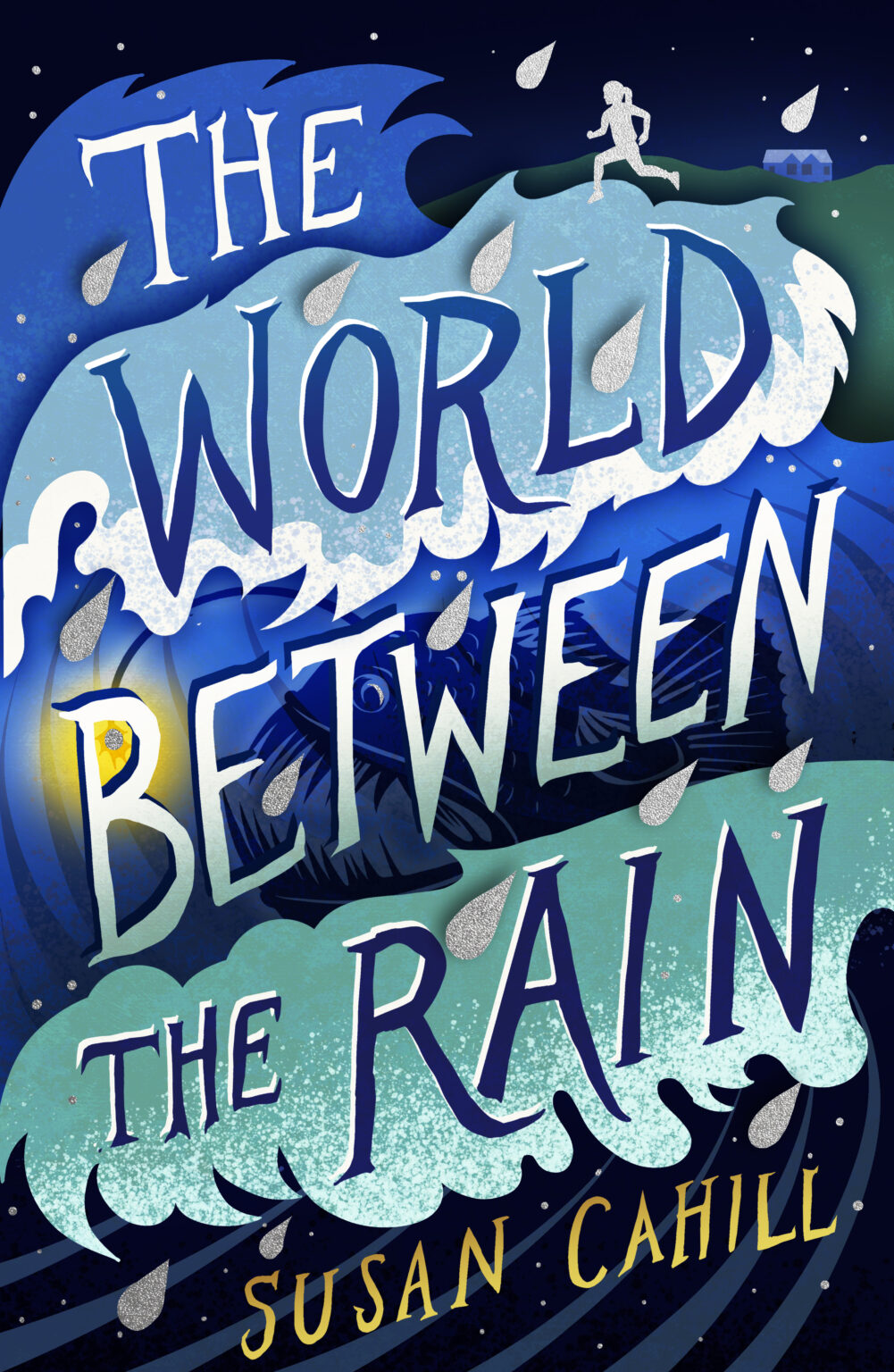
You would hope that the Christmas holiday would have resulted in some free time to enable me to make some progress with the numerous books sitting on my ‘to be read’ shelves. Alas, not really! However I would like to share some great books that I did manage to find time to read since my last newsletter. The World Between the Rain by Susan Cahill illustrated by Holly Ovenden is a magical portal story that also conveys ways in which people may cope with grief and loss. It is an absorbing and, ultimately, comforting read. This is a stunning debut and one that I am glad that I have read. I would recommend this as a purchase for secondary school libraries and think that it would appeal to fantasy lovers of about 12+.
Another book, for a much younger age group, but also conveying a thoughtful exploration of dealing with emotions is the picture book, Ebbs and Flows. Written by Sarah Surgery and illustrated by Gozde Eyce this lovely story follows a little girl named Pia as she navigates her changing emotions throughout the day. Sarah Surgery cleverly describes the natural rhythms of a day and the facial expressions of the different emotions experienced by the little girl are captured well by Gozde Eyce. This would be a helpful book to prompt conversation about feelings, either in the classroom or in the home. It may also enable young children to have a greater understanding of their own responses to situations and an empathy with others’ changing emotions too. It is published by Brilliant Monster Books and you can find out more about their books on their website.
Barrington Stoke have several books being published over the coming weeks and I have reviewed three that were published this week. Each of them are written by established and popular authors, and would, I think, encourage potential bookworms. Created by Vashti Hardy, Gill Lewis and Jenny Pearson with illustrations by Agnes Saccani, Irina Avgustinovich and Aleksei Bitskoff they will also appeal to a range of tastes.
Regular readers of Reading Matters will know that I enjoy sharing books with my 2 year old grandson and now sometimes include his recommendations too. Thanks to Veronica Price’s review of Tatty Mouse Christmas we have been enjoying that over the festive period. His bedtime favourites continue to include all the Zeki series by Anna McQuinn and Ruth Hearson which he loves and takes into bed with him, and also Goodnight, Everyone by Chris Haughton which is re-read up to four times a night at the moment. Last but not least Peepo by Allan and Janet Ahlberg is enjoyed by both grandson and son often. I like the balance between the old and new in the little chap’s library.
News, articles and resources…
The end of 2024 saw the publication of several ‘best of’ book lists and I have included a few here that may be useful to you.
Just Imagine Reviewers’ Books of the Year 2024 – Just Imagine reviewers have selected their favourite books of the year 2024. The selection can be viewed in video format and as a list with links to the full reviews.
The best children’s books of 2024, chosen by top authors and illustrators – Book Trust asked authors and illustrators including BookTrust’s Writer in Residence Patrice Lawrence, Axel Scheffler, Emma Carroll, Nathanael Lessore and Rashmi Sirdeshpande among others the question: What is your favourite children’s book published in 2024? Follow the link above to find out which books they chose!
The best children’s and YA books of 2024 – From a boy on a snowy midnight adventure to a gothic family caper via a young offender inspired by poetry, the Guardian children’s book critics pick their favourite titles of the year
BBC Radio4 Children’s Book Club 2024 – Each year a panel recommends children’s books on different themes and for different age groups and will feature old favourites, classics, new releases, books you can borrow from the library and books to delight the whole family. This year’s suggestions from Frank Cottrell-Boyce and Cressida Cowell are worth a look.
Books for Topics Teachers’ Favourites for 2024 – Books for Topics invited teachers to vote for their best classroom read-alouds, the books that were the biggest hit with pupils and the top books to support the curriculums. The books that their community of teachers and librarians voted as their favourites in the various categories can be found on the website linked above. Thank you to Alison Leach founder of Books for Topics.
The Literacy Year Calendar – this excellent resource created by Sian Hardy at The Literacy Hive is a mine of useful information and links to resources. It will help you to plan around forthcoming events, competitions, awards and special days and weeks highlighting aspects of literature and literacy.
Holocaust Memorial Day 2025 -The National Literacy Trust has teamed up with award-winning author Tom Palmer to produce free resources for use in the classroom or at home, to help schools commemorate Holocaust Memorial Day. Secondary teachers and students (ages 11 to 14), are invited to join a free online commemoration event featuring award-winning writer, Tom Palmer, author of After The War in conversation with Holocaust survivor, Alfred Garwood and Child survivor, Antoinette Mutabazi. The online event takes place Monday 27 January10.00am to 10.45am. There are also accompanying free resources available to download for use in the classroom.
Children’s and teens roundup: the best new picture books and novels – Sibling rivalry, a massive shark, anti-Nazi resistance in Norway, a brilliant romcom, and a tale of power and betrayal are among the latest selection of new books for children chosen by Imogen Russell Williams.
Inclusive Books for Children Awards 2025 Longlist – this longlist was announced shortly after the December Reading Matters and the shortlist will be revealed on 20th January. The IBC Awards recognise the best new inclusive children’s books published in the UK across three categories: books for babies and toddlers (aged one to three), picture books (for ages three to seven) and children’s fiction (for ages five to nine). Definitely an award worth following so do please have a browse of the titles in the various categories via the link above
There are three great online events in January hosted by Just Imagine in their An Evening In series of events suitable for teachers, librarians and adults who are interested in children’s literature:
An Audience with P J Lynch – This event takes place on January 9th at 7:00 pm. P. J. Lynch is an acclaimed Irish artist and illustrator of children’s books. He was the fourth Irish Children’s Laureate from 2016 to 2018. Amongst his awards are two Kate Greenaway Medals and three Christopher Awards. In this special event we will be celebrating P J’s contribution to children’s literature. I have never heard this celebrated illustrator in an interview before and am very much looking forward to this.
We Love Poetry! -Join Nikki Gamble on January 16th at 7:00 pm as she discusses all things poetry with Stephen Lightbown, author of CLiPPA shortlisted And I Climbed And I Climbed, James Carter, who will talk about his new book Boing!, and Sarah Ziman, who will talk about her debut poetry collection Why Did My Brain Make Me Say It? And Simon Lamb A Passing on of Shells completes a strong line-up.
Animal Characters and the Development of Empathy – Join Nikki Gamble on January 23rd at 7:00 pm as she talks to Gill Lewis, Ben Garrod, Emma Chinnery and Nicol Baker about writing animal fiction and what it offers young readers.
David Fickling Books and The Phoenix comic announce an epic new comic-book imprint, The Phoenix Comic Books, launching in January 2025 – There will be a The Phoenix Comic Books launch as part of the 2025 Waterstones Family Festival, followed by a year-long programme of events and workshops linked to the new imprint. A key element of the launch is the announcement of The Phoenix Comic Club, an exciting comics community for readers, where they can access drawing, writing, and comic-creation tutorials from a wide range of brilliant artists and comic creators. You can find out more on the via the Love Reading4Kids article linked above or on the Phoenix Comic website.
National Storytelling Week – this annual event will take place from Saturday 1st February to Sunday 9th February and the theme this year is ‘Reimagine your world’. We are urged to be aware that the most extraordinary story can come from the most ordinary place if we use our imaginations. The National Literacy Trust have organised online storytelling workshops for a range of age groups and created resources to accompany them. You can find out more and sign up for the workshops via the link to the NLT website above.
The Island of Brilliant: By the Fireside: join Frank Cottrell-Boyce and Nadia Shireen in the January episode of their podcast where they discuss what is happening in the world of children’s books. I haven’t had a chance to listen to this episode yet so have it earmarked for the weekend.
Finally, some book reviews that caught my eye recently…
I Follow the Fox by Rob Biddulph – a new title from this popular creator of picture books is always welcome and I Follow the Fox’s setting in the snow makes it perfect as a winter read. This lovely review by Lucy Staines for Books for Keeps has encouraged me to seek it out. “The mix of magic and family is just right, the sense of danger and loss perfectly balanced with the comfort and security of home.”
The Misadventures of Mina Mahmood – School Trip! by Farhana Islam, illustrated by Simran Diamond Singh – following the publication of the latest Reflecting Realities Report by CLPE is it helpful to read reviews that feature representative children’s fiction. This great review by Veronica Price of a book due to be published in April is worth a read and you may wish to put the book on your wish list for when it comes out. “Farhana Islam absolutely nails the pacing, humour and peril to create a highly entertaining story for middle grade readers. The addition of illustrations throughout by Simran Diamond Singh as well as the eye-catching typography, makes this a book that readers from age 8 and upwards will choose to read for pleasure…”
The Expanding World of Data by Tom Jackson Illustrated by Ekaterina Gorelova and Ana Seixas – a new title in the series from OUP Very Short Introductions for Curious Kids which explores what data is and how it is a bigger part of our lives than we may realize. In his helpful review for Just Imagine teacher Stephen Connor says he found this book, “enjoyable, hugely informative, and easy to access. It would certainly sit well in older primary classes, and definitely in Key Stage 3, and could work well in history, maths, philosophy and sociology lessons.”
That’s everything for this first round up of 2025 and I hope that you have found it useful. Since my usual first source of children’s book related news has faltered recently, (Twitter was great for this, X is less so in my experience) I have found it a little trickier to track down items and updates but this collection should, I hope, give you at least a taste of what is occurring.
Barrington Stoke are getting 2025 off to a great start with the publication of several new books for young readers and I would like to highlight three titles which I think will encourage potential bookworms.
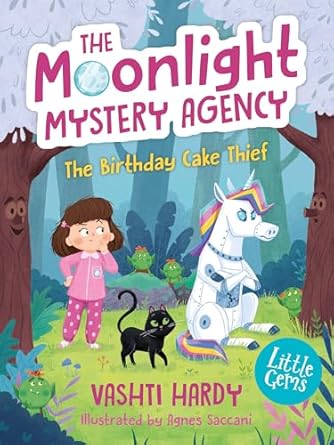
The Moonlight Mystery Agency : The Birthday Cake Thief by Vashti Hardy Illlustrated by Agnes Saccani
The first in a new series in the Little Gems range for brand new readers brings Vashti Hardy’s popular magical touch to a younger audience. In The Birthday Cake Thief we meet Hana who has always wanted a pet of her own. When a friendly cat turns up at her bedroom window Hana thinks that she has finally got her wish. In fact the cat, Ace, has plans for Hana and she is whisked away to join a special detective agency. The Moonlight Mystery Agency has gained a new member! Hana’s first mission is to solve the mystery of Spark the bionic unicorn’s missing birthday cake.
The Little Gems range is perfect for new readers of about 5+ and incorporates a supportive layout and in this story is accompanied by charming illustrations and puzzles to solve by Agnes Saccani. Vashti Hardy’s Griffin Gate series for this publisher are immensely popular adapting her trademark steampunk fantasy to a shorter length with success. The Moonlight Mystery Agency will, I think, tempt the youngest audience to venture into her imaginary worlds. The author also blends a gentle observation of sibling tension into the storyline portraying the importance of patience and kindness with subtlety. This tempting package is a lovely start to a new series. Suitable for children from 5 upwards.
The Island Vet: Devil Bird Island by Gill Lewis illustrated by Irina Avgustinovich
Devil Bird Island is the third in this enjoyable series featuring Tia, daughter of a vet based on an island written by Gill Lewis, a vet herself Lewis always writes with warmth and understanding in her animal stories and this is evident in The Island Vet stories. In this latest instalment Tia and her friend visit a neighbouring island to count puffins but their trip swiftly turns into an adventure. First they rescue an animal caught in a fishing net then when night falls they hear strange wailing in the dark outside their tent. Their puffin counting has taken a rather scary turn!
Gill Lewis draws on her own experience and knowledge to create a believable and enjoyable story containing some important observations about how we need to work together to look after the wildlife around us. The charming story is accompanied by lovely illustrations and chapter headings by Irina Avgustinovich bringing the characters to life for young readers. This is a perfect series for young animal lovers and conservationists suitable for children with a reading age of 7.
Bigfoot and the Wild Boys by Jenny Pearson illustrated by Aleksei Bitskoff
As a teacher Jenny Pearson knows not only what type of story children like but she also knows what children themselves are like as people. As an author she combines this knowledge and experience in creating books packed with humour but also with an understanding and kindly observation of what matters to her young readers. Her third book for Barrington Stoke, Bigfoot and the Wild Boys is a thoroughly enjoyable story of friendship and adventure. Alexei Bitskoff once again illustrates Pearson’s fiction bringing the characters and events to life with great humour.
Joe is about to secondary school and is determined to shake off his ‘average’ persona and do something to make others notice him. When he sees a story on TV about the sighting of a Bigfoot-like beast in the local woods he decides this is his opportunity to show others that he not forgettable at all but someone who stands out from the crowd. He will capture the beast! With his best friend Tiago he sets off with no real plan or any experience in surviving ‘in the wild’. However he has watched his hero, Wildman Mike, online and feels sure that he can achieve his aim. Unfortunately things do not quite as he planned and the boys’ quest lurches from one disaster to another with sometimes hilarious results.
Bigfoot and the Wild Boys is great fun, as one would expect from this author, but it also conveys a wise message about popularity and the importance of one’s own self-esteem rather than others’ opinions. Another winner from this popular author for children aged 9+ and edited to be accessible for children with a reading age of 8.
Thank you to Poppy McLean and Barrington Stoke for providing my review copies. All three books were published this week.
Grief is like the ocean; it comes in waves, ebbing and flowing. Sometimes the water is calm, and sometimes it is overwhelming. All we can do is learn to swim
Vicki Harrison
There are many quotes about grief, many metaphors used to describe it and frequently they use water in its various forms, be that rain or oceans, tears or the sense that one is drowning in a crushing sensation of different emotions. In her debut novel, The World Between the Rain, Susan Cahill uses these ideas in the form of a magical portal story that also conveys ways in which people may cope with grief and loss. It is an absorbing and, ultimately, comforting read.
Halloween is approaching and it is the anniversary of the death of thirteen year old Marina’s father. In the previous months Marina’s younger sister has been busy with her circle of friends and her mother, Maeve, has lost herself in the obsessional cleaning of their home. But now Maeve has fallen into a deep sleep from which Marina is unable to waken her. This strange sleeping sickness has also overtaken all the adults in the village where the family live. Only Ursula, the girls’ newly arrived grandmother, appears unaffected by this phenomenon and it is she who tells Marina stories of the forgotten gods and the strange world between the rain in the West of Ireland. Shortly afterwards Marina finds herself transported to a mysterious, watery world inhabited by unusual creatures, demons and gods. As she struggles to make sense of her predicament she also knows that she must return to her own world and to her own family who need her.
The World Between the Rain is unlike anything I have read recently yet there are elements that feel familiar. The strange world that Marina visits contains facets of her own yet portrayed in a fantastical way reminiscent of Alice and her adventures in Wonderland. Just like the author, as a child I longed to find a portal to another place like Narnia and Marina, through her sadness, does just this. Susan Cahill has blended magic, folklore, family life and bereavement together in this absorbing story in a manner that encourages the reader to think and reflect. It would, in my opinion, be a helpful book for a teen or young adult who is grieving to read. Even as an adult who has experienced family loss in the last year I found this a thoughtful and, despite the moments of drama and thrills, soothing story. The author has highlighted the many different ways in which people can experience and cope with grief and the impact that this can have on families. Sadly, death in a family can sometimes cause stress between those dealing with the enormity of their loss. This story’s ending provides much needed hope and consolation.
The setting and the names are interesting aspects of this story. Set in the village of Ballinaday on the coast of the West of Ireland, although not a real place it is based on the author’s home town in West Cork. The Irish phrase Béal an Átha translated to Ballina in English means “mouth of the ford” and can be found in places situated on rivers or river mouths. The name Marina of course has connections to the sea too. When she travels between the rain Marina first finds herself in a strange, floating city called Ishka, the pronunciation of the Gaelic for water, uisce. The use of language and imagery throughout the book adds to the magical feeling of the other world created for Marina but also for her emotions and experiences. As a reader it is interesting how one accepts the imagined as real quite quickly. The fantasy world full of dreamweavers, gods and monsters is beautifully executed and the adventure a compelling one of friendship and bravery. The gradual reveal of the hidden stories behind some of the characters adds to the reader’s understanding and appreciation of their attitudes and motivation. The manner in which the contemporary and the fantastical worlds are blended works extremely well.
The World Between the Rain is refreshing in its originality and comforting in its message of acknowledging the enormity of grief and the importance of memories in keeping lost ones close after they have died. A stunning debut and one that I am glad that I have read. Thank you to Susan Cahill for her beautiful and wise story, Holly Ovenden for the excellent illustrations throughout and the stunning cover. Thank you also to Mikka Haugaard at Everything With Words for kindly providing my review copy.
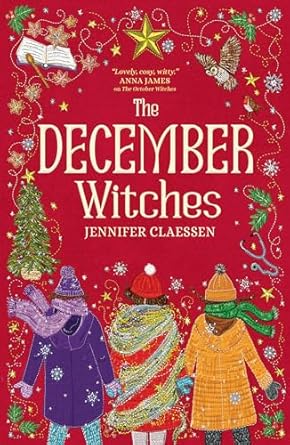
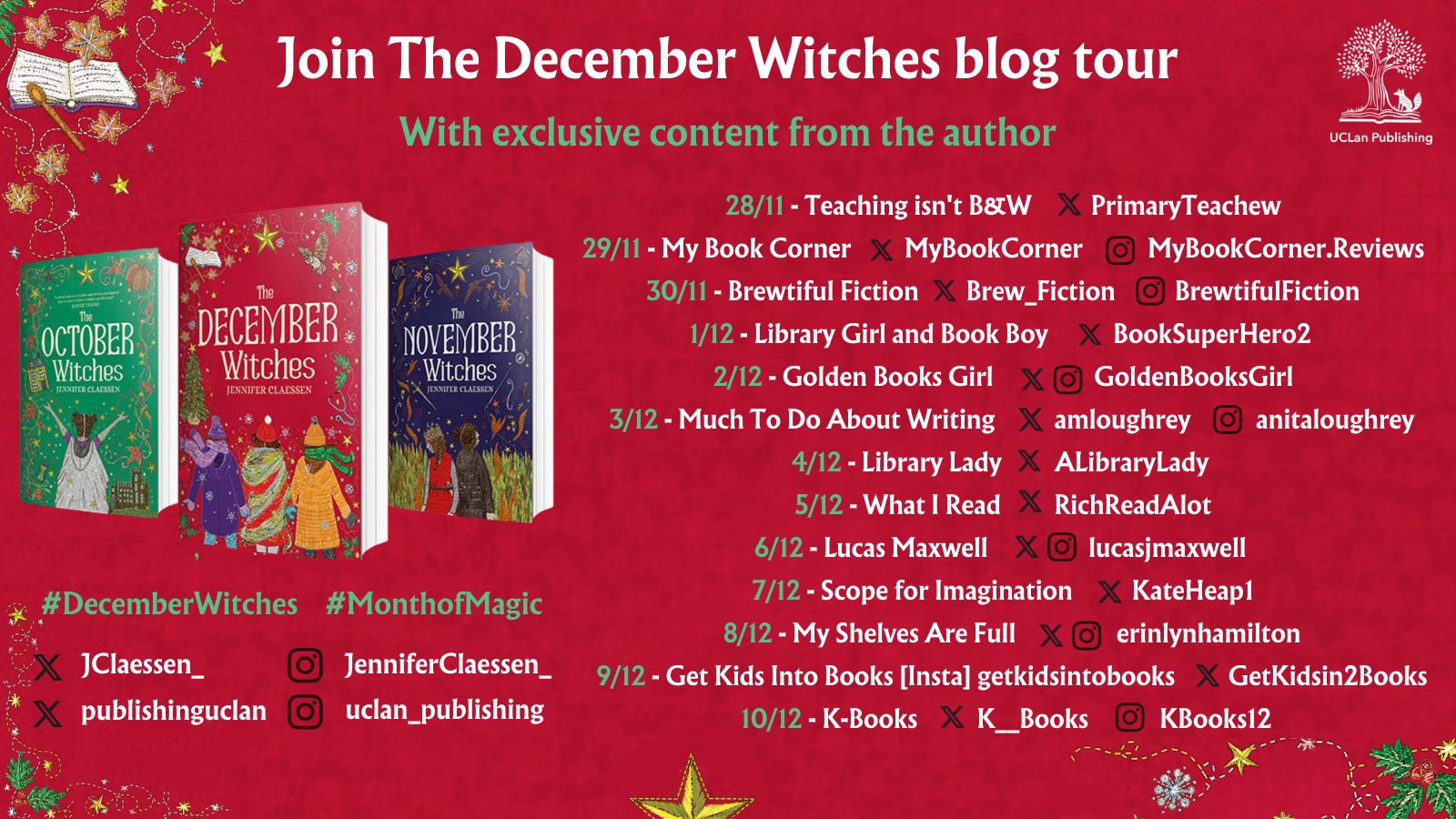
Welcome to today’s stop on the blog tour to mark the publication in November of The December Witches, the final book in the A Month of Magic trilogy. This series blends family relationships, magic and Arthurian legend in exciting adventures that will appeal to lovers of fantasy. With the arrival of the movie version of Wicked I have a feeling the demand for stories featuring witches will be high so this is well timed.
In this final book Clemmie celebrates her 13th birthday but her special day is marred by magic going wrong in a dramatic fashion. She discovers that she has been chosen to be the One True Witch and struggles with this concept. There is chaos as she and the other young hags endeavour to stand up to the ancient powers. In order to survive she must release the magic that is overwhelming her and threatening her very existence. The importance of family bonds despite loss and difficulty is threaded through the magic and excitement of this dramatic finale to the series.
Jennifer Claessen and her publishers have kindly shared a chapter from The December Witches today which will whet your appetite to find out more.
The December Witches was published by Uclan Publishing in November. I should like to thank the publishers for my review copy and Graeme Williams for his help in preparing this blog post. Please do follow the rest of the blog tour to find out more and for your chance to win a free copy of the book.











 Library Lady