Why School Librarians Are Educators Too and Why School Libraries Matter

’We are all educators…….accompanying young people in their efforts to build their lives for today and tomorrow.’’

For seventeen years I worked as a librarian in a school at which the words above formed part of the mission statement. When I left in the summer of 2017 the head-teacher said that as the school librarian I was an example of this. Not me personally but in my role within the school community. Unfortunately today it would appear that there are many who do not believe that school librarians are educators and that schools do not need a librarian at all.

Inevitably discussions about education concentrate on teachers and teaching assistants. That they are the public face of education is not in doubt but schools work best when the staff collaborate and work together as a team and the school librarian should be an important part of that team. Quietly and stealthily school libraries and librarians are disappearing. There are schools that may have a library but no professional librarian to run it. Without a school librarian the library is simply a room full of books, with a librarian it can become the heart of the school for both pupils and staff. We live in age when much in education has to be assessed, measured and counted. These things that can be counted appear to matter most to those who are making the decisions. So much of what librarians do can’t be assessed or counted. That does not mean that what they do does not matter. Nor does it mean that they are not having a positive impact on the children they serve.  Why?  How do librarians add to a child’s education? Why do school libraries matter?

  1. School Libraries matter because Reading for Pleasure makes a difference

There has been much research carried out in recent years that supports the view that enjoying reading has benefits for a child’s education generally. Reading enjoyment has been reported as more important for children’s educational success than their family’s socio-economic status. There is a growing body of evidence which illustrates the importance of reading for pleasure for both educational purposes as well as personal development. In the school library children may not learn how to read but they are likely to learn how to become ‘’a reader.’’ I know that there are many wonderful teachers who create readers; however creating readers is what makes school librarians tick. It’s what we are all about. Finding that right book at the right time that opens up a whole new world for a particular child is the reason we are there.  We have the time to chat about books, to recommend and to guide, to allow time and space for choice and browsing. Librarians love what Teresa Cremin (Professor of Education, Literacy at the Open University) describes so delightfully as book blether. The best class teacher in the world simply does not have enough time to do all this. School Libraries matter because they enable this to happen and librarians can help teachers to make it happen too.

  1. School Libraries Matters Because Facts Matter

‘Fake news’ was named Collins Dictionary’s official Word of the Year for 2017. Never has it been more apparent that we, the public, need to be able to access reliable and accurate information that we can trust.  However, some children’s idea of independent research is to ‘Google it’’. School librarians are trained to teach research skills – referencing, plagiarism etc. and know how to carry out online research, use digital tools and can guide Google searching. As librarian for a junior department I stored links to numerous websites for both teachers and pupils, provided links to suitable sites for young children to use both in school and at home and guided research lessons using books and online resources. School librarians can educate the next generation to select, appraise and use the information they find with confidence. Surely this matters.

  1. School Libraries Matter because we want children to be not only good readers but good people too.

2017 saw the celebration of the first Empathy Day to highlight empathy’s importance in our divided world and the power of stories to develop it.  The day was an amazing success and will now be an annual event.  Through stories children are able to briefly put themselves in the shoes of others and in this way learn about what life is like for people very different to themselves.  Equally importantly, in stories children may find themselves and learn to cope with situations, worries or feel less alone. Children’s books matter because they can encourage tolerance and understanding. School librarians know which books can do this. Education is not just about the academics it is about educating the whole person to be the best that they can be. This matters a great deal.

  1. School Libraries matter because they can be a safe haven.

Perhaps this should have been reason number one. Every single school librarian can tell you of a child that has been ‘’rescued’’ by the library. The new pupil anxious about the hurly-burly of the playground, the worried child who needs some time alone and a quiet space to simply ‘’be’’. If for any reason a child feels out of place the school library can provide security and a place where they feel valued. The school library offers comfort to many and this matters enormously.

As I write this, Nick Poole, the CEO of the Chartered Institute of Library and Information Professionals, is asking children’s authors to support a letter that is being sent to the Government calling for a halt in the decline of school and college libraries. They are responding in large numbers. This is wonderful. My voice may only be a small one but I want to use it to support this call. This is not about self-interest or my job security as I’m no longer employed as a school librarian. It is about speaking up to protect something that I believe to be of great value. If all teachers, teaching assistants, parents, authors, illustrators, book and library lovers speak up too maybe all our voices can add up to something that cannot be ignored. If you think that school libraries matter please add your voice too.

Thank you for reading.

ND Library

Posted in Libraries | Tagged , , , , , , | 1 Comment

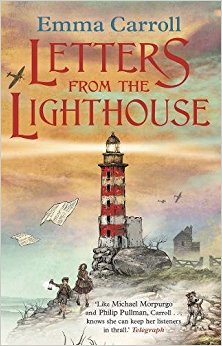
Letters From the Lighthouse by Emma Carroll Review and teaching links

From her very first book for children, Frost Hollow Hall, I have loved Emma Carroll’s stories. They are the sort of books that the ten-year old me would have adored and they have a magic about them which makes me look forward to reading her latest books with a childlike excitement.

I was a bit slow off the mark in reading Letters from the Lighthouse so there was a lot of discussion online already however I had heard only positive things about it. When I finally managed to read it during my holiday I was most definitely not disappointed. This is fabulous historical storytelling, evoking a sense of time and place in a way that makes the reader feel part of the world Emma Carroll has created.

It is February 1941 and a bomb blast takes place in London.  Afterwards Olive can remember little about the night her elder sister went missing. Olive’s mother decides that the city is no longer safe for her children so Olive and her younger brother, Cliff, are evacuated to coastal Devon. Once there they eventually find themselves staying with the mysterious lighthouse keeper.

At first Olive struggles with life in the country and sadly makes an enemy of the challenging Esther. In addition to coping with the changes to her circumstances Olive is determined to solve the mystery and secrets linked to the disappearance of her sister, Sukie.  She soon becomes drawn into a dramatic and exciting adventure which keeps the reader guessing. Once again the author has created believable characters that a reader can engage with. Olive is a likeable heroine who copes remarkably well with her situation showing a maturity and kindness that readers can learn much from. I found Queenie intriguing too and liked her rather spiky attitude. It is Esther, though, whose story has the most impact. I’m reluctant to give away too much of the plot but one of the major strengths of this book is the way in which through Esther readers can empathise with people today who are suffering prejudice in similar ways to Esther and her family. Emma writes about weighty issues including grief and loss with a warmth and kindness that is appropriate for her intended audience.

This is children’s historical fiction at its best, a gripping adventure with believable characters and events that have a resonance today.  A wonderful book and highly recommended.

Although first and foremost a brilliant story this would work extremely well in schools prompting discussion and also be extremely helpful for learning about World War 2. An ideal class read. Letters from the Lighthouse can be bought at all good bookshops online or borrowed from your local library.

 Letters from the lighthouse cover


Interview with Emma Carroll

Mat Tobin, Senior Lecturer in English and Children’s Literature at Oxford Brookes University interviewed Emma about Letters from the Lighthouse and this provides a fascinating insight into both the research behind the book and the writing process involved.  You can read it here This interview, I think,  is interesting to both adults and young readers.

Emma Carroll

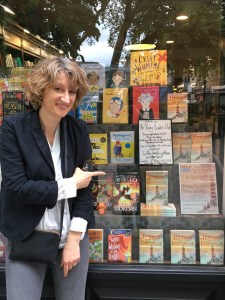
Photo of Emma from her official website

Scheme of Work

The brilliant and ever helpful primary school teacher Ashley Booth (@MrBoothY6 on Twitter) has produced a scheme of work linked to the book which is freely available on the TES website or can be accessed via Ashley’s blog

Lighthouse Information

The lighthouse in the story was inspired by the one at Start Point in Devon and if young readers want to find out more about this they can find more information on the official website.

WW2 Evacuees

There are many sources of information about evacuees suitable for KS2 students but two of the most comprehensive websites are Primary Homework Help and the Imperial War Museum

Kindertransport

The CBBC Newsround website contains information about the Kindertransport programme presented in a manner appropriate for Junior School children.

Finally if reading Letters from the Lighthouse has whetted your appetite for more of Emma’s books you can read my reviews of her previous titles on the Bookbag site.

Another excellent book dealing with World War 2 and themes of discrimination, immigration and tolerance is Girl With a White Dog by Anne Booth  

For a novel about evacuees you may also like to try Catching Falling Stars by Karen McCombie


Posted in Reading, Teaching | Tagged , , , , , | 4 Comments

Love your School Library? – Five Reasons You Should Join the School Library Association Now

For more than seventeen years I have been a school librarian. When I first started I could not have managed without the advice, support and help of the School Library Association (SLA).sla-logo

If you care about your school library then SLA can help you too. Anyone who believes that encouraging a love of reading in our schools is vital already knows that we need a professional librarian in each and every one of them. However the harsh reality is that this is not a financial possibility for an increasing number of schools at present.  This has resulted in time-pressed teachers and TAs often being given responsibility for the school library, particularly in the primary sector. Sadly a large number of county School Library Services are closing too thus depriving schools of that valuable source of advice and resources. Membership of the SLA provides schools with contact with professional librarians and this ensures that you are able to benefit from their experience, knowledge and skills, albeit at a slight distance.

So how can the School Library Association help you?

  1. Advice and information by telephone or email is available for all members. SLA’s professional staff can provide advice on setting up a school library from scratSLA plans-practices-and-policiesch or how to make the most of an existing one. The newly revamped website also provides advice for non members. The support for the primary sector can be accessed here.
  2. The SLA website provides freely downloadable resources for both the primary and secondary sectors. These resources include, guidance on book selection, funding and budgeting plus creating library policies, organising author visits, e-books, preparing for inspection and loads more. It’s brilliant and I have found it a huge help. There are also a range of brilliant reasonably priced publications such as Riveting Reads for all age groups, Amazing Apps for Primary Schools, Picture Books for 0-90, A World of Books in Translation and loads more.
  3. A free quarterly journal, The School Librarian, is sent to all members. This includes reviews of books for all ages from Infant to Sixth Form and articles about best practice. I think the ict@SLA section edited by the brilliant Bev Humphrey (@libwithattitude http://www.bevhumphrey.com/ ) is particularly helpful as it provides information about websites/online resources/blogs with an evaluation of each. It is possible to download an example of the journal on the SLA website.                       School Librarian Journal 2
  4. A comprehensive training programme is run by SLA both on-line and countrywide. Members are able to attend regional training days at a discount however non-members are also made very welcome. The online primary library course is particularly attractive and helpful for non-librarians and is definitely worth a look. There is also a mentoring service available for new school librarians.
  5. Last but most definitely not least are the local branches where you can meet with other members and compare experiences, get new ideas and plan joint ventures. These branches usually organise visits by speakers or trainers to the local meetings. Over the years I have been lucky enough to listen to children’s books experts Prue Goodwin, Julia Eccleshare and Imogen Russell Williams, storyteller Patrick Ryan, a couple of School Librarians of the Year and many more! Despite not having an artistic bone in my body I learned how to create attractive displays and games that would appeal to students.  It is these local meetings that helped to keep me sane in the early years and are most definitely worth the membership fee alone.

This is just a very brief look at the many helpful resources available.

So now you know how the School Library Association can help you what are you waiting for? All of this is available to you whether a librarian, a teacher, a TA or a volunteer parent for £89 per year. An absolute bargain! Visit the new updated website for more information. The SLA helped me it can definitely help you too.

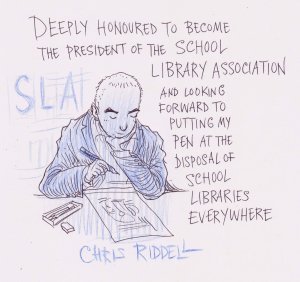
Chris Riddell SLA president

The School Library Association together with the Chartered Institute of Library and Information Professionals has launched the Great School Libraries Campaign to secure school library funding and establish a national framework for school libraries. If you care about school libraries and librarians please visit the official website to find out more.


Posted in Libraries, Reading | Tagged , , , , , | 2 Comments