National Poetry Day – Extending the Celebration

National Poetry Day is the biggest mass celebration of poetry in the UK and a chance for all of us to share in the pleasure of poetry. This year it took place on Thursday 2nd October and it was wonderful to witness the enthusiasm for poetry for children being celebrated within the online community. It would be a shame if this joyful participation was confined to just one day or even the one week in which the day falls. Now while poems are fresh in our minds is the time to build on this interest.

Poetry By Heart, the nation’s poetry speaking competition opened on National Poetry Day with a call to all schools in England to sign up and a preview of Poetry By Heart: the Movie, the inspiring new feature film documentary following schools as they enter the competition. Founded in 2013 by former Poet Laureate Andrew Motion and Dr Julie Blake, Poetry By Heart is open to all schools and colleges in England. It invites young people to choose a poem they love, learn it by heart, and perform it out loud. Schools hold internal competitions to select their own winners, with the best from each region invited to a Grand Finale at Shakespeare’s Globe, London to compete for the title of national champion. There is a website for teaching and learning about poetry – by heart and out loud, and with plenty of choice for young people to explore poems and find the ones they love. Taking part in Poetry By Heart is all about developing confidence with poetry in an enjoyable, accessible and engaging way. Registration, participation and competition entry are free for schools and colleges in England. This year’s competition closes on Thursday 2 April 2026 with the finalist announcement on Thursday 30 April and the Grand Finale on 6th July 2026.  

Poetry By Heart The Movie is an uplifting film celebrating poetry for everyone and has been filmed in schools up and down the country, from Newcastle to the Scilly Isles, Dorset to the Wirral, Great Yarmouth to Barrow. It features fabulous freestyle entries, and moving classic performances; it records pupils staying after school on Fridays just to be a part of poetry club. It stars teachers and pupils as they practise their poems, run competitions and perfect their video submissions.

If you are looking for further inspiration for poems to share in the classroom or at home with your family I have some suggestions of recent poetry books for children that may interest you. Colossal Words for Kids (Frances Lincoln) written by Colette Hiller and illustrated by Tor Freeman is this year’s winner of the CLiPPA, the UK’s leading award for published poetry for children. Each of the 75 words in this entertaining book, from acquiesce to zest, are defined with a simple rhyme accompanied by jolly illustrations. Colossal Words for Kids would be best shared with an adult and this is a clever blend of fun and learning that brings language to life in the classroom. Colette Hiller’s lively verse, paired with quirky illustrations, engages children’s curiosity and creativity while naturally expanding their vocabulary. Many of the poems are accompanied by a text box providing either a related quote or interesting fact. Teachers could use this collection to support spelling, comprehension and literacy skills, while pupils will simply enjoy the rhythm and humour. Perfect for reading aloud, class discussions or creative writing prompts, this book turns word-learning into a happy, memorable adventure.

Former CLiPPA winners Zaro Weil and Junli Song have a new illustrated anthology of poems about mother nature that will encourage children to explore the natural world around them. I Hear the Trees (Hachette Children’s Books) is a lovely collection full of joyful appreciation of nature inviting readers to live in the moment and savour the sensory experiences to be found if we pay attention to the world around us. The subject matter is wide ranging including space and dinosaurs alongside seasons, butterflies and birds and the emotions described and evoked vary from the sad and poignant to the merry and joyful. There is something here for everyone and for every occasion. The differing styles include story like poems and even a play that may prompt classroom involvement. The simply wonderful illustrations complement the poetry style perfectly and add to the accessibility and enjoyment for younger readers. The publishers’ guidance suggests an audience of 5-7 however I think this would be appreciated by older primary children too.

I Hear the Trees is an invitation to adults and children to share their experience of the world, language and poetry together and the closing pages of the book include an excellent range of engaging ways to do this created by the Centre for Primary School Literacy (CLPE). There are discussion points, performance ideas, creative writing suggestions and more ensuring that this book would be wonderful to use in the classroom. You may also like to try When Poems Fall From the Sky another beautiful collection by Weil and Song.

Scallywag Press is a children’s publisher I admire for offering their readers something different, sometimes quirky, but always memorable. Simon Lamb’s debut poetry collection, A Passing on of Shells, was a wining mix of wisdom and insight, hope and humour so when I learned that he had created a reimagining of the famous Robert Burns poem, Tam O’Shanter, I was intrigued. Once I had read it I was both impressed and moved. Simon Lamb opens his book with an introduction to the original poem without which the re-working would lose some of its impact. Mat O’Shanter – A Cautionary Tale is set in the poet’s home town of Prestwick, and, unlike the original featuring an old man in a pub, Lamb’s version is about a young boy hanging out with his pals on the beach, his trusty stead is not a horse but a bike. So the original becomes a poem with a relevance for today’s young readers. The illustrations by Scottish muralist Ross McCrae are bold and dramatic, just perfect for the increasingly dark tone of the narrative. This would be perfect to share in the build up to Halloween and throughout the dark winter evenings ahead.

The poem itself is extremely well done and I had to go back to re-read when I finished the first time. There also a helpful glossary of the Scottish vocabulary. However, it the extensive author’s note which, for me, increased both the impact and the importance of the poem. The relevance to Simon Lamb’s own childhood is explained and his comments, his wise advice and thoughtful understanding provide a valuable addition to this book’s use with young people. Covering well being, mental health, bullying and resilience this would be well placed within a PSHE context too. Highly recommended for Upper KS2 and I think for KS3 too.

Posted in Announcements and Awards, Book Review | Tagged , , , , , | 4 Comments

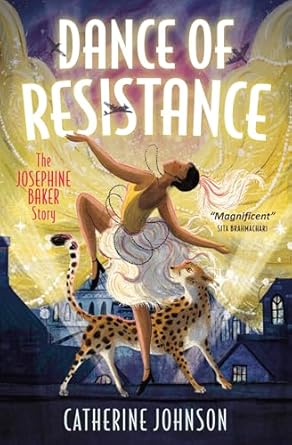
Dance of Resistance by Catherine Johnson illustrations by Katie Hickey

Dancer, singer, actress, movie star, spy and civil-rights activist, Josephine Baker was a remarkable woman. Her story has been vividly brought to life in this inspiring book by Catherine Johnson. Dance of Resistance tells Josephine’s life story from impoverished childhood to fame and stardom. Alongside her talent this impressive woman also possessed considerable determination and drive to succeed. Today’s young readers will learn much from this compelling narrative non-fiction.

Born in East St Louis in 1906 young Josephine was expected to bring some money in to support her family. Sent to work as a maid in a large house nearby her life is made bearable by her love of dance, music and theatre. Sometimes she saves her pennies to visit the theatre to watch the glamourous dancers and often she dances in the street to music coming out of local bars. After several unpleasant experiences and an unwanted marriage at the age of 13 Josephine is befriended by one of the performers and through hard work and perseverance she becomes a dancer in one of the shows she loves. From there on her popularity grows culminating in a trip to Paris and stardom. When the Nazis invade France she is recruited to the French Resistance and becomes instrumental in the safety of fleeing refugees.

This is an astonishing story in many ways. Although I knew a little about Josephine Baker and her life Catherine Johnson has ensured that her readers are fully aware of this woman’s role as an historic figure. Her treatment in the US during a time of racial segregation is shocking and conveyed in an age appropriate manner but nevertheless brings home what life was like for Black people at that time. Josephine’s strength in standing up to her treatment and her later involvement in the civil rights movement are an important element of her life story.

The writing style, as in Johnson’s previous narrative non-fiction for Barrington Stoke is extremely readable and although obviously not the target audience I read this in one sitting. The narrative voice fizzes with exuberant positivity throughout and this carries the reader through and brings the young woman to life on the page. This is so skilfully done that by half way through it is possible to imagine that Josephine Baker herself is telling the story.

Dance of Resistance is a story of an impressive woman and how she made the most of her life, told in an accessible and inspiring manner. Published by Barrington Stoke on 11th September for readers of about 9 or 10 upwards with a reading age of 8. Recommended for both primary and secondary school libraries and classrooms.

As we approach Black History Month in October Dance of Resistance would be a particularly good book to share at this time. To assist with this the publishers in collaboration with CLPE have produced a free teacher pack to help develop reading strategies and provides lots of enjoyable activities for the classroom which is free to download on their website here.

You may also be interested in a free online event for schools with Catherine Johnson on Thursday 16th October 1.30pm – 2.30pm when she will be discussing this book with an opportunity for student questions. Suitable for Year 5 and above. Schools can register here.

Posted in Book Review | Tagged , , , , | 3 Comments

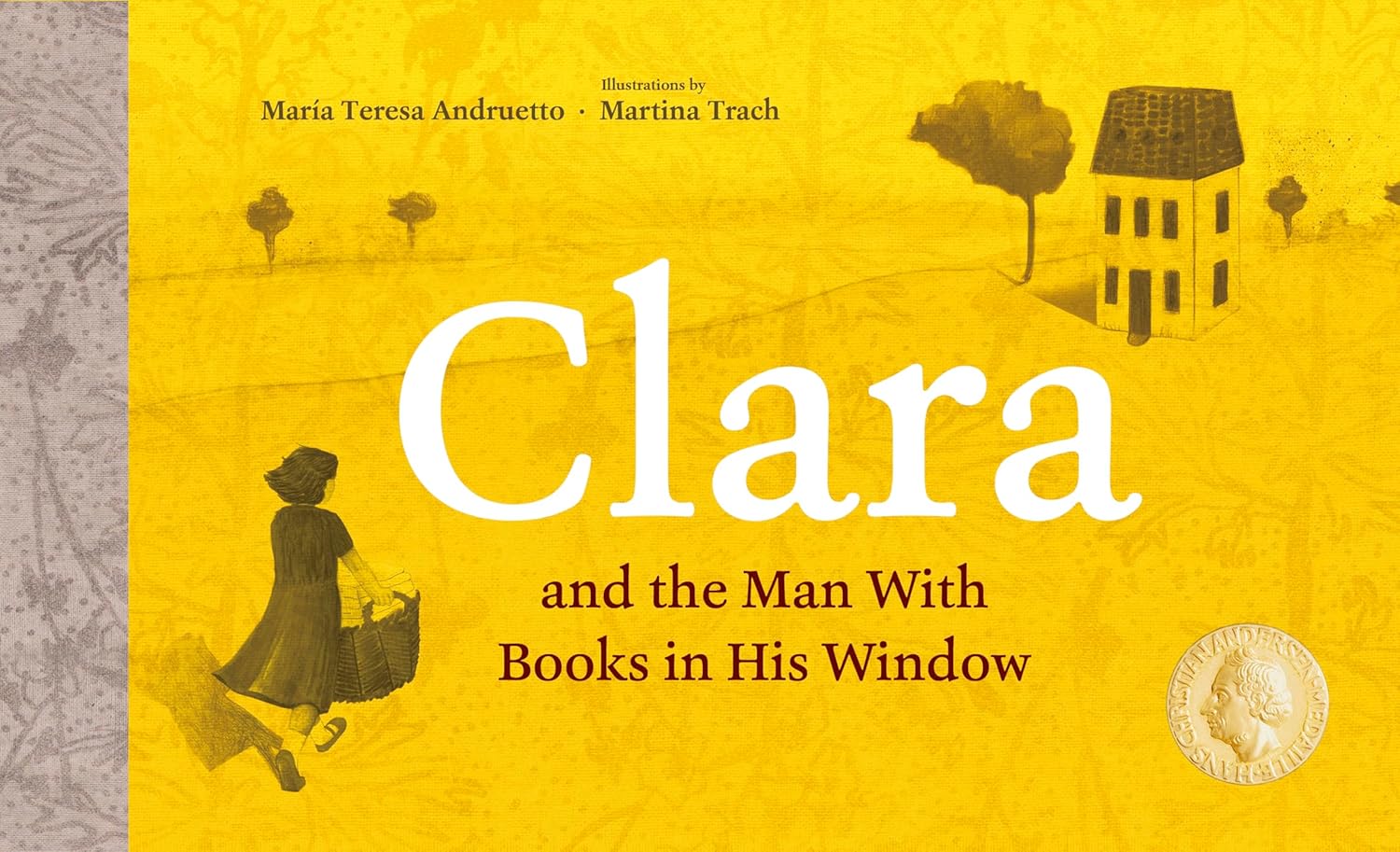
Clara and the Man With Books in His Window by Maria Teresa Andruetto illustrated by Martina Trach translated by Elisa Amado

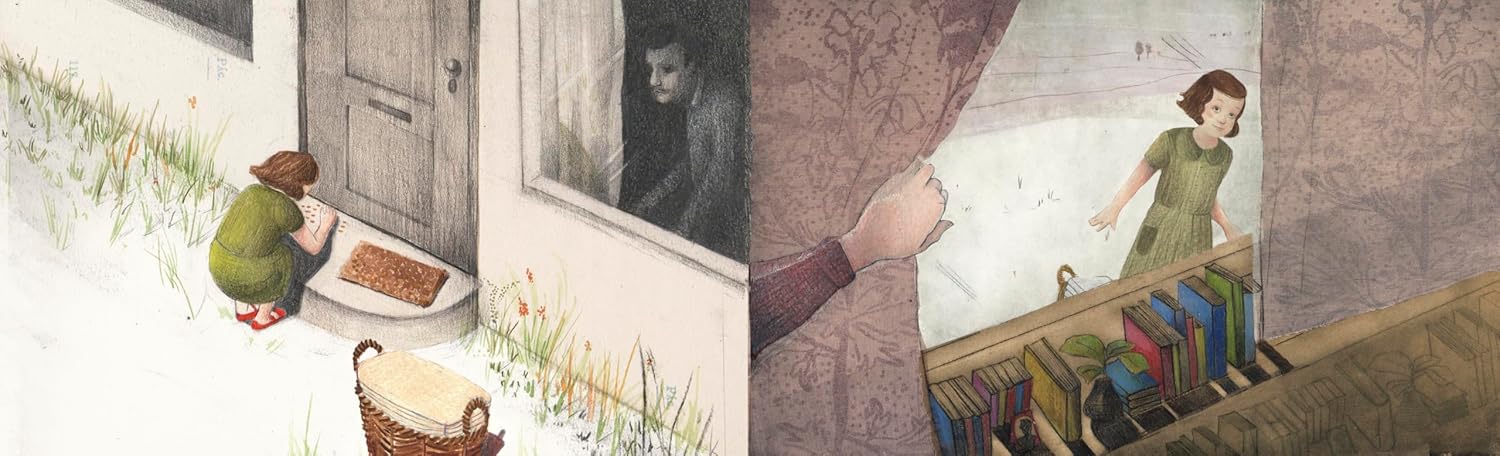
September is World Kid Lit Month, a time when we are encouraged to explore international children’s literature. So I cast my eye over my mountainous pile of books to review to try and find something suitable and unearthed a rather special picture book. The title itself is tempting, the cover illustration attractive in a nostalgic way and then the opening lines are, I think, irresistible.

“This is the story of my mother and her friend Juan, of how she discovered books and he, the light of day.”

This beautiful book is set in rural 1920s Argentina and tells the true story of Hans Christian Andersen Award winning author Andruetto’s mother Clara. Clara was the daughter of a poor laundress who when assisting her mother delivering laundry meets Juan, a wealthy recluse, who lives in a house lined with books. He never leaves his home due to his past and his feelings of shame and a lack of courage. Gradually a tender bond grows between the little girl and the sad man and the reader watches the moving effect of friendship and the world available within the pages of a book.

Andruetto has used family history to create a gorgeous and powerful homage to the power of books and friendship in this stunningly illustrated book. Each double page spread conveys emotions that are not always articulated in the spare text. This is truly a book where one ‘reads’ the pictures. The opening pages are wordless and the sepia tinted illustrations depict a rural Argentinian landscape which, as one turns the pages, zooms ever closer in on Clara and her mother. Clara in her green dress and red shoes draws the eye instantly and as the story unfolds we watch the small child carry her basket of laundry back to the gentleman who lives alone. She takes the money left on the mat leaving the laundry behind and the man, in blank silhouette sits alone, turned away amongst his books. Gradually through hesitant conversation at the door the man learns that Clara can read, taught by her Grandma, and on her next visit a book is left for her on the doormat. So begins a friendship, conversations about the stories and about their lives are shared. The man’s love for another young man many years ago is alluded to and it is this loss that has resulted in his loneliness. Through the man’s story Clara learns the importance of ‘courage’ and learning to be brave enough to live your own life.

The illustrations in a watercolour style with the use of digital collage are integral to the story and would prompt a great deal of discussion and thought if shared in the classroom. The use of colour to convey emotion and highlight particular memories or important items is a particular strength. I was curious about the significance of the selection of items depicted on the title page and their reappearance in the man’s home. The passage of time is skilfully conveyed too. There is so much to ponder on here that I would love to share this book with an expert in illustration. A word of thanks also to the translator, Elisa Amado, a Guatemala-born author and translator who has ensured that the text has almost a fairy tale quality to it.

Clara and the Man With Books in his Window was published by Greystone Books in June and I should like to thank the publisher and Catherine Ward for my review copy.

Posted in Book Review | Tagged , , , , , , , | 4 Comments

The Fear by Tom Palmer illustrated by Robin Boyden

Sometimes as a school librarian I had to tap into a child’s interests to find a book that may just be the one to turn them into a reader. As a mum my son’s interest was football so every Friday after school we visited the local library and borrowed titles that may tempt him by authors such as Rob Childs. If he wasn’t reading those he was reading Match magazine. Today’s football fans have award winning author Tom Palmer to help them. Not only does he love football himself he knows how to write about it in a way that will hook youngsters into the reading habit. So I was delighted to receive from Barrington Stoke a copy of The Fear, the first in a new football series from Tom and illustrator Robin Boyden. However this is most definitely a book for all children not only those who are confirmed football fans. With thoughtful understanding this story explores themes that are important to all children; self-esteem, friendship and resilience and the importance of considering others.

Kian’s best friend Azeem is desperate for them both to join the local football team. He can’t understand why Kian’s reluctant to get involved as he’s one of the best players on their estate. But a bad experience with a former coach has robbed Kian of all his confidence. He wants to support his friend, but he doesn’t think he can face the pressure of being part of a team again in case he makes another mistake. However the coach at the new team has a more understanding approach and over a period of time he starts to make a difference to Kian. Gradually the boy gains in confidence and begins to understand the importance of conquering his anxiety, not only for his own sake but to help his team mates too.

At under 70 pages this book manages to pack in much in the way of life lessons for young readers. Kian’s anxiety and the manner in which he deals with it is central however through the interactions of others, including Kian’s mum and his new coach Steve, he also grows to appreciate the value of doing things to help others. The resolution is not a magic, happy ever after ending rather a example of learning how to be resilient under pressure and how focusing on others helps you to feel better as well.

The Fear can open up conversations, build empathy, and provide life lessons about teamwork and perseverance. It also includes some exciting football action for footie fans! Published on 11th September by Barrington Stoke who I should like to thank for my review copy. Highly recommended for readers aged 9+ with a reading age of 7.

If you are interested in another book about youngsters coping with anxiety I reviewed Eve Ainsworth’s latest title for Barrington Stoke, Jellybean, last week which covers the subject of anxiety based school refusal. Tom Palmer has written several other books based on football including the Roy of the Rovers series and the spin off series featuring Rocky, Roy’s sister both of which should appeal.

Posted in Book Review | Tagged , , , , , | 4 Comments

Winner of the 10th Klaus Flugge Prize Announced

At a ceremony last night, at the Artworkers’ Guild in London, it was announced that Emma Farrarons is the winner of the 2025 Klaus Flugge Prize awarded to the most exciting and promising newcomer to children’s picture book illustration. She wins for her illustrations in My Hair is as Long as a River, written by Charlie Castle published by Macmillan Children’s Books. The bestselling creator of the Mindfulness Colouring’ series embraces colour and narrative in her debut picture book telling the story of a boy whose long hair ‘helps me to be me’, It is a wonderful exploration of the imagination and individuality, perfectly captured in Emma’s illustrations.

Emma Farrarons Photo Andrea Reece

This year marks ten years of the Klaus Flugge Prize, which was established in 2016 to honour Klaus Flugge, founder of Andersen Press and a leading figure in the world of children’s publishing and illustration. The £5,000 prize is the only prize specifically to recognise a published picture book by a debut illustrator and is one of the most important and influential awards thanks to its spotlight on exciting new talent. Previous winners include Eva Eland, Jessica Love, Flavia Z Drago, Mariajo Ilustrajo, Joseph Namara Hollis and Kate Milner.

Prior to taking up picture book illustration, Emma also worked as a picture book designer, deciding to make the change during the Pandemic. Emma Farrarons said, “This prize means so much to me. When I left my role as an in-house designer to pursue picture book illustration, I never imagined I’d come full circle and work with my former colleagues in such a different way. It was a joy to collaborate with them in this new chapter, and to see that book, alongside Charlie Castle’s beautiful text, recognised with the Klaus Flugge Prize feels truly special.

Chair of the judges, Julia Eccleshare said: “We are delighted to be celebrating Emma Farrarons on the tenth anniversary of the Klaus Flugge Prize, as well as shortlisted illustrators Mikey Please and Rhian Stone, and thrilled to be joined by so many former winners of the Klaus Flugge Prize this evening. Picture books are children’s first encounter with art and the vital beginning step on young children’s ‘Reading for Pleasure’ journey. Congratulations to all those who produce and publish picture books and very special thanks again to Klaus Flugge who has done so much to support and promote illustrators throughout his long career and to bring outstanding art to children.”

Klaus Flugge and Emma Farrarons Photo Andrea Reece

For more information about the Klaus Flugge Prize and to find out about the other illustrators on this year’s shortlist please visit the official website: https://www.klausfluggeprize.co.uk/

Posted in Announcements and Awards | Tagged , , , , | Leave a comment

New Books for Children from Barrington Stoke

What Was It Like To Be An Ancient Greek by David Long illustrated by Stefano Tambellini

Barrington Stoke are probably best known as a publisher of accessible, high quality fiction for children and teens, however the partnership between award winning historian David Long and illustrator Stefano Tambellini has resulted in an excellent series of information books for primary learning. The latest title sheds light on life as an ancient Greek and is a fascinating read.

The nine chapters interspersed with illustrations, maps and labelled depictions of aspects of Greek life cover a range of subject areas. Travelling back almost 3000 years we learn the background to this ancient civilisation, how they lived and worked and discover how some became brilliant astronomers, philosophers, artists and navigators. Under the rule of Alexander the Great their influence spread still further. There is a chapter on their myths and legends and explanations of the origins of the Olympic Games. The way in which examples of their influence can still be seen today is incorporated in the text will, I think, increase the relevance and interest of this subject for children.

The book culminates in the arrival of the Roman Empire and leads nicely into another book in the series, What Was It Like To Be An Ancient Roman David Long’s writing style is both readable and interesting and What Was It Like To Be An Ancient Greek would be a useful purchase for primary school libraries. Many children will enjoy reading this and learn much from it and teachers will also find this a useful classroom resource. Published on 14th August and suitable for readers aged 9+ with a reading age of 8. As with all Barrington Stoke books this is carefully edited and presented to be dyslexia friendly which is an added bonus.

Jellybean by Eve Ainsworth illustrated by Theo Parish

Sometimes children’s books are more than a story, they can support, guide and inform both their target audience and the adults who care for those readers in many varied roles. Jellybean is one of those books. Anxiety-based school avoidance is a growing problem in the UK, with a huge increase since the Covid-19 pandemic. There is much discussion in the media about the best way in which to tackle this issue and Eve Ainsworth has used her experience in pastoral and child protection roles in schools to great effect in this compassionate novella.

The story features Ellie who can’t face going to school any more. Her parents suspect bullying may be the cause or is schoolwork too hard? The truth is Ellie is unable to articulate the reason herself. Her anxiety grows despite her close friendships and her enthusiasm for some of the lessons such as English and Art. The days of absence grow into weeks and Ellie’s parents seek outside help to try to support their daughter and help her find a way back. It is clear that a great deal of thought has gone into the writing of Ellie’s story as it is easy to empathise with this worried girl and we are hoping that the kindness and understanding shown by the adults in the book will help her cope with things. It is a clever touch to leave the ending open to interpretation prompting discussion and further thought about the choice Ellie will make.

At the end of the story there are several pages of further information for parents and carers and young people providing details of useful organisations and tips for coping with anxiety. Some of this advice is successfully incorporated within the story too. This is a must buy for secondary school libraries and would be useful for parents. Published on 14th August and suitable for readers aged 11+ with a reading age of 7. Eve Ainsworth has written several novels for Barrington Stoke and another for teens on the subject of foster care, Know My Place, is well worth seeking out if you haven’t already read it.

Posted in Book Review | Tagged , , , , , , | 3 Comments

Engaging New Information Books for Children

Finding new non fiction for younger primary aged children can sometimes be a challenge so as we start the new school year I would like to draw your attention to three new information books pitched at an audience aged approximately 5-8 years. These titles all relate to the natural world, a subject often popular with this age group, and would also be interesting for children a little older. All are designed to appeal to children and would, I think, be excellent purchases for primary school libraries and classrooms.

Bugs! Bugs! Bugs! by Susan Martineau illustrated by Vicky Barker

The award winning non-fiction partnership of Susan Martineau and Vicky Barker return with the third title in their Nature Investigator series. In Bugs! Bugs! Bugs! they explore in detail the world of creepy crawlies in a book that will delight and fascinate young bug lovers.

This engaging book is pitched at readers of about 5 upwards and is full of fascinating information presented in an appealing style with bright, attractive illustrations which encourage browsing. After an introduction to the bug world the reader explores a wide range of minibeasts including beetles of different types, spiders, grasshoppers, butterflies, moths, millipedes, centipedes, bees, wasps and more. The facts are conveyed using subject specific language such as, larvae, antennae, proboscis etc. with explanations provided within the text and the detailed illustrations. The pictures are labelled and important words highlighted with definitions also provided in the helpful glossary.

Bugs! Bugs! Bugs! answers every possible question a child may have on the subject and works well as both a reference book and as a lovely book to explore, browse or read for pleasure or general interest too. It also highlights that although some bugs may be viewed as a pest or spread disease they are an essential part of life on Earth and have important roles as pollinators, food, and recyclers. Finally, a few tips on how children can help protect bugs that may be endangered are included.

A lovely book to share both at home and in school this would be an excellent addition to primary school libraries and classrooms. Published on 24th July by B Small Publishing. I should like to thank the publishers and Naomi Weeks for my review copy.

The Tree of Life by Nalini Nadkarni illustrated by Kendra Binney

Written by forest ecologist Nalini Nadkarni, The Tree of Life is a captivating introduction to the extraordinary role trees play in our world. Drawing on her expertise, Nadkarni takes young readers on a journey across continents, highlighting a wide variety of tree, from familiar species to more unusual ones, and showing how each contributes to the well being of its ecosystem.

Kendra Binney’s clear, detailed illustrations are a perfect match for the text, with vibrant depictions of trees, animals, and habitats that invite children to linger on each page. The addition of interactive lift-the-flap elements encourages exploration, transforming the book into a enjoyable, immersive experience as young readers uncover hidden details about the lives supported by trees. Lifting the flaps young readers will discover colourful birds, busy insects and interesting animals who depend on the different trees in many ways.

An additional element is the way the text relates not just to nature, but also to culture and community. For example readers learn that the Banyan tree is of spiritual importance to the people living near them and is the national tree of India. Nadkarni also includes information detailing which of the trees included are currently endangered, highlighting the importance of conservation.

This book balances scientific accuracy with accessibility conveying ecological concepts in a way that is engaging and easy for children to grasp. This combination plus the interactive design ensures the book has strong child appeal while also offering plenty for adults to appreciate. I discovered things reading this book too and am looking forward to sharing it.

The Tree of Life is a beautiful celebration of trees as providers of food, shelter, and inspiration. It is both an educational resource and a work of art—an ideal choice for classrooms, libraries, or families eager to spark curiosity about the natural world and nurture a love for trees. Published by Neon Squid on 1st July and I should like to thank the publishers and Malu Rocha for my review copy.

Volcano by Claire Saxby illustrated by Jess Racklyett

Another award-winning duo return in this stunning picture book exploring the fascinating world of an underwater volcano. Saxby and Racklyett had previous collaborated on the books Iceberg and Tree and Volcano, their latest title, uses the same blend of scientific research, lyrical language and beautiful illustrations to convey information to young children.

Deep down in the ocean at the sea bed the earth quakes and creatures scatter as lava pillows flash and fade as a mountain forms. Slowly a chimney pushes upwards and new creatures appear as the mountain pushes upwards towards the light. As it breaks the sea surface a wonderful gatefold opens so children can see the volcanic island that has emerged. Then new life begins as seeds sprout and branches spread, birds hover and eggs hatch. Below the sea yet more volcanoes erupt. This beautiful book explores a relatively unknown part of the natural world and provides a glimpse of this underwater environment and the ecosystems within in. On the final page there is a helpful note mentioning hydrothermal vents, the processes of photosynthesis and, the recently discovered, chemosynthesis where chemical create food energy far beyond the reach of light.

This would be a valuable addition to primary school libraries being suitable for a wide age range in that younger children who many not fully grasp the information will enjoy the poetic text and the stunning pictures. It is an interesting approach to traditional non-fiction and will be an enjoyable way to learn for many. Published by Allen and Unwin in April and I should like to thank the publishers and Laura Smythe for my review copy.

Posted in Book Review | Tagged , , , , , , , | Leave a comment

A Summer Reading Round Up – My Favourite New Books for Children

The return of some jolly young witches and their cat, an exciting adventure on a magical island, a coming-of-age story set in Wales during the Second World War and an understanding look at teen friendships and conflict make up the pick of my summer reading selection.

The Notwitches: Prison Break by Gary Panton illustrated by Dotty Sutton

‘Ta da!’ Mitch and Melanda are back in another jolly adventure accompanied by their almost talking magic cat, Rolo, and a whole host of new characters to enjoy. In a similar manner to the first in the series this happy story combines laugh out loud humour with kindness and a warm take on the importance of family and friendship.

Having effectively despatched their gruesome Aunts in book one Mitch and Melanda now hatch a cunning plan to release their parents from the Dark and Disgusting Prison for Witches. There is one small snag, first they will have to break in. So they need a magic spell to get them arrested. How can they possibly fail? So begins this bonkers but brilliant adventure which features an imaginative array of characters. Rolo the almost talking cat, apparently a vocabulary of only four words does not meet the criteria for full blown ‘talking cat’, has a starring role in the drama and his Mission Impossible style antics are hilarious. Craig the hapless witch hunter is a new favourite of mine and there are numerous other cameos to enjoy.

Dotty Sutton’s illustrations are perfect for the story and add greatly to the fun and she has captured and conveyed the tone of the text brilliantly. At a time when research about the decline in reading for pleasure among children is causing concern Gary Panton has, I think, created something that may convince youngsters that reading can be huge fun. Definitely a book to recommend to newly confident readers of about 7+ and a treat to read aloud. A big thank you to the publishers, Chicken House and Laura Smythe for my review copy and for making me giggle. Published 14th August.

Museum of Lost Umbrellas by Marie Louise Fitzpatrick

The first of The Cloud Witch Chronicles, a new fantasy series, The Museum of Lost Umbrellas combines likeable characters, familiar tropes and magic in a charming and entertaining story sure to appeal to many. Marie Louise Fitzpatrick says that she wrote this book for herself and it really shows. The tone of the book is full of warmth and enthusiasm, the adventure brimful of the elements we all love including caves, secret doors, underground passages etc. It’s even set on an island! How could lovers of children’s books possible resist this? I definitely couldn’t and am looking forward to reading the next in the series.

Ten-year-old orphan Dilly Kyteler arrives on the mysterious island of Ollipest to stay with a great-aunt she’s never met. Aunt Florence at first appears to be somewhat forbidding however she has a laissez-faire attitude to childcare allowing Dilly to wander off for the day exploring. The young girl quickly acquires both a new friend in Callum, the grandson of a friend of Aunt Florence, and a much wanted pet dog in Parsley, a large hound. As she explores both her new home and the island, Dilly unexpectedly finds magic everywhere—houses that grant wishes, portals in alleyways, and a spectacular Museum of Lost Umbrellas, where umbrellas are anything but lost but are in fact magical flight assistants.

When a stranger arrives who encourages the islanders to support an anti-magic movement Dilly, Callum, and Shelley, the museum owner decide to work together to unravel the island’s secrets and save the magic that has been passed down through their families.

Yes, there are echoes of many other much loved stories here but The Museum of Lost Umbrellas still feels fresh and some elements such as the manipulation of the population by one who appeals to their own fears has current relevance. However, this is very much a story to enjoy for its own sake. Dilly is endearing, the plot pacy enough to keep children’s attention, and the fantasy world imaginatively drawn. The inclusion of a magical library with its helpful books delighted me as did the reference to Mary Poppins. I imagine young readers will find something that they love about this delightful story too. Published by Faber Books on 31st July and recommended for readers of about 9+. Thank you to Emma Golay for my review copy.
George’s Fateful D-Day by David Brayley

David Brayley’s George’s Fateful D-Day is a coming-of-age story set against the backdrop of World War II-era South Wales. The novel follows 11-year-old George Jones, a bright and curious boy growing up in a working-class community in 1943. Through George’s eyes, Brayley vividly captures a time of uncertainty, quiet heroism, and unexpected connections. When George meets Oliver Jacobson, a young American GI stationed nearby, what begins as a chance encounter becomes a powerful and transformative friendship. The two of them bond over their shared love of sport, comparing notes on rugby and American football, and their growing friendship bridges cultures and generations and has a profound effect on George and his family.

George is a well drawn and engaging protagonist — inquisitive, open-hearted, and at times extremely vulnerable. His interactions with Oliver introduce him to situations and attitudes he has never encountered before, challenging assumptions and shaping his sense of right and wrong. Brayley handles themes of race, grief, guilt, loss and friendship with a gentle but unflinching tone, appropriate for younger readers but deeply affecting too.

The historical context is authentic, yet never overwhelms the narrative. Instead, this story manages to both entertain and educate. Readers are reminded that for every soldier on the battlefield, there are countless others living quieter stories filled with their own risks, revelations, and moments of courage. As D-Day approaches, the emotional tension rises, leading to a conclusion that is both poignant and uplifting.

George’s Fateful D-Day is not just a war story — it’s a story about understanding, about the quiet power of connection, and about how even the most fleeting meetings can echo across a lifetime and generations. A moving and memorable read, it offers young readers a compelling introduction to the social history of the second World War, while inviting all readers to think about the human stories history books may overlook.

Highly recommended for readers aged 10 and up, and for anyone who values stories that combine heart, history, and hope. The quote mentioned throughout the story, “None but the fates know our fortunes, so best leave it all up to them” has stayed with me since I turned the last page as have George and Oliver. Thank you to David Brayley for providing my review copy. George’s Fateful D-Day was published by Y Lolfa on 23rd May.

My Perfect Cousin by Karen McCombie illustrated by Sofia Miller Salazar

Fiction, especially fiction written for children and teens, can often offer life lessons through the experience of the characters created by authors. Karen McCombie has a knack, I think, for doing this without being didactic or preaching in tone. The reality behind the often quoted saying, “There are two sides to every story” is conveyed with skill and understanding in My Perfect Cousin.

Cousins Ruby and Yasmin could not be more different. Ruby dislikes Yasmin because she is ‘perfect’ and she feels small and insignificant by comparison. Yasmin is pretty and popular, has a gorgeous boyfriend, and is expected to get excellent grades in her GSCEs. Ruby is fed up with Yasmin trying to make sure that the spotlight is always on her. However, how would Yasmin’s version of this family experience compare? Using a dual narrative that switches from Ruby to Yasmin at the halfway point Karen McCombie cleverly explores teenage concerns. She touches on the complexity of relationships and the possible rivalry at this age in a manner that will be relatable for early teen readers.

It would be interesting to know how readers react to this story and whether their opinions of the two girls alters by the end of the book. It is therefore a book that may be used successfully in the classroom as a discussion prompt. My Perfect Cousin is suitable for readers of 11+ and has been edited and presented to be enjoyed by those with a reading age of 7+. At under 100 pages and with illustrations by Sofia Miller Salazar that capture the tone of the story well this fills a gap and would be a valuable addition to secondary school libraries. Published on 3rd July by Barrington Stoke. Thank you to the publishers and Poppy McLean for my review copy.
Posted in Book Review | Tagged , , , , , , , | Leave a comment

Explore the World With Children’s Books – Celebrate World Kid Lit Month

September is World Kid Lit Month: a month for everyone of any age to explore the world through international children’s books.


How do you take part? It’s simple, just read a book for young people from another country. If you use social media, share what you’ve enjoyed with the hashtag #WorldKidLitMonth. Are you a seasoned explorer of children’s literature? Then why not take the Explorer Challenge, and push your reading boundaries with the World Kid Lit bingo charts of ideas of books from, or set in, other countries, and books translated into English from other languages. You’ll find hundreds of book reviews and creator interviews at World Kid Lit blog, introducing you to children’s and YA books from over 180 countries and translated from over a 100 different languages.


Whether you celebrate at home or at school, in your library or bookshop, or on social media, September is the perfect time to expand your reading horizons and find a more inclusive selection of books for the young people in your life. I have earmarked a couple of books on my heaving ‘TBR’ shelves and will, I hope, be able to share my thoughts on them over the next month. Happy travels wherever you fly by book!

New for 2025: Reading Challenge Award for Schools


This is an inspiring way to start the academic year and promote reading and its many benefits. The World Kid Lit Reading Challenge Award, launching in September 2025, is a new competition for schools to promote international and inclusive reading. In 2025, the pilot year, schools anywhere in the world can enter, as long as English is one of the main languages of instruction. Students can read any books that fit the description of “world literature for young people”, and the Award is for the most imaginative, innovative or inclusive presentations where students reflect on what they’ve read. See here for more details, including how to enter.

Posted in Announcements and Awards | Tagged , , , , | 2 Comments

Prepare Your Child for Nursery: Lenny Goes to School by Ken Wilson-Max

This latest addition to the Lenny series is perfect for reassuring young children, and indeed their parents, as they embark on the important transition from home to nursery school. Lenny Goes to School contains all the thoughtful elements found in the previous books; vibrant illustrations, special moments between children and adults and the small details that matter and are comfortingly familiar.

The book opens with Lenny and his mum walking along the street to playschool. His mum offering words of encouragement and Lenny bursting with excitement. Once there, after a quick goodbye, Lenny settles into playing with the various activities, sitting next to his new friend Lucy to sing ‘The Wheels on the Bus’, and tucking into to his break-time juice and snack before playing outside on a tricycle. A quiet story-time follows and very soon it is the end of the day and Mummy is there to collect Lenny and give him a hug. Lenny can’t wait to go back tomorrow and play with Lucy again.

The gentle, warm tone of the narrative is comforting yet also captures all the important aspects of early childhood experiences. Wilson-Max guides children through the new routines that will quickly become everyday for them, highlighting the positive and easing them gently into anticipation rather than fear of the new. This would be an extremely helpful book to share with a child before they start at nursery or playgroup and would have value for those moving on to reception class too. It is ideal preparation and could by used by families to open up conversation about what to expect. The book also offers the opportunity to share nursery rhymes together, an important part of language development and a regular feature of nursery school life. My grandson enjoys his Lenny books very much and I know this one will be treasured just as much as the the others and will help him too. Recommended by us both! Published by Alanna Max on 14th July. Thank you to Fay Erek for providing my review copy.

Posted in Book Review | Tagged , , , , | 2 Comments